depeperwinkel
Doi seed (hạt dổi)
Doi seed (hạt dổi)
In stock
Unable to load availability for pickup
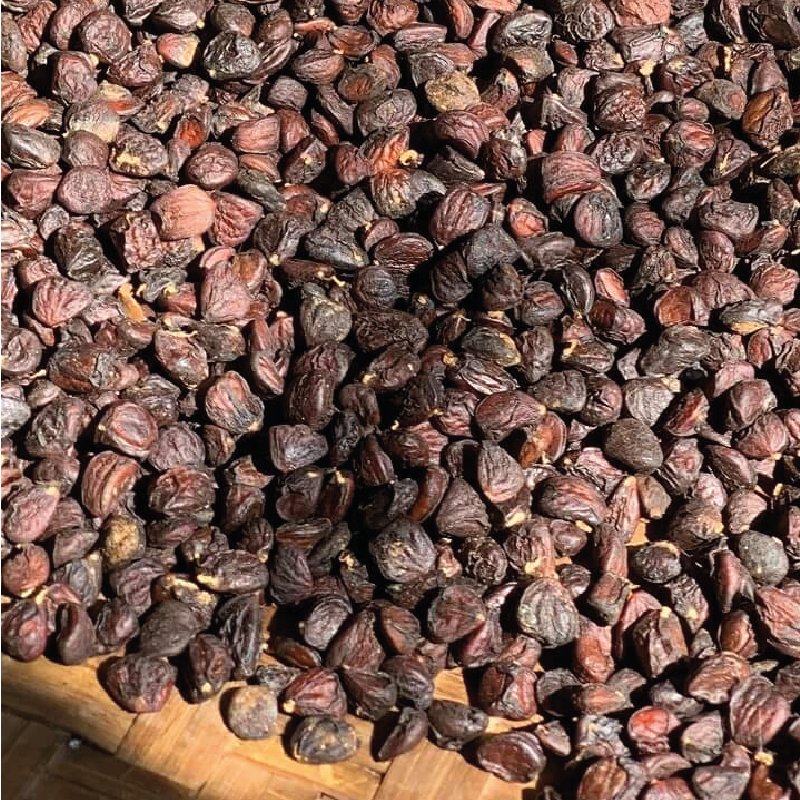
Doi seed, hạt dổi, is a typical Vietnamese spice, the fiery red seed of the Magnolia balansae, a tulip tree also known as Michelia Tonkinensis, native to southern China and northern Vietnam. The Magnolia is related to two typical spice genera, the Piperaceae and the Lauracea.
The dổi is a sparsely branched, flowering tree that averages 15-20 meters in height with a crown tens of meters in diameter. The flowers of the dổi stand alone, grow at the ends of the branches, and have white, hairy petals. The plant flowers in March-April. The fruit is a long, compound capsule containing numerous flattened spherical or ovate seeds. The fruit usually ripens from September to November and contains red seeds.
You traditionally find doi-zaad in mountainous provinces such as Lao Cai, Lang Son, Lai Chau, and Ha Giang, where the Tai (Thái) live, including the Black Tai (Thái Đen), the White Tai (Thái Trắng), and the Red Tai (Thái Đỏ).
There are two types of dổi seeds on the market: dổi tẻ and dổi nếp. The seeds of the dổi tẻ are not edible, whereas those of the dổi nếp are. Hạt dổi nếp and mountain pepper Mắc Khén are the most important spices in Thai cuisine, used with smoked buffalo meat, dried beef, sausage, grilled meat, grilled fish, etc. The seeds are lightly roasted before use, just as you would with cumin and coriander seeds. During roasting, the aromas are released, and the seeds swell slightly. Grind the seeds before use in a suitable spice grinder, a
Our dổi seeds come from wild trees in Lạng Sơn (Lang son). Not from mature old trees, but from young vegetation. Around October-November, ethnic minority communities often head into the forest to collect fallen dổi seeds for use as spices or for sale.
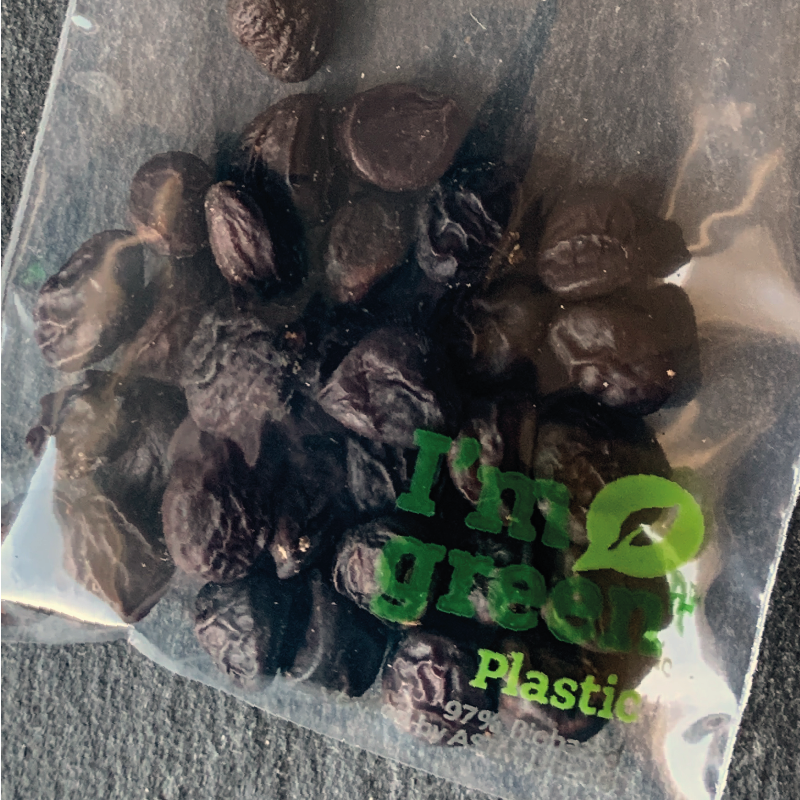
Although the taste of the former is the ultimate, these fruits are very rare—they are called black gold for a reason—and are kept by collectors for their own use. Dổi seeds are harvested annually between September and November. The fresh seeds are red and turn black upon drying (enzymatic coloring), and unfortunately do not regain their original fiery red color when they absorb moisture again, as with Tasmanian pepper is indeed the case.
Taste and smell
Hạt dổi It has a powerful scent and flavor, not so easy to define, with an initially rather bitter undertone, transitioning into the sharpness of spathulenol, a sesquiterpene also found in sage and mugwort. You can also taste the aromas of black pepper and siltimur, closely related spices. With mountain pepper, you get a blend with a fresher, more citrusy aroma, and an interesting sharpness in two dimensions.
Usage
The berries are roasted before use. Traditionally, this is done by holding them in glowing charcoal for a short time, but (dry) roasting in a pan on the stove is of course also possible. Do not heat them for too long, otherwise they will become bitter. Use no more than a few berries in a dish.
Well-known dishes with doi seeds are Lạp Xưởng, Măng Pửng soup (made with young bamboo shoots), and Chẩm chéo, a dipping sauce for rau má (water spinach). The latter is made by the Tai in Lai Châu with mắc có – the sour fruit of the Mimosa pudica –, mắc khén, mắc mật and cardamom.
Chẩm chéo is made of equal parts mắc mật of dổi and mắc khén, cardamom, fresh or dried Chile, coriander leaves, lemongrass, ginger root, garlic and some salt.The Vietnamese ingredients in bold are roasted, then ground in a mortar. Use the remaining ingredients fresh! Finally, add some—not too much—water to use it as a dipping sauce, but never fish sauce as indicated in some recipes!
Features:
- 100% berries of the Magnioliabalansae
- origin: Lạng Sơn, Vietnam
- Available in our store for the first time: February 2026
Assortment
- available in glass (45 and 60 grams of your choice), and stand-up pouch (various weight classes)
- larger quantities than shown on request
Save
- batch number MF610423
- best before January 2028 (01-2028)
Expiration date - storage advice
Expiration date - storage advice
The stated expiration date is an indication of the shelf life. Because many factors can influence the maintenance of the quality of a spice, you may have to take it sooner or enjoy it for a long time. Trust your senses of smell and taste.
Store spices in a closed container, preferably in a dark, dry and cool place
The batch number that we mention with each product helps us to trace from which supply an item comes.
Dimensions
Dimensions
Onze ziplock-zakken zijn gemaakt van plastics, zo mogelijk van één soort plastic. Biedt ze aan bij het plastic-afval. De potjes zijn een levenlang te gebruiken om uw specerijen of spulletjes in te bewaren. Doet u het glas toch weg, doe het dan in de glasbak.
Allergen information
Allergen information
This product contains no allergens.
Our packaging
Our packaging
We supply this product in a practical twist-off jar (clear glass) of 128ml and in bags. For smaller quantities we use laminated stand-up pouches with ziplock closure, made of PET and PE. The bag is approximately 90% recyclable and is collected with the plastic.
Our two-layer bio-based kraft bags consist of a layer of 60 gram kraft paper and 80 micron PLA plastic. This bag is 100% biodegradable and can be placed in the green bin.
We use our aluminum bags for packaging larger quantities. These three-layer bags are made of laminated 12 micron PET, 7 micron aluminum and 60 micron PE. This combination makes it not possible to fully recycle the bags. These bags must be presented with the other waste.
The test tubes are made of PS plastic, have a diameter of 16 millimeters and a length of 100 millimeters. The caps are made of LDPE.
Share