depeperwinkel
Selim (kani pepper)
Selim (kani pepper)
In stock
Unable to load availability for pickup
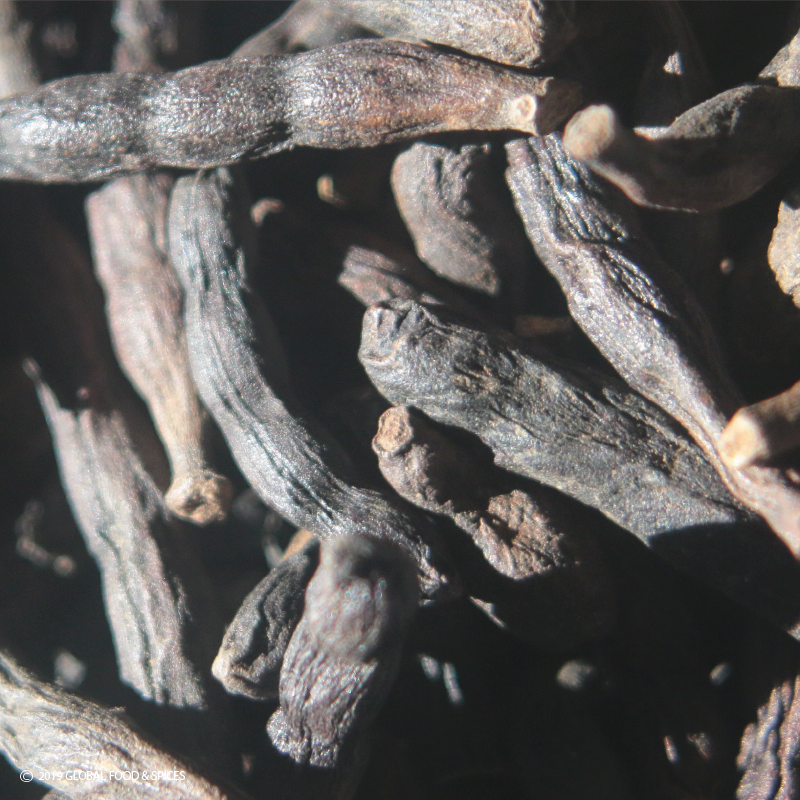
Selim pepper, also known as selim kani or kani pepper, is the dried fruit of a tree related to the custard apple. Therefore, it is not a 'true pepper'. The taste is described as a marriage between cubeb pepper and nutmeg.
This (pseudo)pepper from Senegal is a member of the soursop family (Annonaceae). Selimpepper was also found in Europe until the large-scale import of black pepper in the 16th century, a common pepper known as negro pepper or Moorish pepper.
The tree on which the pepper grows is the Xylopia, a tropical tree that easily reaches a height of 20 meters. Xylopia means 'bitter wood', a bitterness that ensures the wood of the tree is termite-free and excellent for use as construction timber. You can also taste this bitterness in the
The afterNatural habitat: Grains of Selim trees thrive on fertile, well-drained soil in tropical forest areas. They require a lot of rain, usually between 1,200 mm and 1,600 mm per year, and are often found along riverbanks or in moist areas with high humidity. The selim trees are not fertilized or watered.
Harvesting takes place twice a year. The ripe fruits are often picked from the trees by hand. Immediately after harvesting, the fruits, stem and all, are laid out in the sun to dry. Only after drying is the stem removed from the fruit, which by then has turned dark brown. Each fruit contains five to eight seeds, which outwardly bear some resemblance to kidney beans.
Selim pepper, also known as Guinea pepper, has many, many names on the African continent, including uda hwentia or kimba pepper. In African and especially Nigerian cuisine, not only the seed but also the whole dried fruit is used. This is tied together with other spices in a 'bouquet garni' that is used in stews. The capsule smells of rosewood and also has lavender and coriander aromas.
The cultivation is a combination of traditional farming methods and natural growth. Attempts to cultivate it on a large scale have so far proven largely unsuccessful.
Scent and taste
The seeds contain volatile oils that provide the aromas of eucalyptus and nutmeg, which are released as soon as the seeds are ground. As mentioned, they have a slightly bitter taste. Selimp pepper is (very) rich in vitamin A.
- sabinene, responsible for the woody, camphor-like flavor of black pepper and nutmeg, among others
- α- and β-pinene, woody pine scent, as in cumin, pine (pine cone), juniper and hemp,
- β-phellandrene, mint, turpentine,
- 1,8-cineol, eucalyptol, the refreshing taste of mint
- terpine-4-ol, woody and peppery aroma
- geranyl acetate, responsible for the rose and lavender scent.
Usage
The pod-shaped fruit is very fibrous and is therefore not eaten itself. To 'free' the seeds and thereby only the least bitter part of the
Selim is used in (African) stews, among other things, and in roasted form for the preparation of Touba coffee.Selim is delicious in combination with goat meat!
Recipes):

Features:
- 100% berries of the Xylopia aethiopica
- origin: Senegal
Assortment
- available in glass (45 grams) and stand-up pouch (no test tubes)
- Larger quantities on request
Gift packaging
- The jar is available in tasteful gift packaging, consisting of a cube box filled with black tissue paper.
- For an overview of our gift packaging, please refer to the gift packaging section.
General advice
- Separate the seeds and the 'pods', and tie the latter together to easily remove them at the end of preparation.
Save:
- save your selim pepper in sealed packaging
- preferably store in a dark, dry and cool place
- batch DM590407 - best before May 2028 (05-2028)
- This expiration date is an indication.
Batch number
The batch number helps us trace which supply an item originated from. It is listed on the packing slip and the invoice.
Expiration date - storage advice
Expiration date - storage advice
The stated expiration date is an indication of the shelf life. Because many factors can influence the maintenance of the quality of a spice, you may have to take it sooner or enjoy it for a long time. Trust your senses of smell and taste.
Store spices in a closed container, preferably in a dark, dry and cool place
The batch number that we mention with each product helps us to trace from which supply an item comes.
Dimensions
Dimensions
Onze ziplock-zakken zijn gemaakt van plastics, zo mogelijk van één soort plastic. Biedt ze aan bij het plastic-afval. De potjes zijn een levenlang te gebruiken om uw specerijen of spulletjes in te bewaren. Doet u het glas toch weg, doe het dan in de glasbak.
Allergen information
Allergen information
This product contains no allergens.
Our packaging
Our packaging
We supply this product in a practical twist-off jar (clear glass) of 128ml and in bags. For smaller quantities we use laminated stand-up pouches with ziplock closure, made of PET and PE. The bag is approximately 90% recyclable and is collected with the plastic.
Our two-layer bio-based kraft bags consist of a layer of 60 gram kraft paper and 80 micron PLA plastic. This bag is 100% biodegradable and can be placed in the green bin.
We use our aluminum bags for packaging larger quantities. These three-layer bags are made of laminated 12 micron PET, 7 micron aluminum and 60 micron PE. This combination makes it not possible to fully recycle the bags. These bags must be presented with the other waste.
The test tubes are made of PS plastic, have a diameter of 16 millimeters and a length of 100 millimeters. The caps are made of LDPE.