Collection: Cameroon
Our first introduction to Cameroon was with Cameroonian pepper from Penja. We thought it was the real Penja pepper, but appearances are deceiving. Not all pepper from Cameroon is Penja pepper. Not anymore, at least. Pepper cultivation in Cameroon began at the end of the 1980s. Cameroon had no pepper cultivation yet. In Penja, first one farmer, and later others as well, made the switch from crops such as coffee or cocoa, and bananas for pepper. A pepper that, as it later turned out, was distinctive.
With government support and the input of foreign, French know-how, Penja pepper became a resounding success and, more than that, obtained European protection in 1991. A unique achievement at the time. Since then, only certified farmers in Penja have been permitted to call pepper from the region Penja pepper. Additionally, companies benefit from the name and reputation of the authentic Penja to cultivate pepper outside of the certification process. That is simply how it works.
In 2016, we became better acquainted with Penja pepper, and with people who offered this pepper and other spices from Cameroon and surrounding countries. Not to mention the unique flavors of the region. Step by step, we began to discover Cameroonian cuisine and the spices that make it so special. Quite tricky, because with which reference?
We decided to expand our predominantly Asia-oriented shop with a small selection of West African spices with the potential to find a place in Western cuisine. These include African Szechuan (igi-ata) and garlic nutmeg, calabash nutmeg, alligator pepper (mbongô), grains of paradise, African jujube, and African cubeb. Give them a taste, and understand our enthusiasm for a flavor profile that most Westerners do not (re)cognize!
Latest news: We count ourselves fortunate to have finally managed to establish a contact who can supply us with timiz, also known as Cape long pepper. The small 'family' of long

-
 Offer
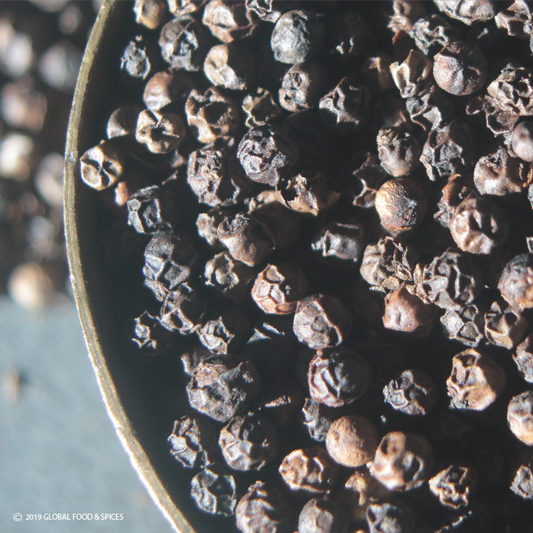
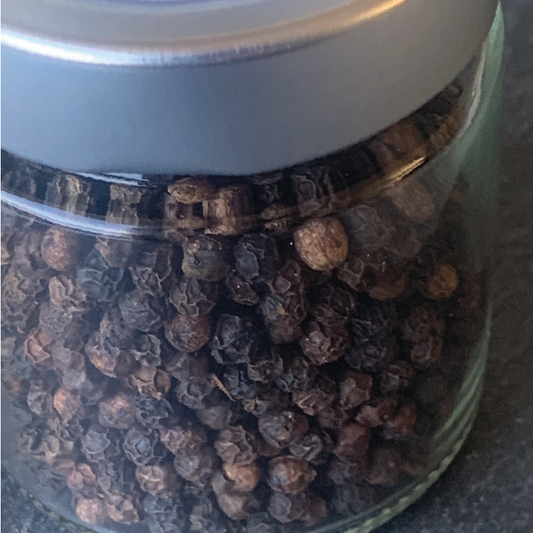
OfferBlack Penja Pepper
Normal price From €4,55 EURNormal priceUnit price €135,00 per kg€43,80 EUROffer price From €4,55 EUROffer -
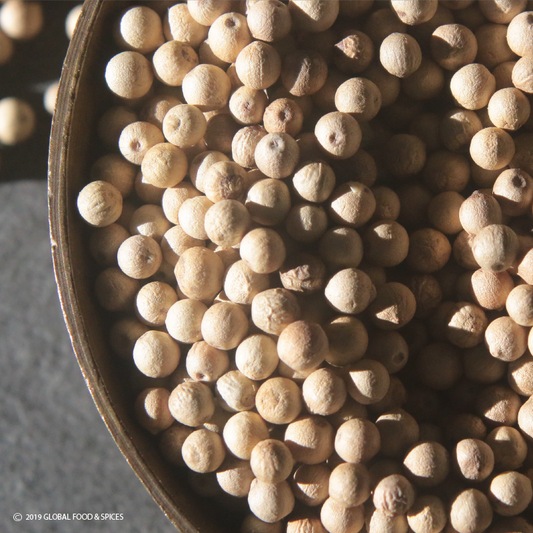
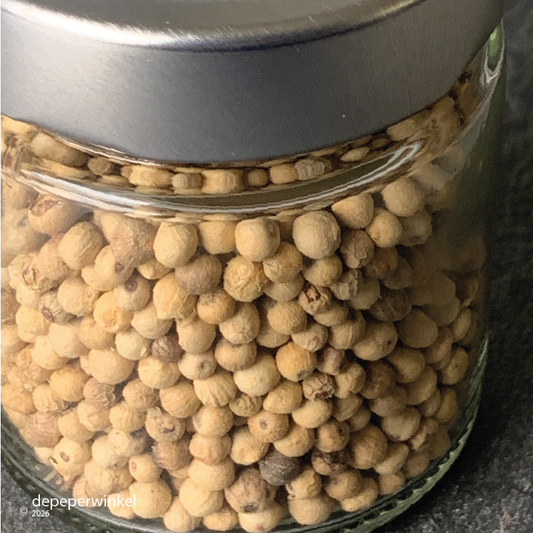
White Penja pepper PGI
Normal price From €4,70 EURNormal priceUnit price €139,17 per kg -
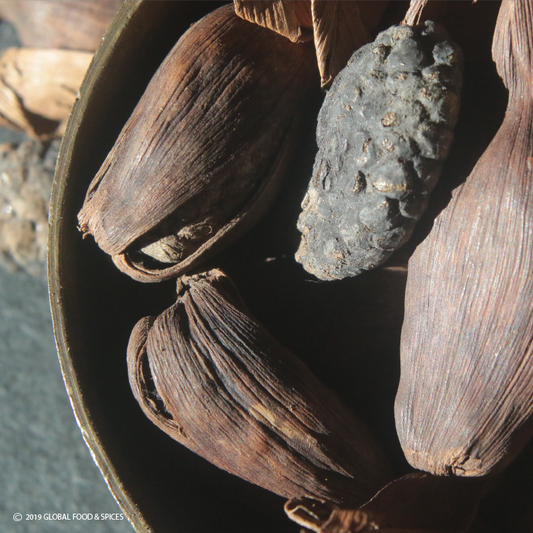
Mbongo (pods)
Normal price From €5,25 EURNormal priceUnit price €165,56 per kg -
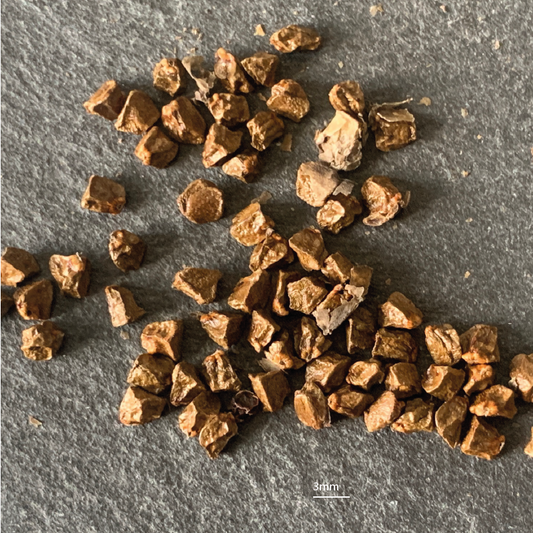
Didim - peace seed (pods)
Normal price From €4,15 EURNormal priceUnit price €138,33 per kg -
Didim - peace seed (seeds)
Normal price From €5,85 EURNormal priceUnit price per -
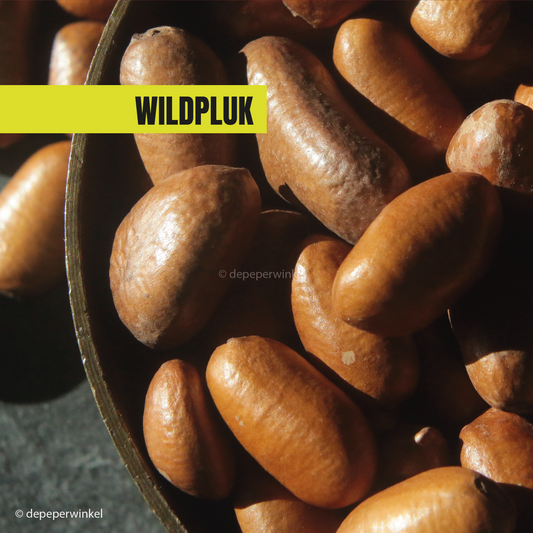
 Not available - see explanation
Ehuru (gourdnutmeg) - not peeled
Normal price From €3,95 EURNormal priceUnit price per