depeperwinkel
Peruvian pink pepper
Peruvian pink pepper
Temporarily out of stock
Unable to load availability for pickup
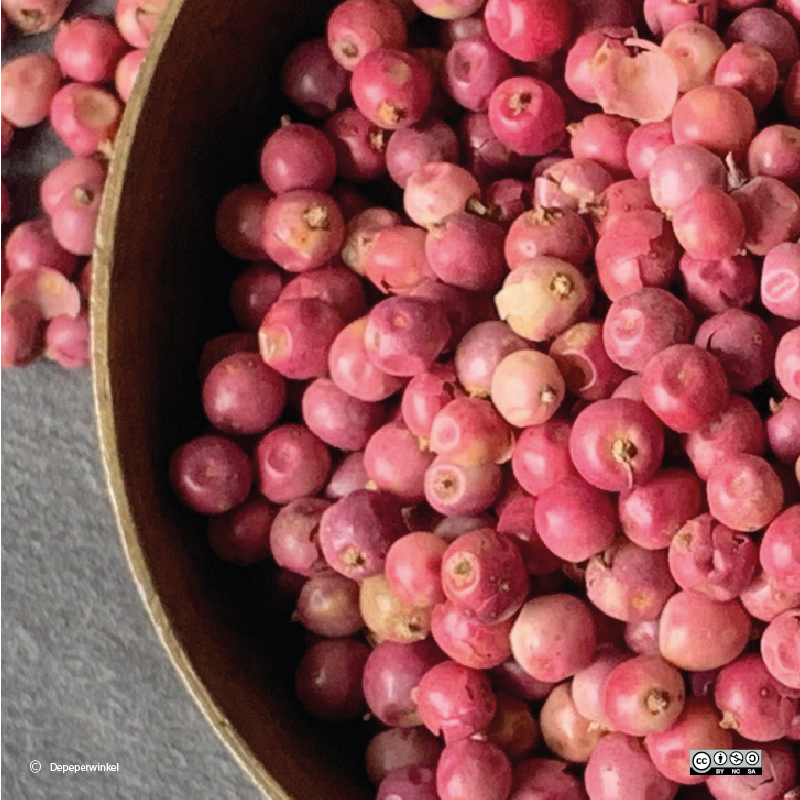
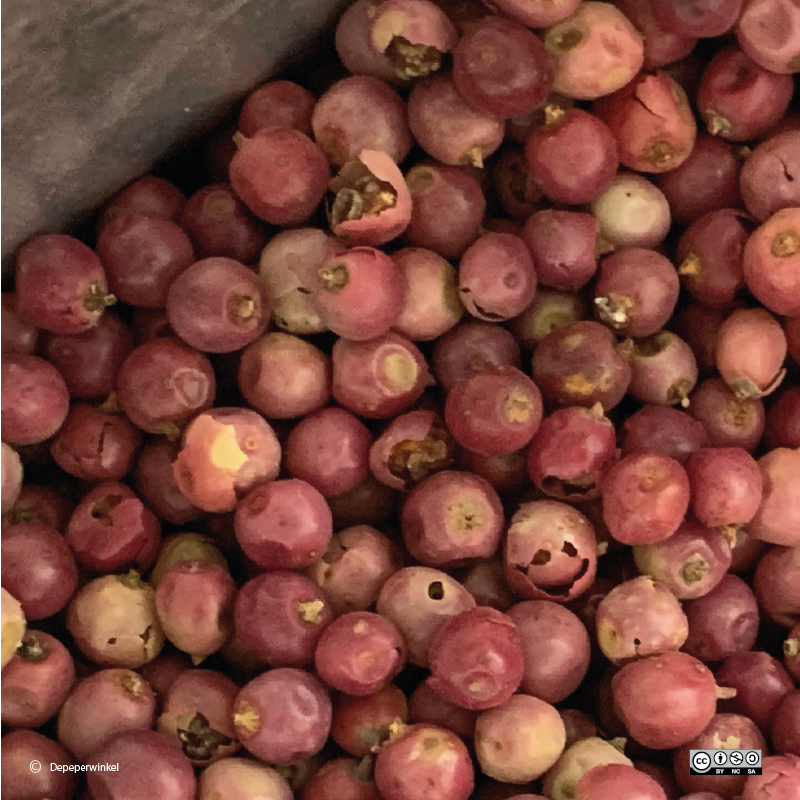
The berries of the Peruvian pepper tree are known as 'pink pepper', just like those of the more famous Brazilian pepper tree. In terms of taste, this pink pepper distinguishes itself with a subtle tartness. The berry is pale pink, in contrast to the pinkish-red blushing Brazilian berry.
Stock item. Sold out - uncertain if and when new arrival
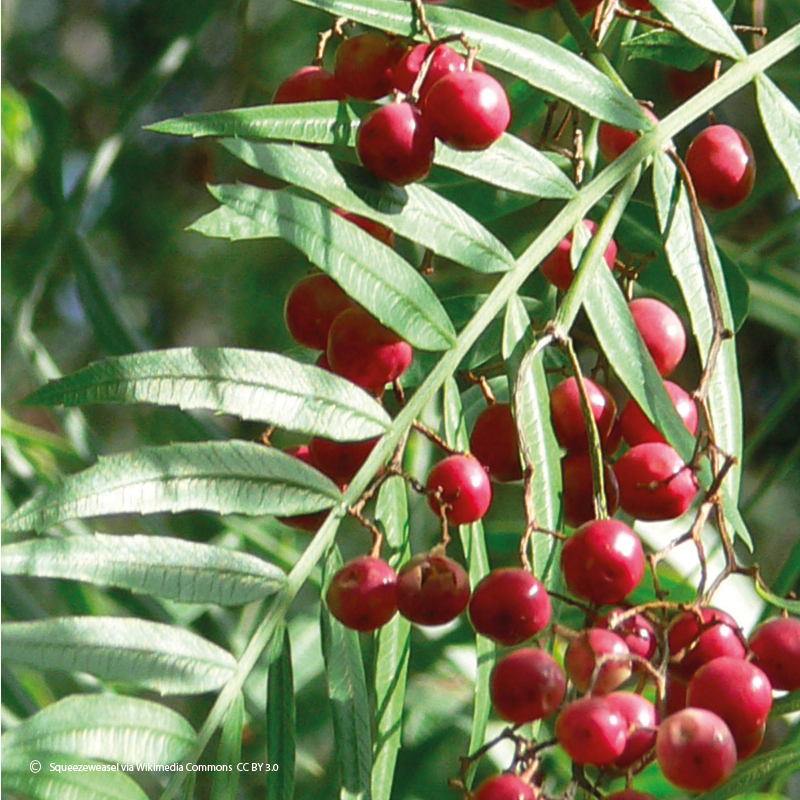
Pink pepper is not a pepper, as it is not part of the pepper family (Piperaceae), but of the sumac family, a not-so-well-known family, yet with very well-known plant species such as the cashew (nut), the pistachio (nut), sumac (spice), mango, and Greek mastic. The Peruvian pepper tree (Schinus molle) originates from South America, just like the Brazilian pepper tree (Schinus terebinthifolius). Both are used as spices.
Our Peruvian Pink pepper comes from Colombia. Most Brazilian pink pepper
Pink berries are also known 'Air-dried', they then acquire the same wrinkled appearance as black pepper. Preferably, they are freeze-dried. Freeze-drying preserves the smooth shape of the berry, and the subtle flavor profile and color are better retained.
Scent and taste
Pink peppercorn is not a pepper, as it is not part of the pepper family (Piperaceae), but of the sumac family, a not-so-well-known family, but one with very well-known plant species such as the cashew (nut), the pistachio (nut), sumac (spice), mango, and Greek mastic.
Pink peppercorn can hardly be called spicy compared to black pepper, although it can this Peruvian berries taste quite peppery. That It comes from the phenol carvacrol, an antioxidant that occurs not only in pink pepper but in much larger quantities in herbs such as savory, thyme, and oregano. You can very clearly taste juniper in the berries (also somewhat sweet), which is why the berries are also called red juniper berries. to mention.
Peruvian pink pepper contains the monoterpenes:
- α- and β-pinene, woody pine scent, as in cumin, pine cone, juniper, and hemp
- α- and β-phellandrene, pleasant mint and citrus flavor, also found in allspice, and
- spathulenol, earthy, also found in oregano and
selim pepper
Usage
Peruvian pink peppercorns have warm, woody, and spicy notes that are incredibly appealing. The berries combine excellently with cloves, cardamom, lemongrass, cinnamon, savory, oregano, tonka beans, vanilla, allspice, black pepper, and chili pepper.
Delicious when pickled in vinegar.
Also try this pink pepper with fruits: peach, orange, lemon, grapefruit, melon, mango, or papaya. And chocolate, in French tartines (mango) and bread, and even in desserts, such as by sprinkling some over pêches melba or incorporating it into peach marmalade.
Fable
On the internet, the Peruvian pepperberry is frequently labeled 'poisonous'. Just like the Brazilian pepperberry, the Peruvian berry can trigger allergic reactions in people with a nut allergy, particularly to cashew nuts, to which the berry is closely related. However, the berry is certainly not poisonous.
As a botanical
Just an example: the Phizz Star: 50ml Star of Bombay, 15ml Bottlegreen Plump raspberry cordial, 15ml pink grapefruit juice and 30ml prosecco, finished with pink peppercorns finely crushed between the fingers. Try an infusion of pink peppercorns and red
Features:
- 100% berries from the Schinus molle
- origin: Putumayo Colombia
Assortment
- available in stand-up pouch (30 grams), glass and test tube (10 ml)
- Larger quantities on request
Gift packaging
- The jar is available in tasteful gift packaging, consisting of a cube box filled with black tissue paper.
- For an overview of our gift packaging, please refer to the section. gift packaging
Allergens
Strictly speaking, pink peppercorns are not allergenic. With plants from the same botanical family, it sometimes occurs cross-reactivity to, an allergic reaction that is similar to that of the allergenic family member. Examples of this are apricot kernels (almonds) and pink peppercorns (cashews). If you are sensitive to cashews – or pistachios – then avoid pink peppercorns!
General advice
- Pink peppercorns can be eaten raw and used in hot dishes.
- Use the berries whole—also as a garnish—or grind them. Preferably do not do this with a
pepper grinder with a metal grinding mechanism. The skins are so thin and greasy that the grinding mechanism clogs quickly. - Also consider using only the skins instead of the whole berries.
Save:
- store your pink peppercorns in a closed package
- preferably store in a dark, dry and cool place
- best before June 2027 (06-2027)
- This expiration date is an indication.
Would you like to know how this pink pepper tastes?
You can also try a test tube. The tube contains enough pepper to grasp the essence of the flavor.
Batch number
The batch number helps us trace which supply an item originated from. It is listed on the packing slip and the invoice.
Peruvian pink pepper is a stock item
We have a very limited stock of Peruvian pink peppercorns, which is why larger quantities are not available. For the time being.
Expiration date - storage advice
Expiration date - storage advice
The stated expiration date is an indication of the shelf life. Because many factors can influence the maintenance of the quality of a spice, you may have to take it sooner or enjoy it for a long time. Trust your senses of smell and taste.
Store spices in a closed container, preferably in a dark, dry and cool place
The batch number that we mention with each product helps us to trace from which supply an item comes.
Dimensions
Dimensions
Onze ziplock-zakken zijn gemaakt van plastics, zo mogelijk van één soort plastic. Biedt ze aan bij het plastic-afval. De potjes zijn een levenlang te gebruiken om uw specerijen of spulletjes in te bewaren. Doet u het glas toch weg, doe het dan in de glasbak.
Allergen information
Allergen information
This product contains no allergens.
Our packaging
Our packaging
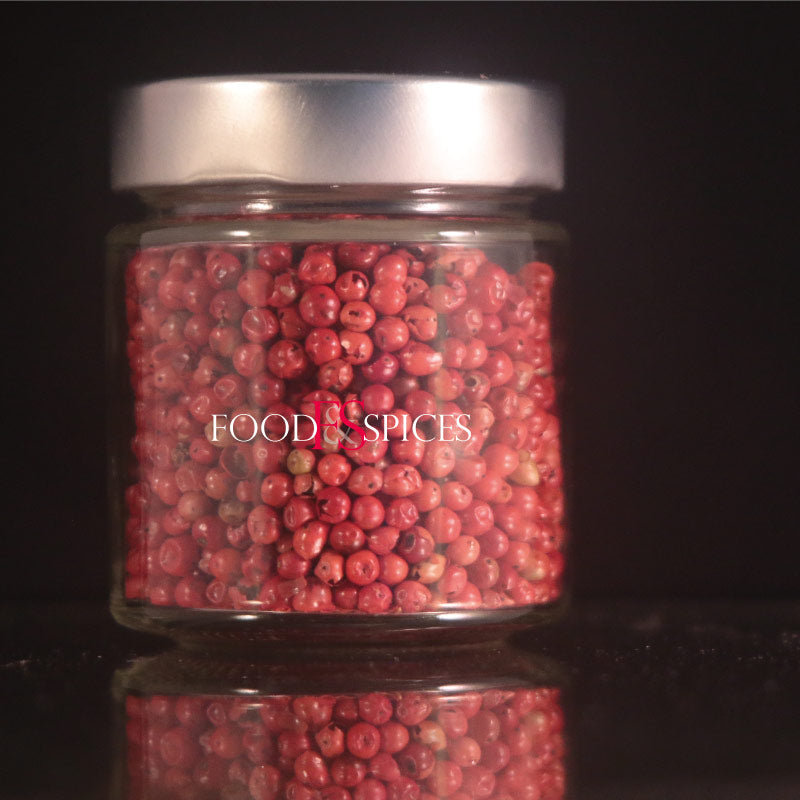
We supply this product in a practical twist-off jar (clear glass) of 128ml and in bags. For smaller quantities we use laminated stand-up pouches with ziplock closure, made of PET and PE. The bag is approximately 90% recyclable and is collected with the plastic.
Our two-layer bio-based kraft bags consist of a layer of 60 gram kraft paper and 80 micron PLA plastic. This bag is 100% biodegradable and can be placed in the green bin.
We use our aluminum bags for packaging larger quantities. These three-layer bags are made of laminated 12 micron PET, 7 micron aluminum and 60 micron PE. This combination makes it not possible to fully recycle the bags. These bags must be presented with the other waste.
The test tubes are made of PS plastic, have a diameter of 16 millimeters and a length of 100 millimeters. The caps are made of LDPE.
Share


