depeperwinkel
Paradise grain
Paradise grain
In stock
Unable to load availability for pickup
Grain of paradise is a sharp
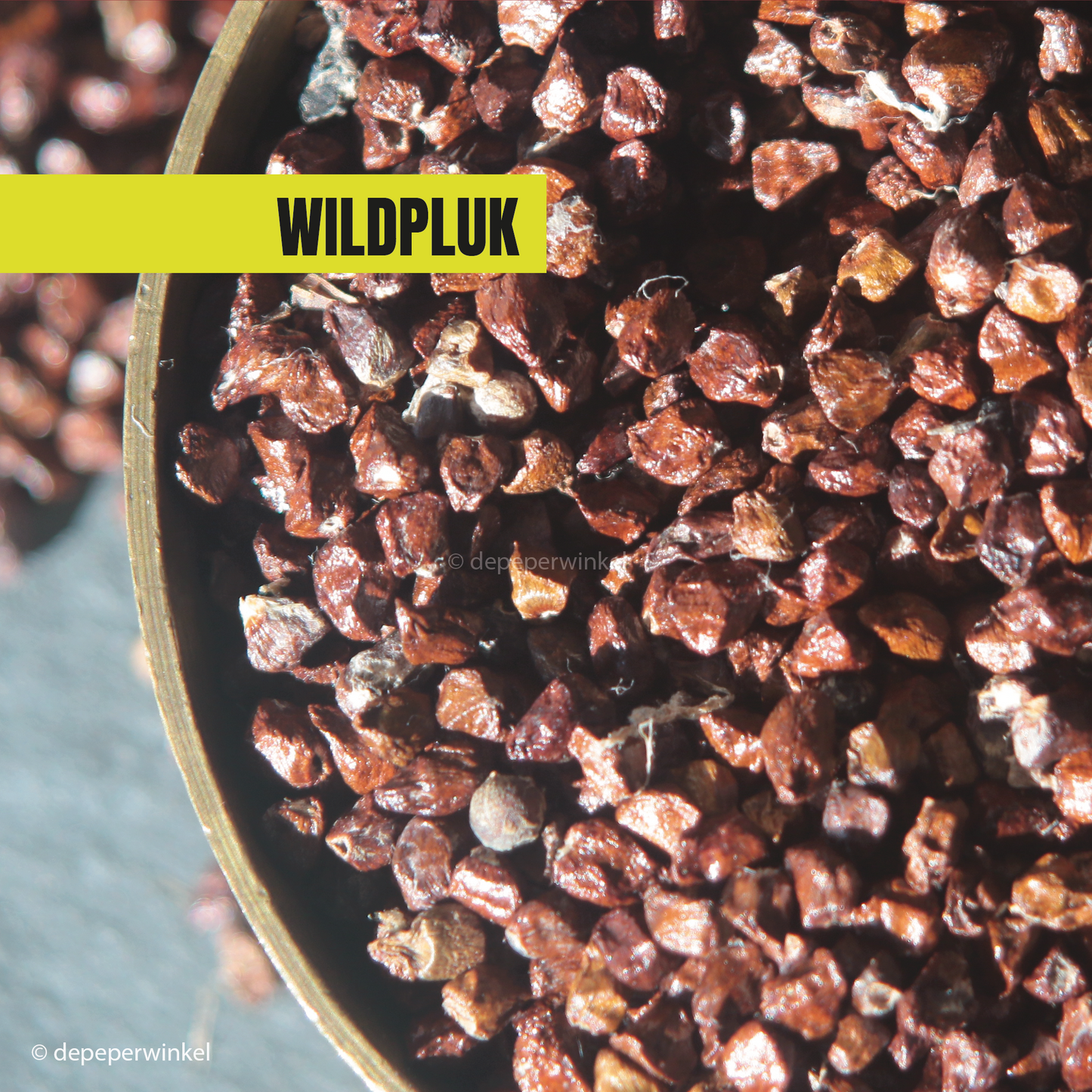
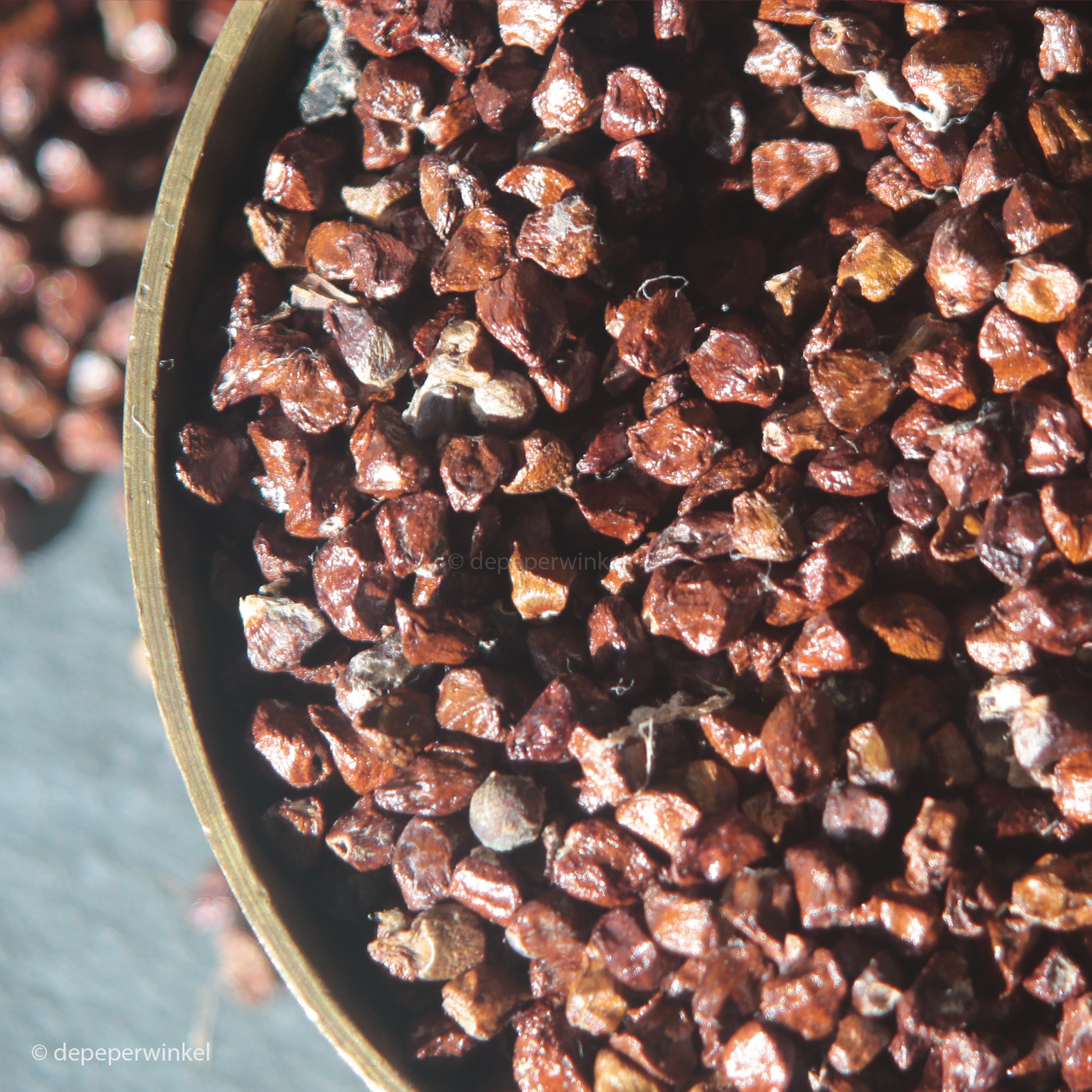
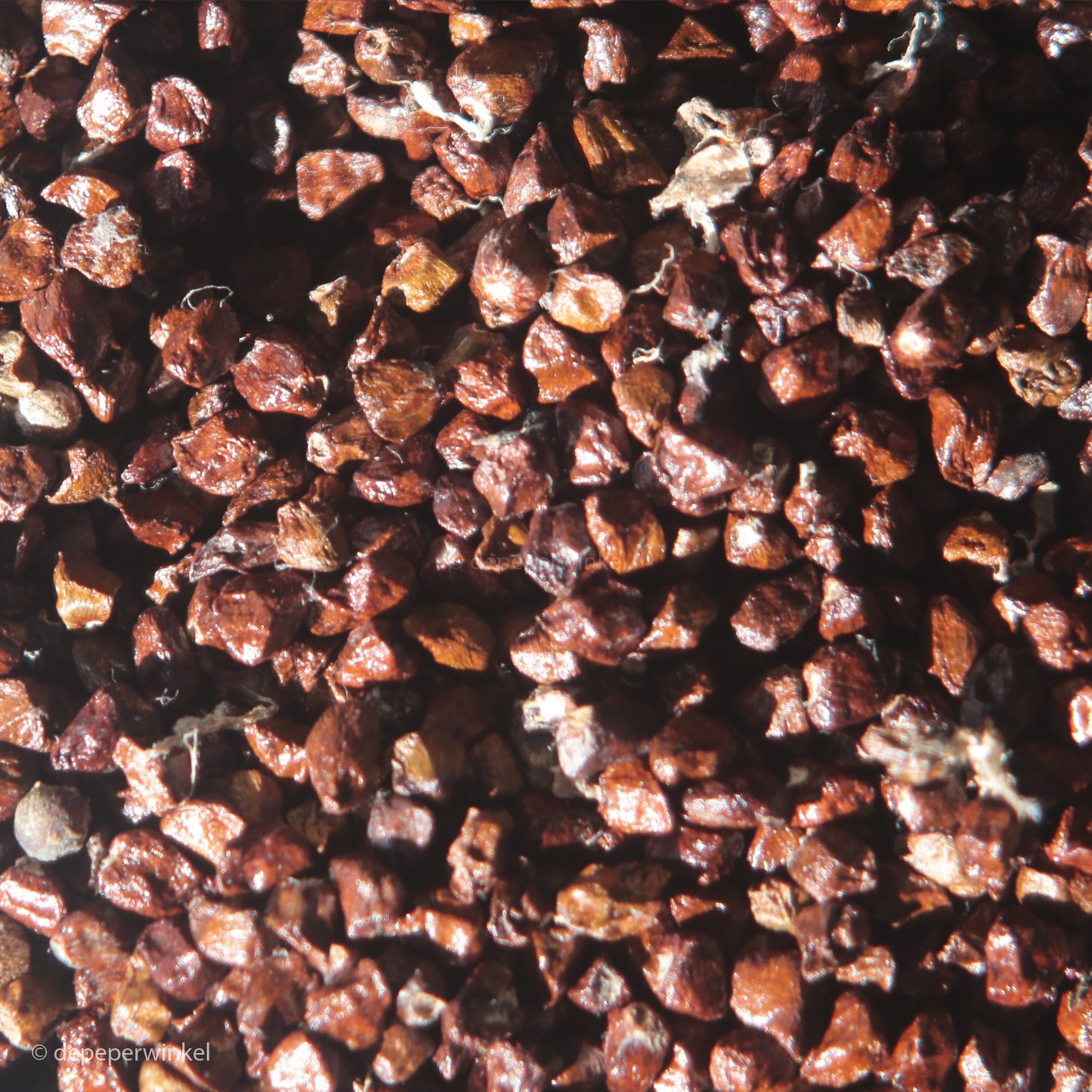
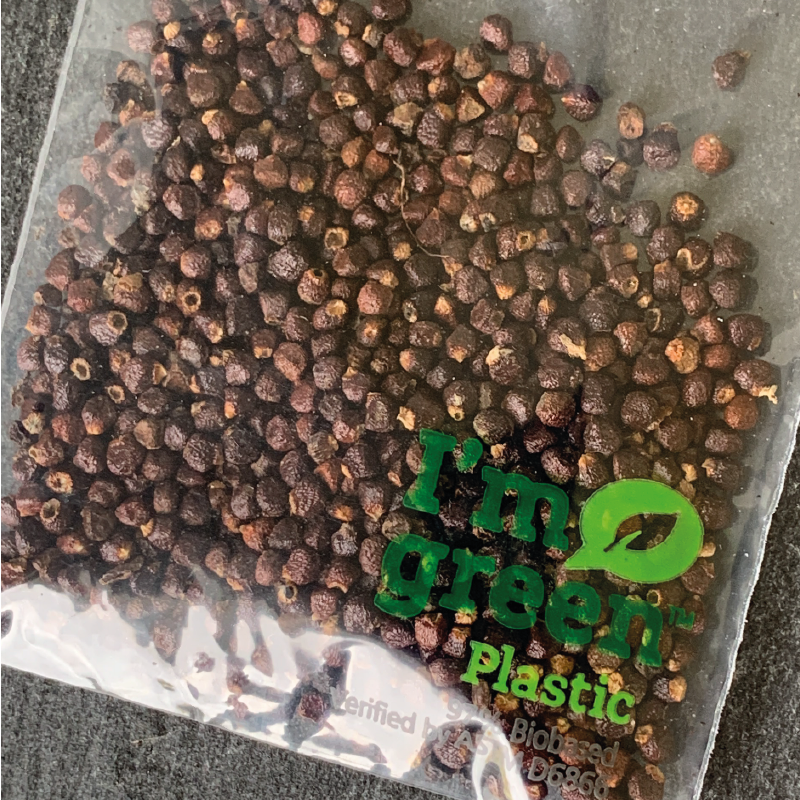
We supply grains of paradise as seed pods – for you to hull yourself – and in hulled form, the so-called grains (seeds).
This (pseudo)pepper from Cameroon (sometimes we source our grains of paradise from Ghana) is a member of the ginger family (Zingiberaceae), and is also known by names such as Guinea pepper and malaguetta pepper. It has been an important spice in West African and Surinamese cuisine for centuries.
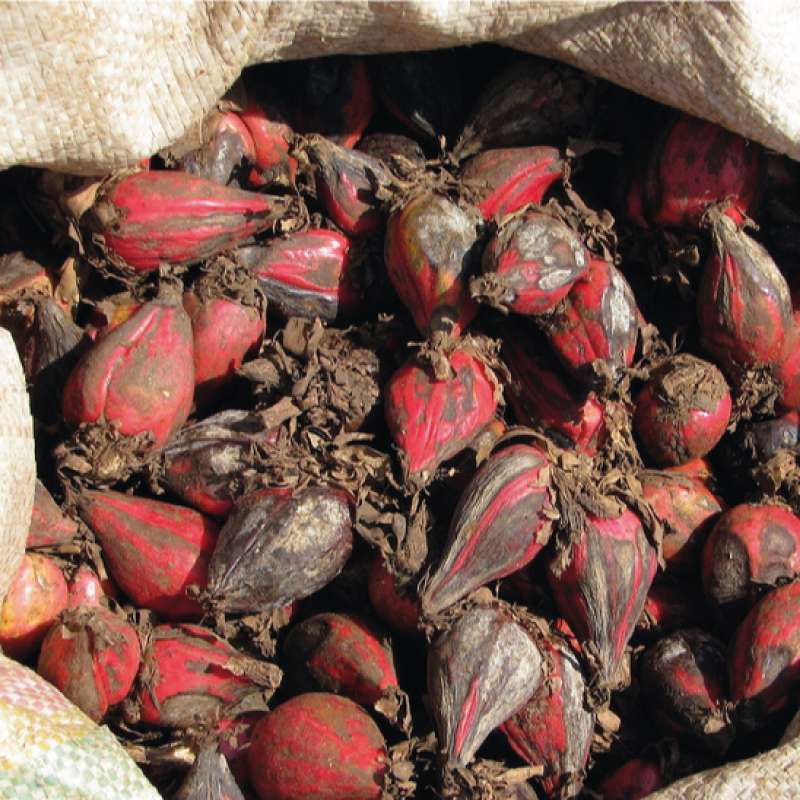
Like all gingers, the plant grows in a warm, humid environment and prefers some shade. The rhizome grows just below the surface of the ground. The plant reaches a height of about 2 meters and has elongated, pointed leaves, like bamboo. Trumpet-like flowers form close to the ground; they appear to emerge directly from the soil but are supported by stalks. They are 15 cm long and light purple, and soon fall off to make way for large reddish-brown 'pods' (10 cm). These contain reddish-brown seeds in a jelly-like fluid, the grains of paradise.
It takes three years for sown plants to yield a usable harvest. From then on, harvesting can take place for four consecutive years. The pods are picked when ripe. A modest portion is sold fresh in West Africa, while the lion's share is laid out in the sun to dry.
Unique. It is not always possible to obtain this, but the grain of paradise we are currently supplying is not cultivated but sourced from wild harvesting!
Grains of paradise have a stronger and sharper taste than regular pepper due to the ketone paradol, an antioxidant found exclusively in these.
Grains of paradise are closely related to other African pepper plants, Aframomum danielli, whose seeds are called mbongo or alligator pepper, and the very rare Aframomum angustifolium, the Madagascar cardamom. Grains of paradise are rarely sold unhulled; as a rule, only the loose seeds are available, including from us.
Scent and taste
Grains of paradise are a spice scented of forest and wet wood. It tastes sharp at first, followed by pleasant citrus notes and Notes of cinnamon, clove, and cardamom (a distant relative) come to the fore. The aftertaste is pleasant. Some of the essential oils determining the taste and aroma in grains of paradise are:
- [6]-paradol, the dominant pungent substance, is also found in ginger,
- [6]-gingerol, better known as the sharpness of ginger, converted upon drying into [6]-shoagol, twice as sharp as gingerol
- β-caryophyllene, sweet, spicy and woody
- linalyl acetate, responsible for a pleasant citrus, bergamot, and lavender scent,
- sabinene, responsible for the woody, camphor-like flavor of black pepper and nutmeg, among others
- β-myrcene, spicy aroma, with notes of fruit (mango, grape, peach) and mint,
- α-caryophyllene (humulene), hops, as in beer and cannabis
- d-limonene, responsible for the citrus aromas,
To reach the grains, must the skirt of the seed capsule be removed and the kernel of the fruit be flattened. This must be done carefully, as it is important to keep the seeds as intact as possible so that they can be separated from the rest of the contents of the capsule.
The grains are ground just like peppercorns.A good ras el hanout contains grains of paradise, which is called 'gouza sahraouia' in Morocco. In many versions of ras el hanout, it is nowadays replaced by Asian cubeb pepper or black pepper. Grains of paradise are making a comeback, not only in African cuisines, but also in beers, spirits, and European cuisine.
Grains of paradise are delicious with lamb dishes, courgette, potatoes, and aubergine.
Features:
- 100% seeds of the Aframomum meleguetta
- origin: Cameroon
Assortment
- available in glass (60 or 75 grams), stand-up pouch (various weight classes) and test tube (10ml)
- larger quantities than shown on request
Save
- batch number **220233
- best before November 2027 (11-2027)
Expiration date - storage advice
Expiration date - storage advice
The stated expiration date is an indication of the shelf life. Because many factors can influence the maintenance of the quality of a spice, you may have to take it sooner or enjoy it for a long time. Trust your senses of smell and taste.
Store spices in a closed container, preferably in a dark, dry and cool place
The batch number that we mention with each product helps us to trace from which supply an item comes.
Dimensions
Dimensions
Onze ziplock-zakken zijn gemaakt van plastics, zo mogelijk van één soort plastic. Biedt ze aan bij het plastic-afval. De potjes zijn een levenlang te gebruiken om uw specerijen of spulletjes in te bewaren. Doet u het glas toch weg, doe het dan in de glasbak.
Allergen information
Allergen information
This product contains no allergens.
Our packaging
Our packaging
We supply this product in a practical twist-off jar (clear glass) of 128ml and in bags. For smaller quantities we use laminated stand-up pouches with ziplock closure, made of PET and PE. The bag is approximately 90% recyclable and is collected with the plastic.
Our two-layer bio-based kraft bags consist of a layer of 60 gram kraft paper and 80 micron PLA plastic. This bag is 100% biodegradable and can be placed in the green bin.
We use our aluminum bags for packaging larger quantities. These three-layer bags are made of laminated 12 micron PET, 7 micron aluminum and 60 micron PE. This combination makes it not possible to fully recycle the bags. These bags must be presented with the other waste.
The test tubes are made of PS plastic, have a diameter of 16 millimeters and a length of 100 millimeters. The caps are made of LDPE.
Share