depeperwinkel
Cape long pepper (timiz)
Cape long pepper (timiz)
In stock
Unable to load availability for pickup
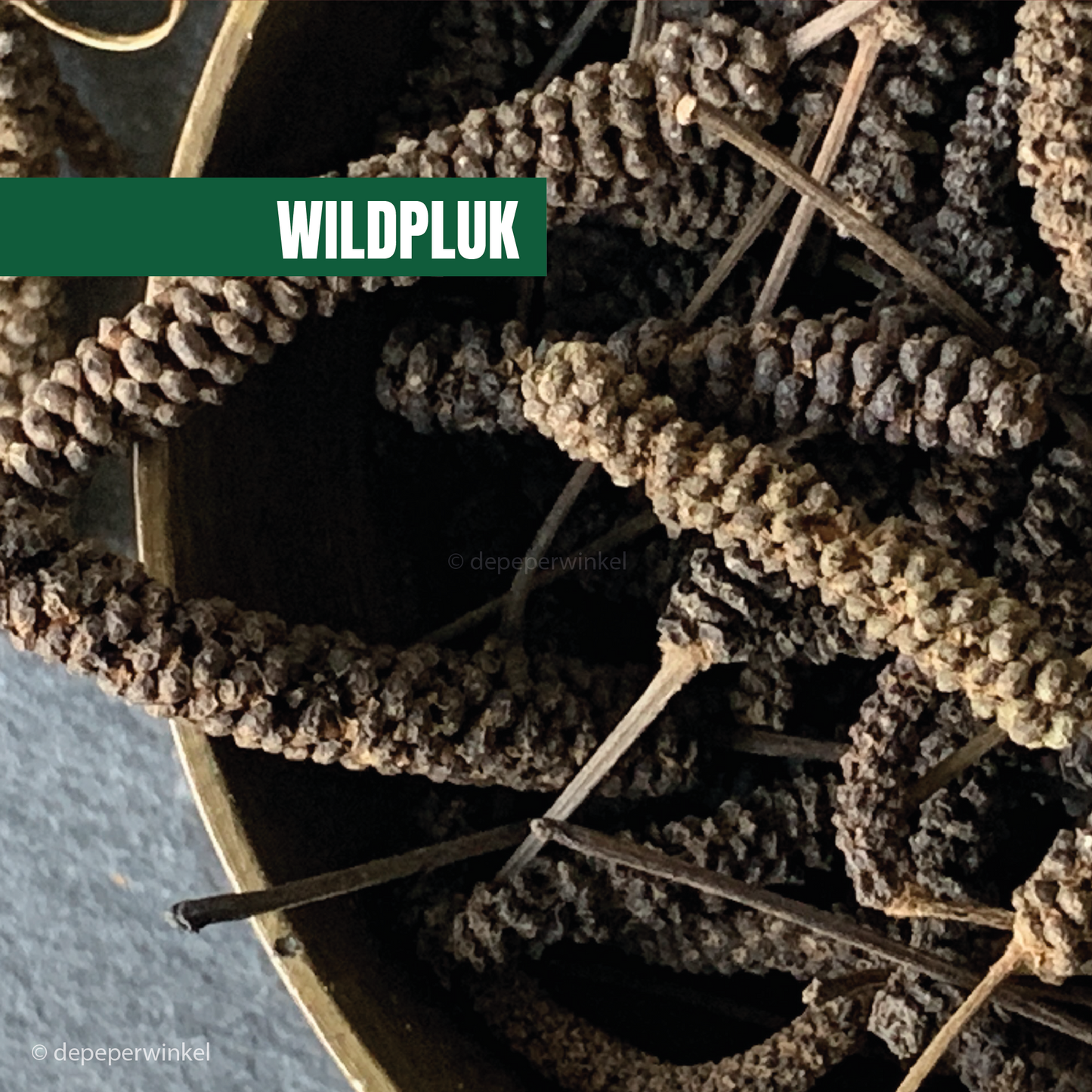
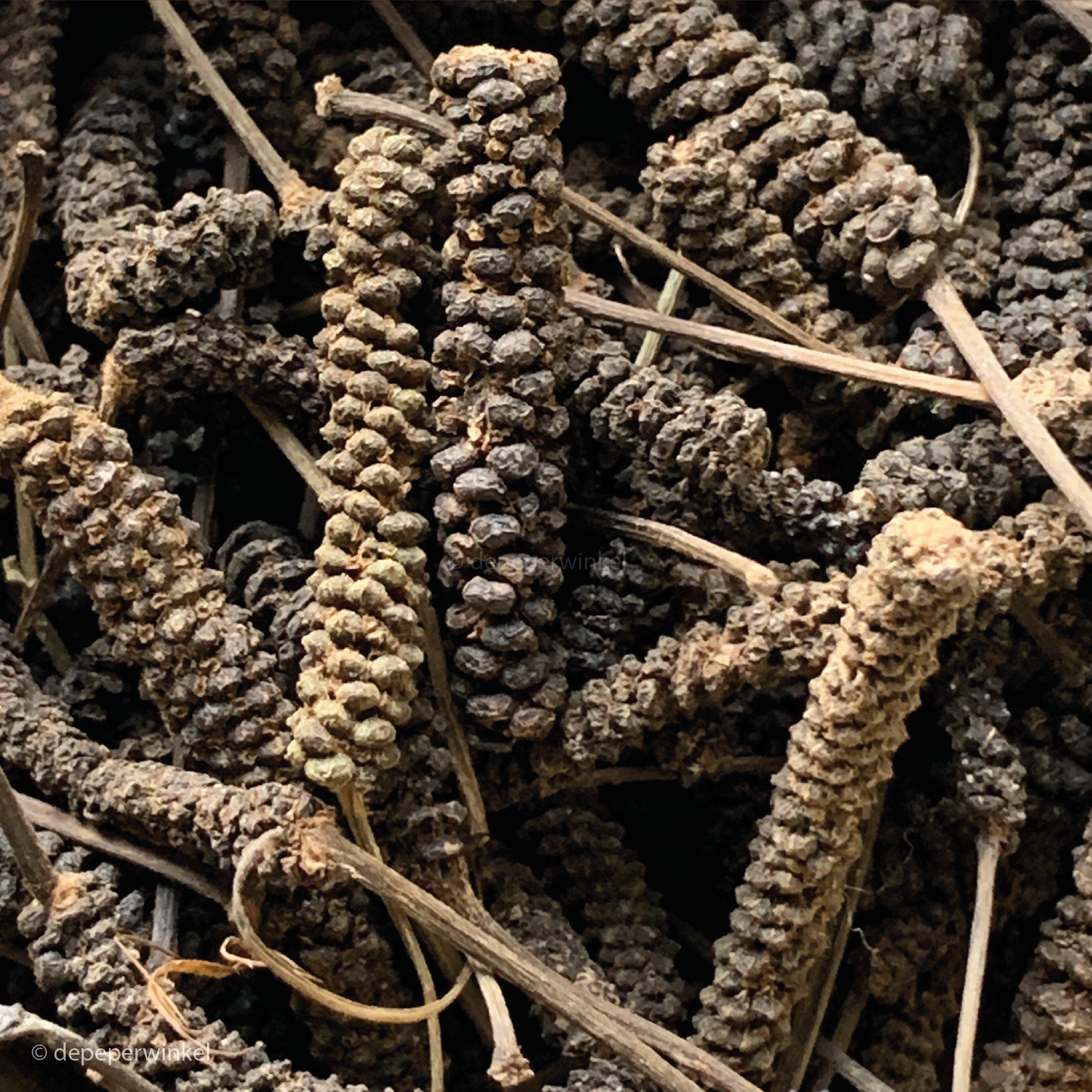
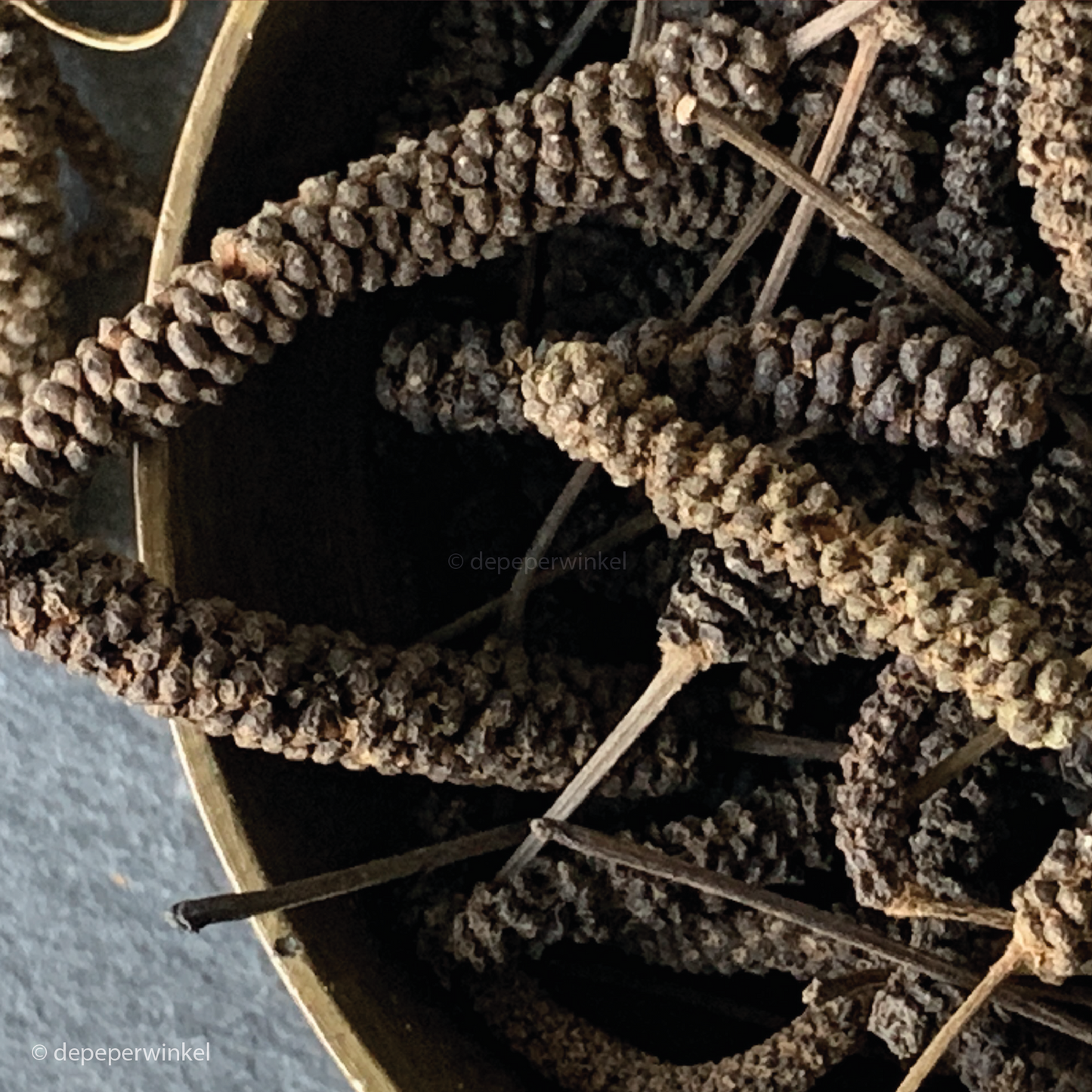
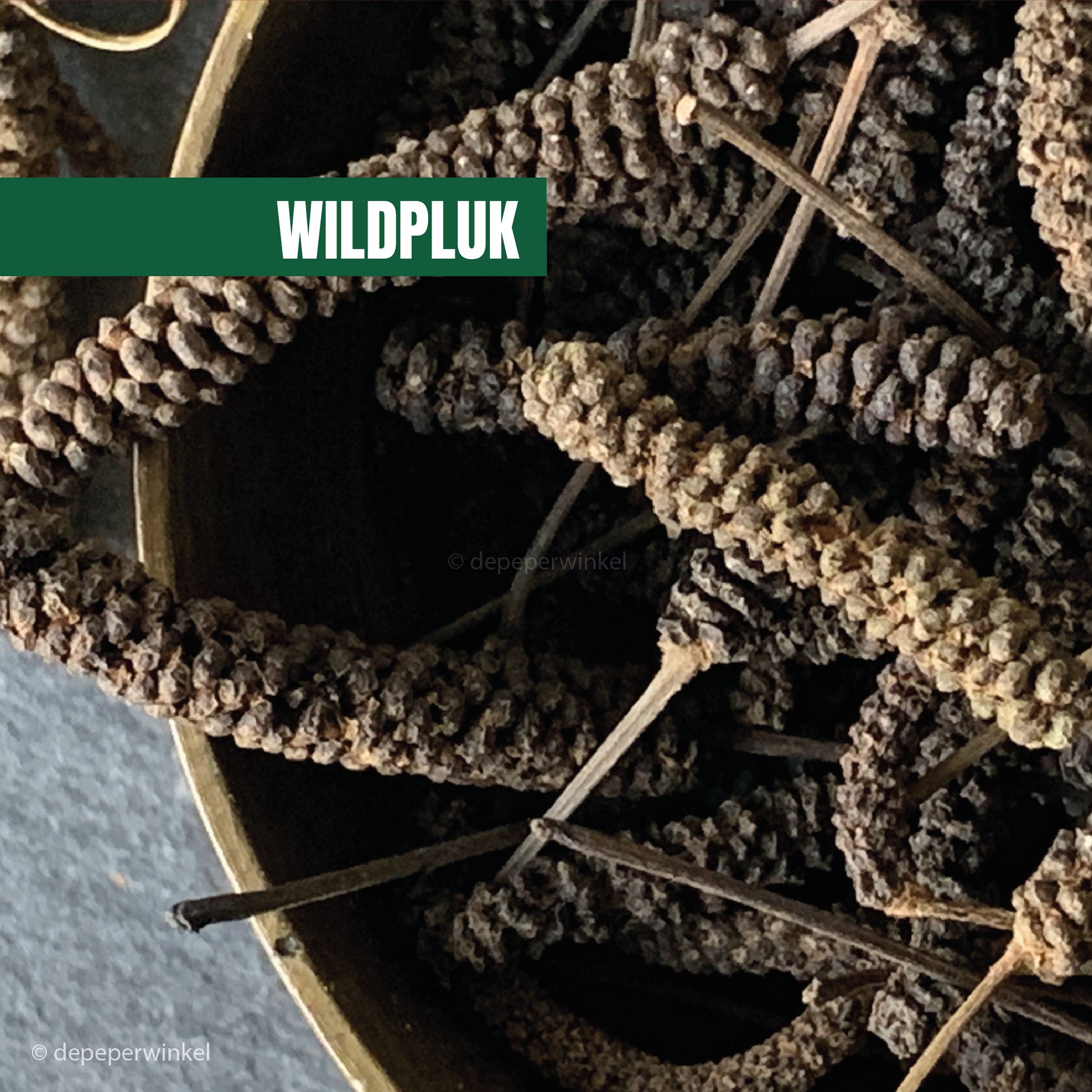
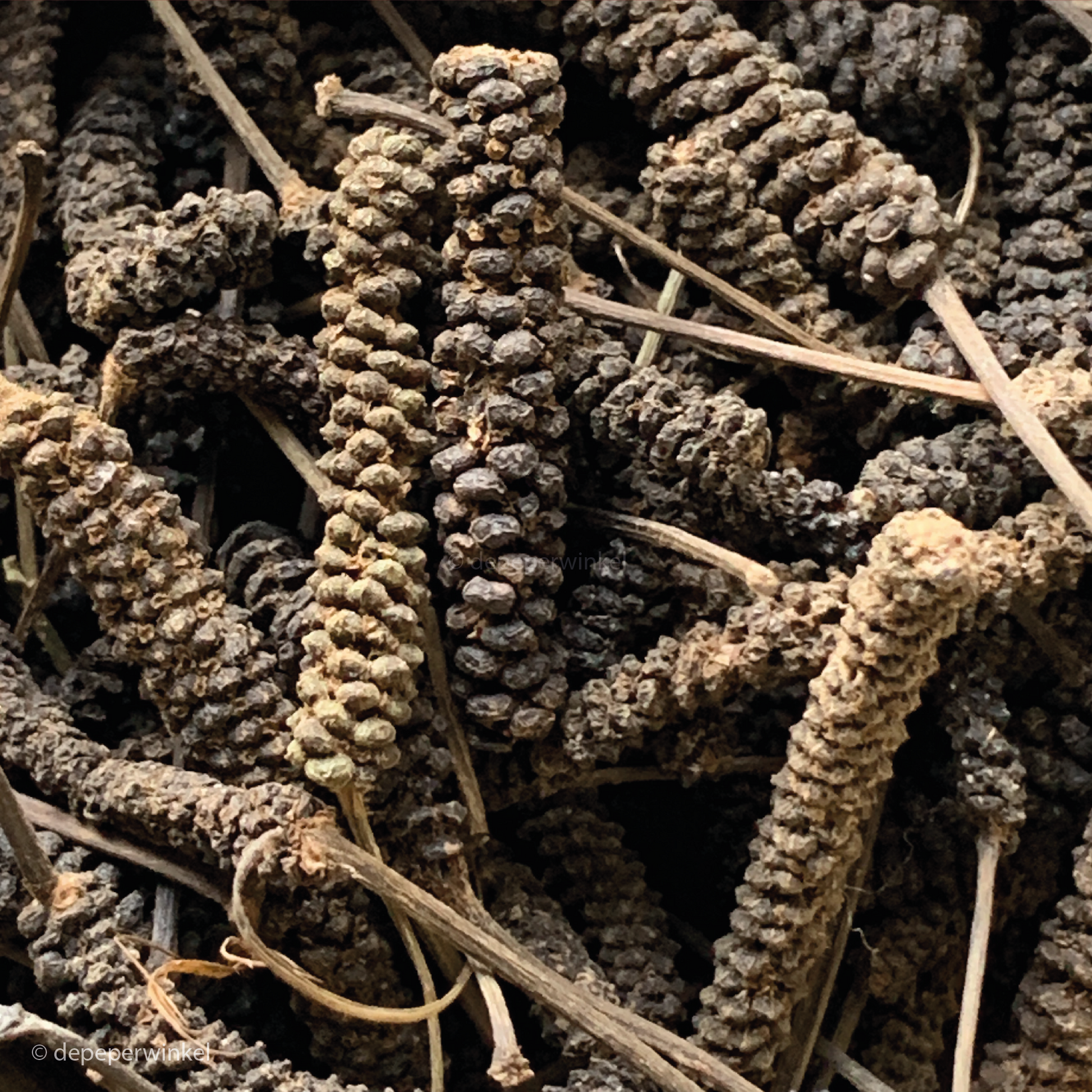
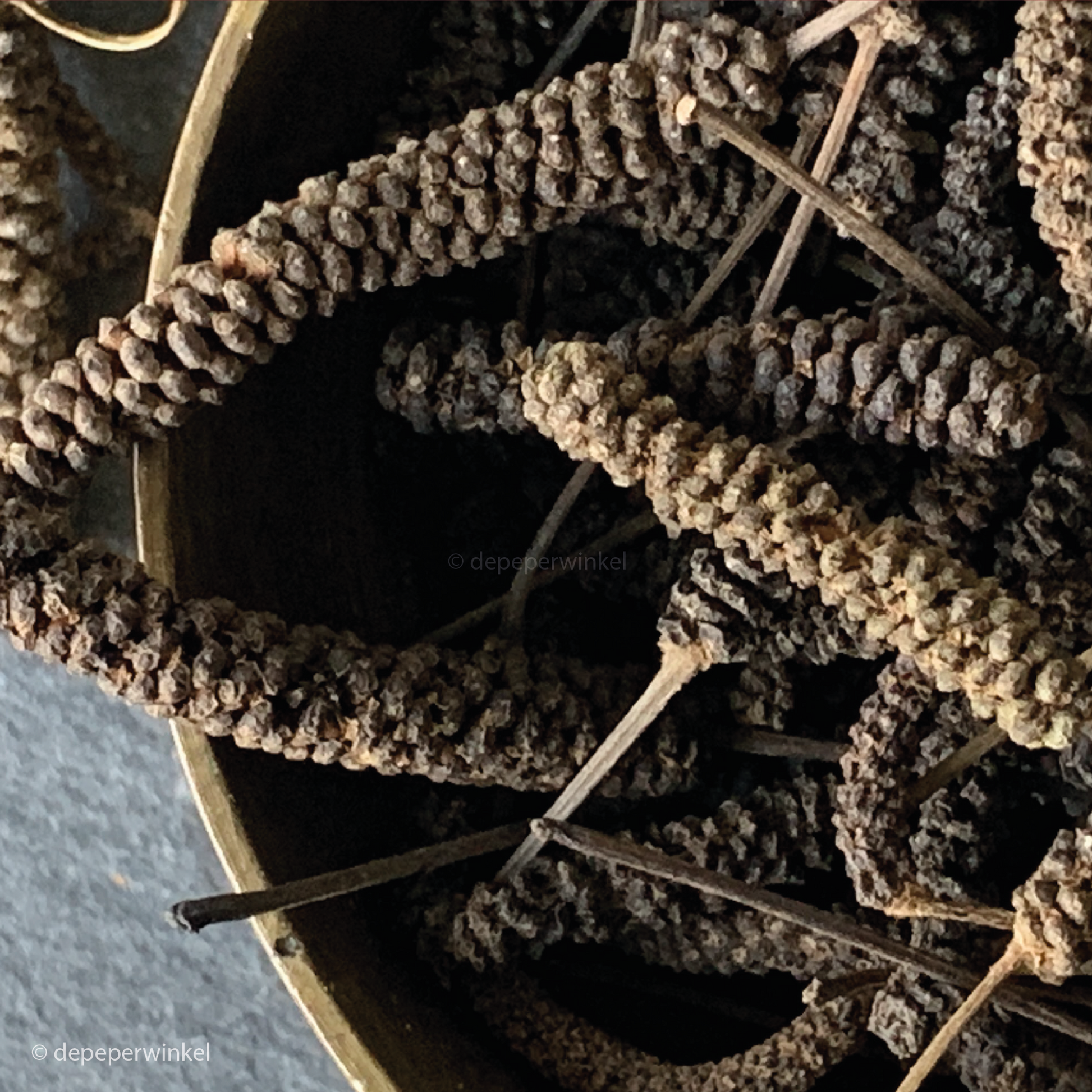
This Cape long (bush) pepper is a sharp, ripe pepper with a complex flavor. The catkins are much longer than the catkins of the Asian long pepper.
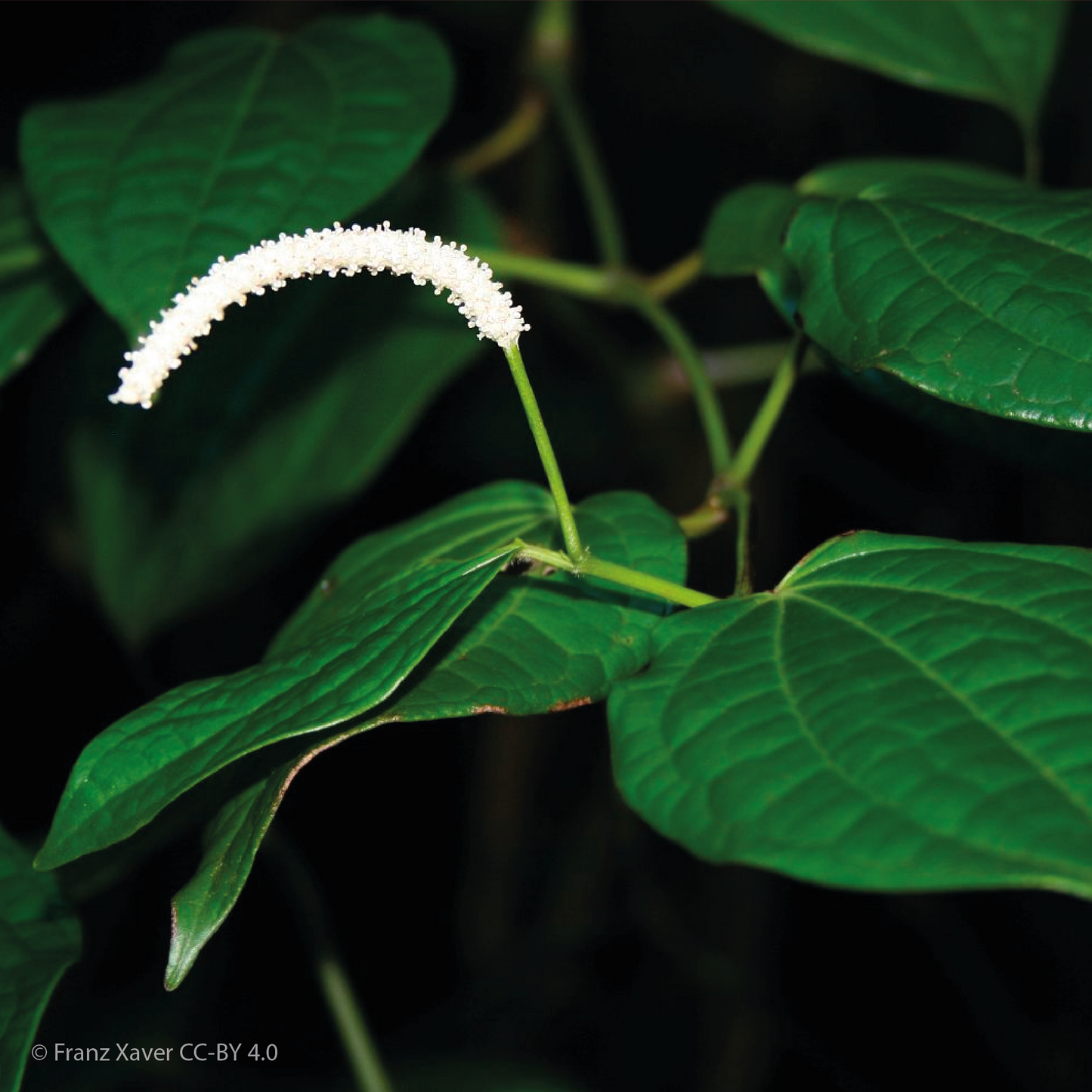
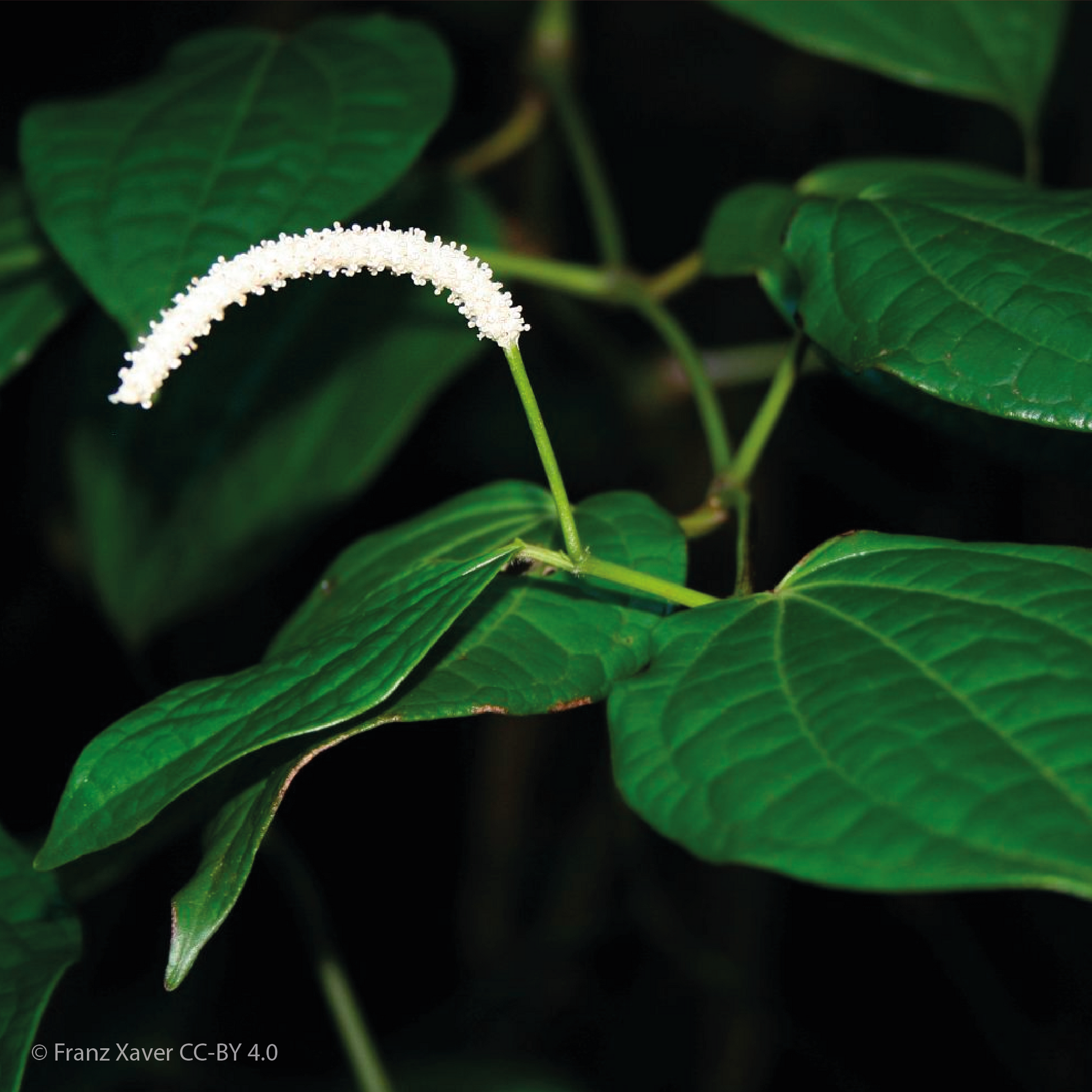
Cape long pepper (Piper capense) is a perennial, evergreen climbing plant with broad green leaves. In shrub form, it grows 2 to 4 meters tall. The inflorescence is spike-shaped. During the rainy season, the small flowers become hidden beneath the scales, under which the seeds are also trapped during the winter. They resemble willow catkins.
The catkins contain round to oval seeds with a diameter of 2 mm. They are harvested whole in January, with the stalk attached, and are traded both fresh and dried. To distinguish this long pepper from the imported Indian long pepper
The Cape long pepper grows in a zone from West Africa to Ethiopia, and is also found in South Africa, hence the botanical name Piper capense. In southern Africa, it blooms The plant flowers from August to February and bears fruit from October to June. It can even bloom all year round if sufficient water is available.
In Ethiopia, capense grows alongside the Piper. also the Piper umbellatum, originally from South America
Most timiz in Ethiopia comes from the Bonga rainforest. For the farmers in Bonga, it is almost impossible to grow the
Scent and taste
This long pepper is not very hot. The first impression you get of this pepper is that of a smoky, camphor-bitter pepper, a bit like the African cubeb or Ashanti pepper. Gradually, you also taste notes of tobacco and resin. These are the main flavor components:
- α and β-pine, woody pine scent, like cumin, juniper and hemp,
- sabinen, responsible for the woody, camphor-like flavor of black pepper, among others
- germacrene D, spicy woody
- α-cubeben, camphorous, like cubeb pepper,
- β-caryophyllene, sweet, spicy and woody
- safrole, sasafras aroma, also present in cinnamon and nutmeg,
Culinary use and preparation
Due to its intense flavor, the pepper is rarely used in Ethiopia. in itself, but in the spice blends berbere and mekelesha, a mixture of timiz, cinnamon, cloves, black pepper, nutmeg, black onion seed and black cardamom.
The simplest way to use long pepper is to cut or break the pepper into pieces and then mortar or grind these pieces, for example in a coffee grinder specifically designed for grinding spices.
Cape long pepper Pairs excellently with lamb, goat, fresh goat cheese (in combination with olive oil and green herbs), duck, game, and generally with dishes in which cinnamon, cloves, and nutmeg (ehuru) are (or can be) used.
Features:
- 100% peppercorns from the Piper Cape
- The spikelets are attached to the fine, long stalk.
- origin: Ethiopia
Aassortment
- available in glass (30 grams), stand-up pouch (various weight classes)
- larger quantities than shown on request
Save
- batch number **220283
- best before November 2027 (11-2027)
General advice
- Use long pepper whole or broken. When grinding the pepper, grind it shortly before use, and store any excess in a well-sealed jar.
- Whole or broken pepper comes into its own best in stews, giving the pepper time to integrate.
Expiration date - storage advice
Expiration date - storage advice
The stated expiration date is an indication of the shelf life. Because many factors can influence the maintenance of the quality of a spice, you may have to take it sooner or enjoy it for a long time. Trust your senses of smell and taste.
Store spices in a closed container, preferably in a dark, dry and cool place
The batch number that we mention with each product helps us to trace from which supply an item comes.
Dimensions
Dimensions
Onze ziplock-zakken zijn gemaakt van plastics, zo mogelijk van één soort plastic. Biedt ze aan bij het plastic-afval. De potjes zijn een levenlang te gebruiken om uw specerijen of spulletjes in te bewaren. Doet u het glas toch weg, doe het dan in de glasbak.
Allergen information
Allergen information
This product contains no allergens.
Our packaging
Our packaging
We supply this product in a practical twist-off jar (clear glass) of 128ml and in bags. For smaller quantities we use laminated stand-up pouches with ziplock closure, made of PET and PE. The bag is approximately 90% recyclable and is collected with the plastic.
Our two-layer bio-based kraft bags consist of a layer of 60 gram kraft paper and 80 micron PLA plastic. This bag is 100% biodegradable and can be placed in the green bin.
We use our aluminum bags for packaging larger quantities. These three-layer bags are made of laminated 12 micron PET, 7 micron aluminum and 60 micron PE. This combination makes it not possible to fully recycle the bags. These bags must be presented with the other waste.
The test tubes are made of PS plastic, have a diameter of 16 millimeters and a length of 100 millimeters. The caps are made of LDPE.
Share