

depeperwinkel
White Sarawak pepper GI
White Sarawak pepper GI
In stock
Unable to load availability for pickup
Sarawak pepper is known as the Queen of the
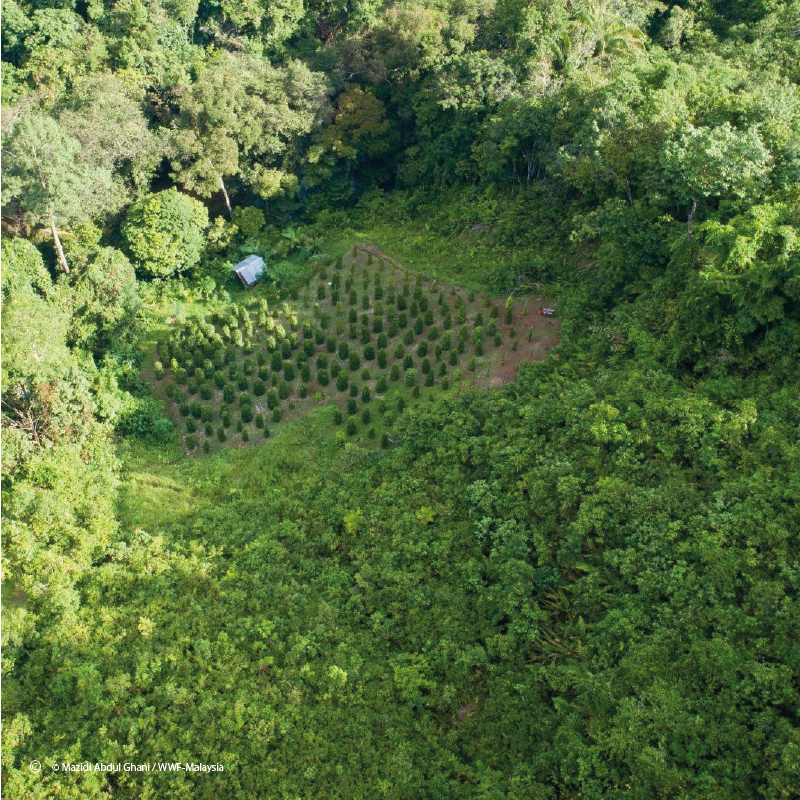
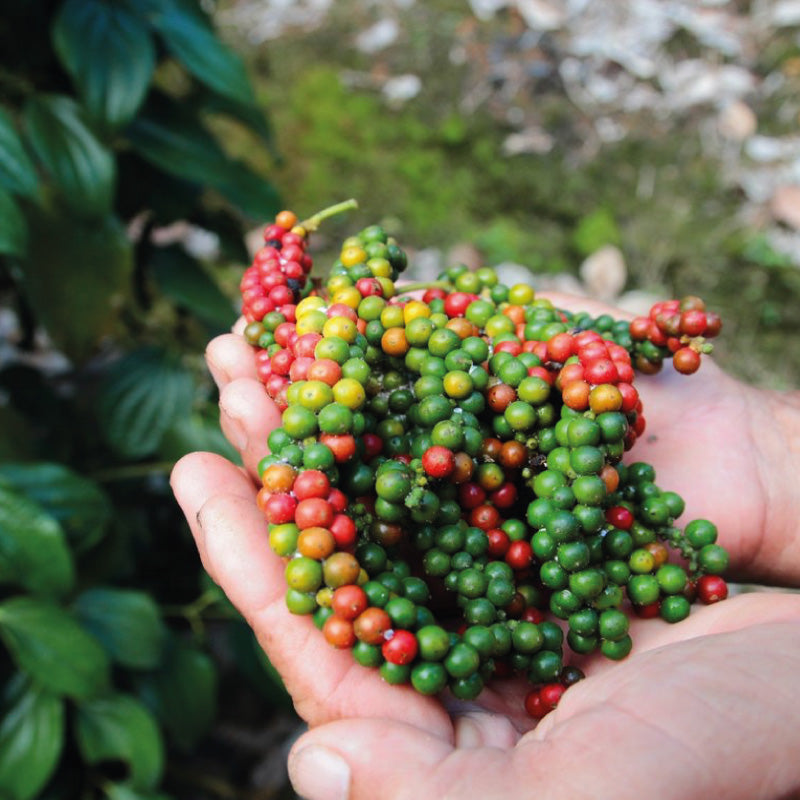
Texts occasionally surface claiming that Sarawak pepper is an indigenous pepper, cultivated in the pristine wilderness of Borneo. In reality, the cultivation of Sarawak pepper is like raising Wagyu cattle: a highly controlled process to which a great deal of work is devoted. Perhaps that is why Sarawak pepper is highly valued by the Japanese, for whom Sarawak is the most important pepper, alongside sansho.
Every year, the pepper plants are pruned, unlike others.
Sarawak pepper has a Malaysian Geographical Indication (GI), which is overseen by MyIPO, which falls under the Malaysian Ministry of Economy.
Taste and smell
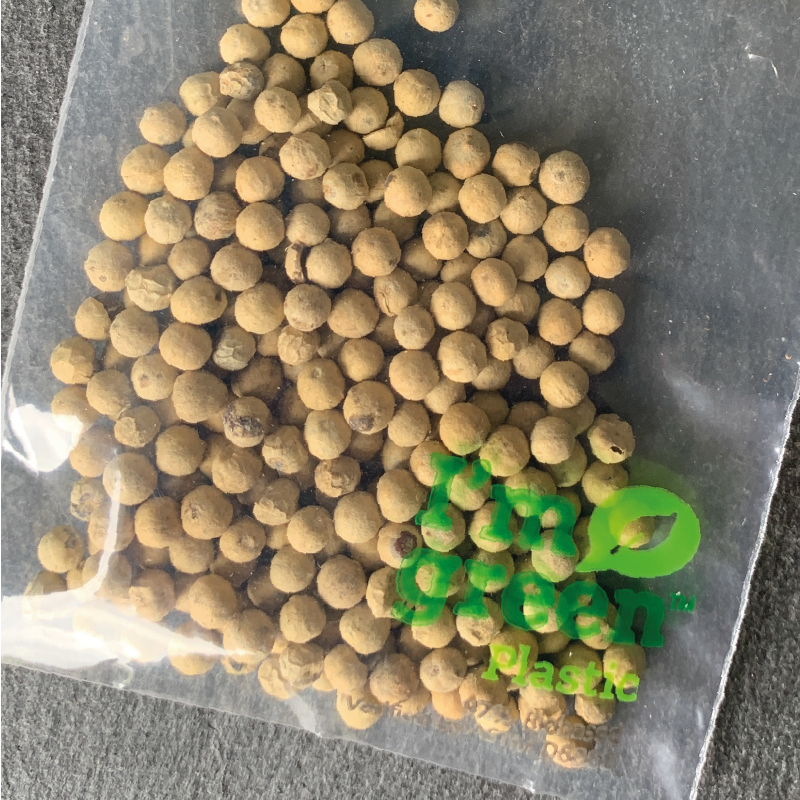
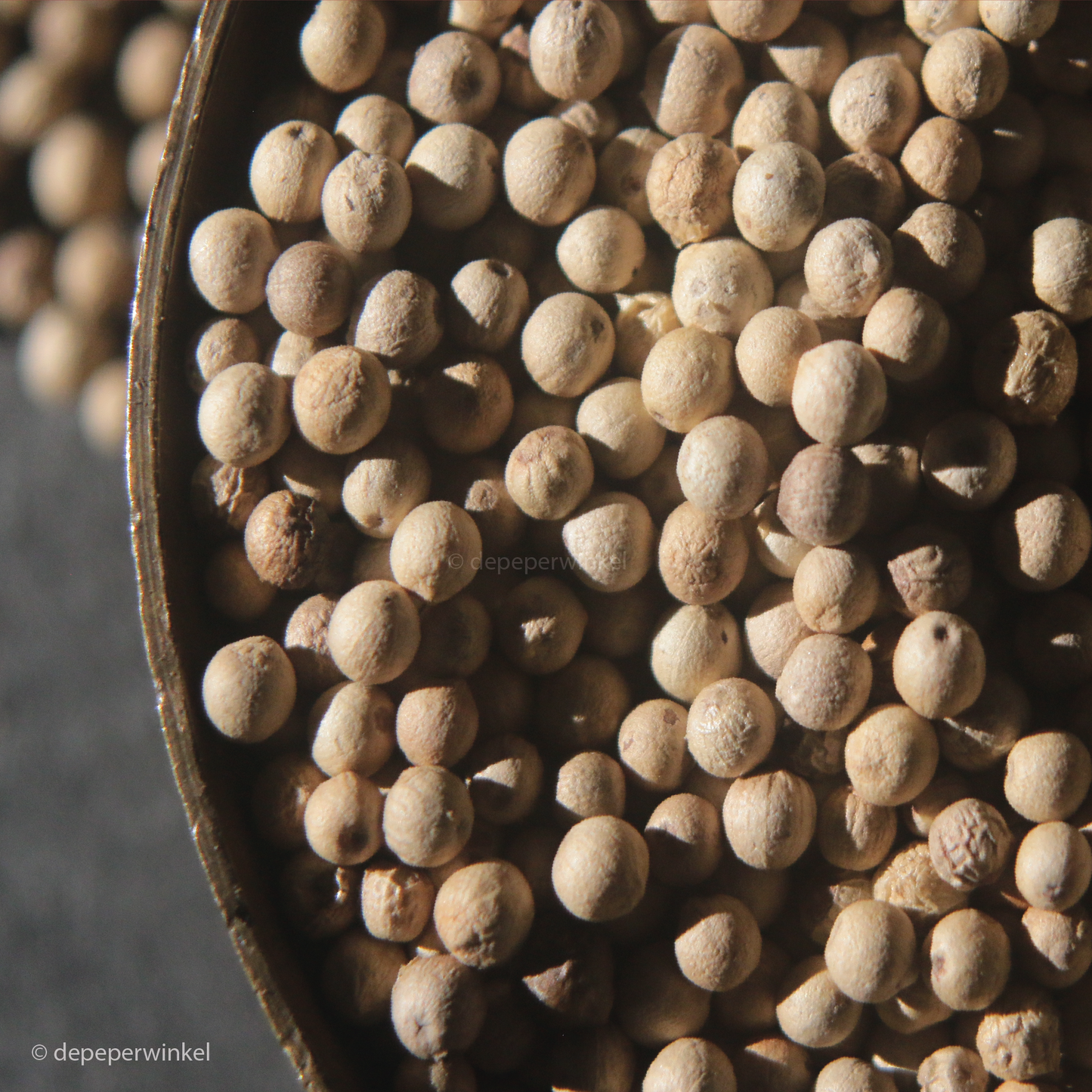
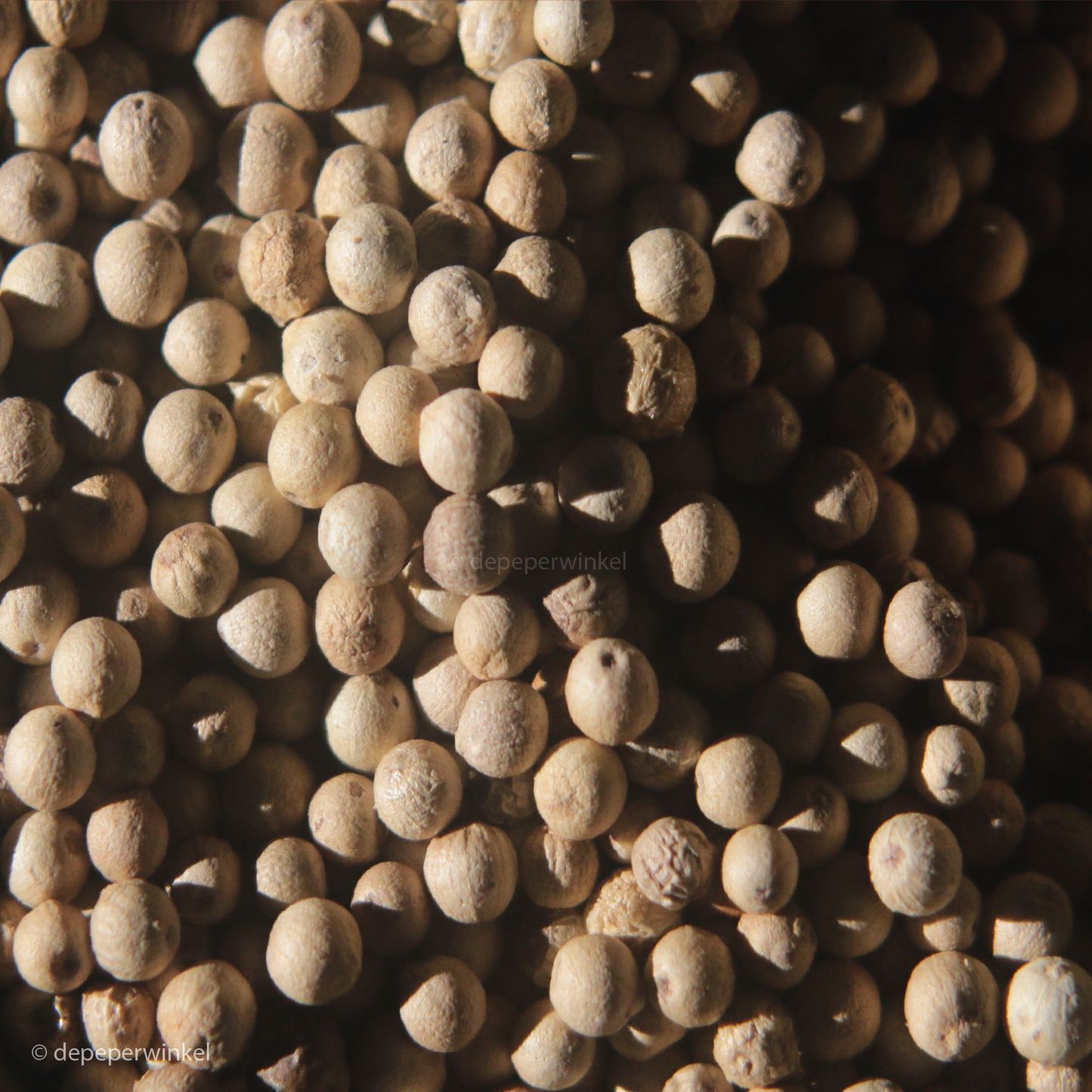
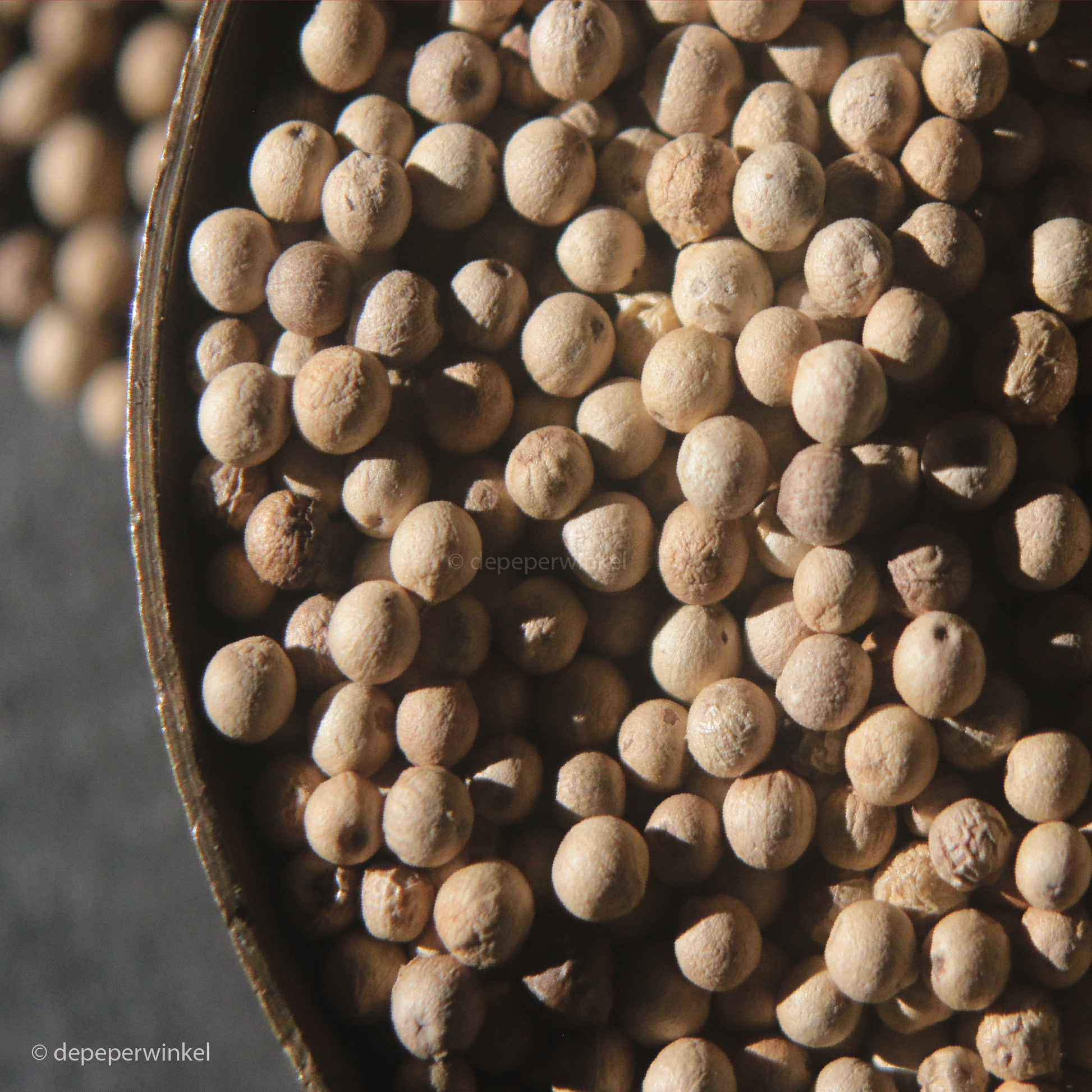
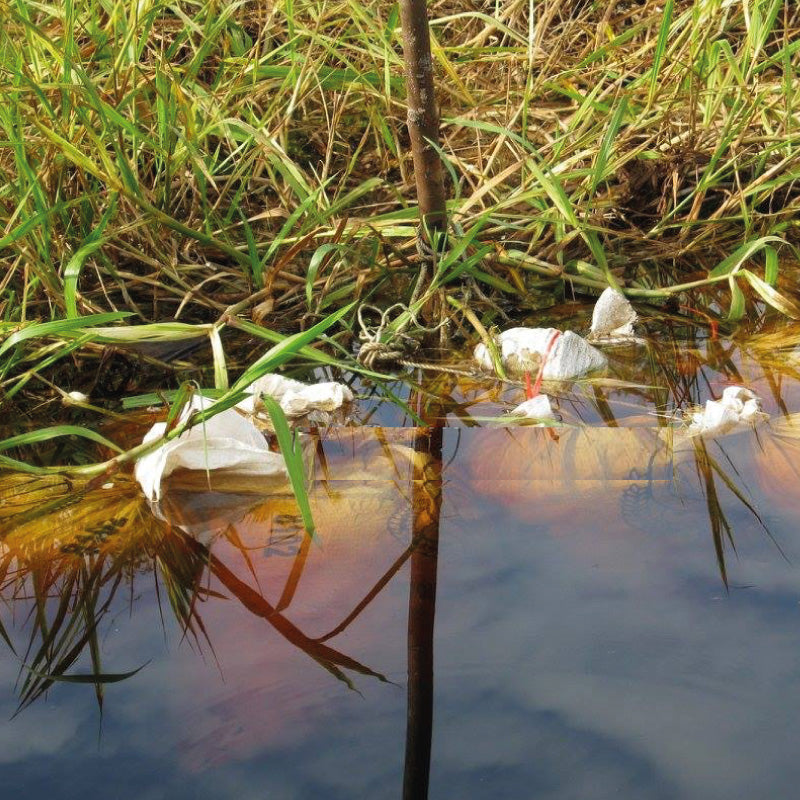
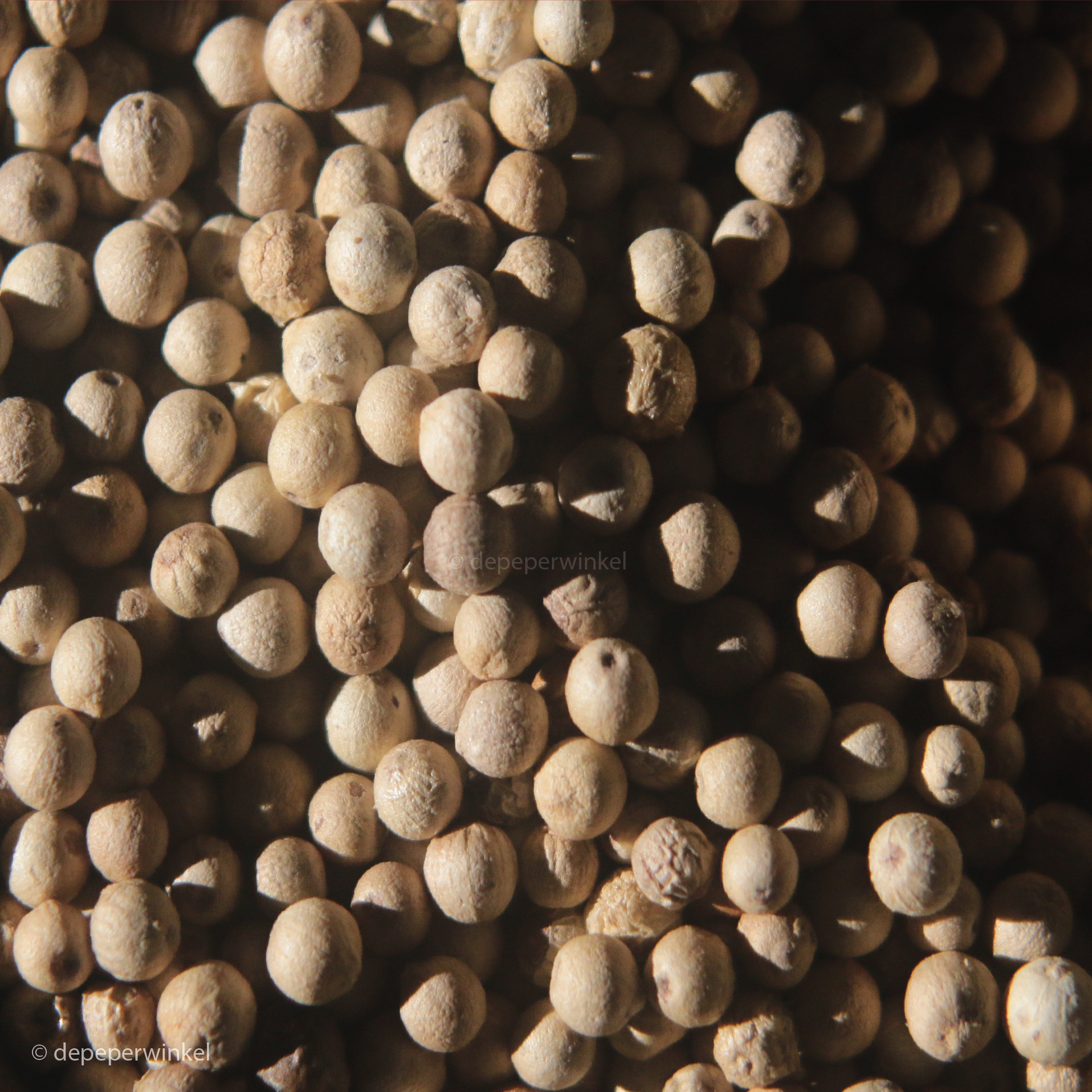
White Sarawak pepper has an even lighter citrus flavor than Black Sarawak, but distinct accents of musk and licorice, and is widely praised as the best white pepper in the world. The cream-colored pepper is produced by soaking the ripe berries in jute sacks under running water. After a week, the husks have loosened and can be separated from the kernels; the kernels are steamed and subsequently dried in a well-ventilated place out of the sun.
The sharpness is quite moderate; it is more of a slight tingling in the mouth.
Usage
White Sarawak is an excellent pepper for seasoning and adding heat to sauces, white fish, white meat, and poultry, but also in rubs, for example in combination with black pepper. Just like Black Sarawak, this white pepper is delicious on goat cheese. It is a complex, not too overpowering white pepper.
Why not organic?
The reason for this is quite simple. For the family businesses in Sarawak, meeting the requirements demanded by international organic standards is, not possible without making investments that are insurmountable for them. Even though micro-credit is available, it has proven unfeasible for most small family businesses. Most organic Sarawak therefore comes from a few larger companies, the number of which is increasing rapidly.
Developments
Government-stimulated scaling up poses a serious threat to the survival of small-scale pepper cultivation. Moreover, it is under fire from producers of palm oil and pineapple, who do not only satisfy their hunger for space on the rainforest.
Usage
Pair White Sarawak with red meat, oily fish, brown sauces, tomato dishes, vegetables, or white cheese. Delicious with fruit and chocolate desserts such as mousses and fondants.
Features:
- 100% peppercorns from Piper nigrum var kuning
- protected by the Malaysian GI label
- origin: Sarawak (Borneo), Malaysia
Assortment
- available in glass (60 and 75 grams), stand-up pouch (various weight classes) and test tube (10ml)
- larger quantities than shown on request
Save
- batch number **OB640454
- best before May 2029 (05-2029)
- This expiration date is an indication.
Expiration date - storage advice
Expiration date - storage advice
The stated expiration date is an indication of the shelf life. Because many factors can influence the maintenance of the quality of a spice, you may have to take it sooner or enjoy it for a long time. Trust your senses of smell and taste.
Store spices in a closed container, preferably in a dark, dry and cool place
The batch number that we mention with each product helps us to trace from which supply an item comes.
Dimensions
Dimensions
Onze ziplock-zakken zijn gemaakt van plastics, zo mogelijk van één soort plastic. Biedt ze aan bij het plastic-afval. De potjes zijn een levenlang te gebruiken om uw specerijen of spulletjes in te bewaren. Doet u het glas toch weg, doe het dan in de glasbak.
Allergen information
Allergen information
This product contains no allergens.
Our packaging
Our packaging
We supply this product in a practical twist-off jar (clear glass) of 128ml and in bags. For smaller quantities we use laminated stand-up pouches with ziplock closure, made of PET and PE. The bag is approximately 90% recyclable and is collected with the plastic.
Our two-layer bio-based kraft bags consist of a layer of 60 gram kraft paper and 80 micron PLA plastic. This bag is 100% biodegradable and can be placed in the green bin.
We use our aluminum bags for packaging larger quantities. These three-layer bags are made of laminated 12 micron PET, 7 micron aluminum and 60 micron PE. This combination makes it not possible to fully recycle the bags. These bags must be presented with the other waste.
The test tubes are made of PS plastic, have a diameter of 16 millimeters and a length of 100 millimeters. The caps are made of LDPE.
Share