depeperwinkel
Black Phú Quốc pepper
Black Phú Quốc pepper
In stock
Unable to load availability for pickup
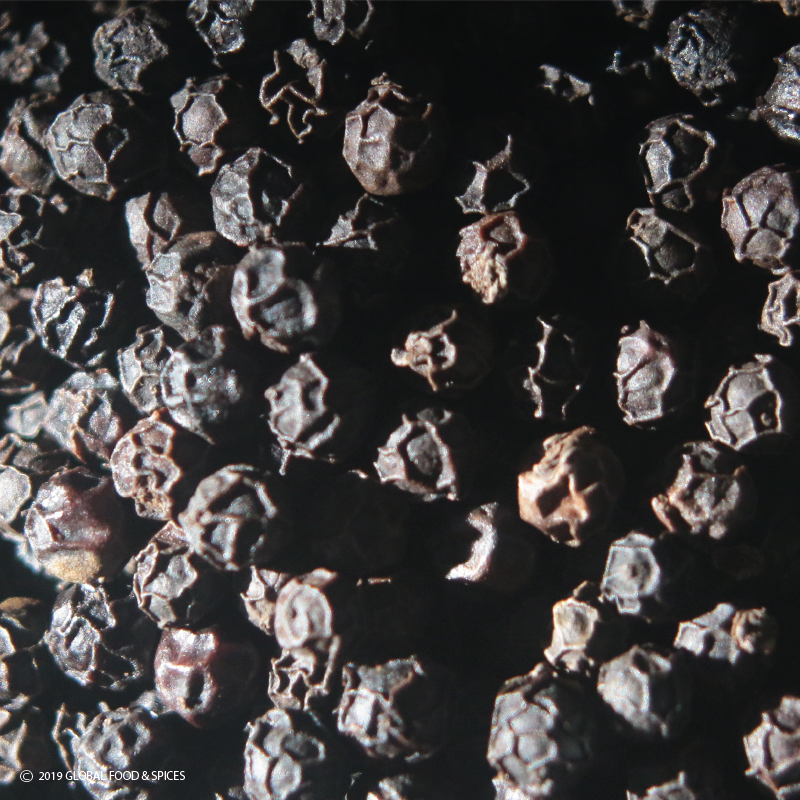
This Phú Quôc (phu quoc) pepper originates from the Vietnamese island of Phu Quoc. The pepper it is cultivated in a traditional way, without chemical aids, primarily by women since the 1950s.
On the Vietnamese island of Phú Quốc, in a traditional way, has been practiced since the beginning of the nineteenth century. pepper renovated The pepperCultivation was introduced there by the Chinese, but has been greatly improved under French management, just as happened at the time in Kampot in neighboring Cambodia.
Phú Quốc is located in Kiên Giang province and, at approximately 590 square kilometers, is the largest island in Vietnam. It is part of an archipelago of 22 islands and lies closer to the coast of Cambodia than that of Vietnam. The island has over 100,000 inhabitants. The pepper is one of the sources of income, alongside tourism and the famous nuoc mâm (fish sauce).
With government support, the traditional way in which the pepper on Phú Quốc is being cultivated, cherished. Since the 1950s, the peppercultivation, due to political developments and the war(s), has become primarily a women's affair. And that is still the case on many plantations.
It is a relatively small pepper in Vietnam, because it accounts for only 1% of the total pepperharvest of the land, which on average takes place on a large scale and is mechanized. In contrast to the pepper from Bà Rịa-Vũng Tàu, on the east coast, east of Ho Chi Minh City is the Phú Quốc pepper not yet eligible for geographic indication (GI).
We offer you the white Phú Quốc pepper, Tiêu sọ đỏ Phú Quốc, the red Phú Quốc pepper, Hạt tiêu chín đỏ Phú Quốc, and this black Hạt tiêu đỏ Phú Quốc.
Usage
The pepper has several subtle aromas of fruit (mango/raspberry) and cocoa, among others, and a slightly acidic accent. As a result, the pepper suitable for all types of meat (red and white), fruit salads and dishes containing chocolate, even desserts.
Although the pepper Although it also pairs well with white fish, squid, and cuttlefish, for those combinations we generally recommend the milder white Phu Quoc.
Features:
- 100% (unripe) pepperberries of Piper nigrum
- protected by Vietnamese PGI label (Protected Geographical Indication)
- origin: Phú Quốc, Vietnam
Assortment
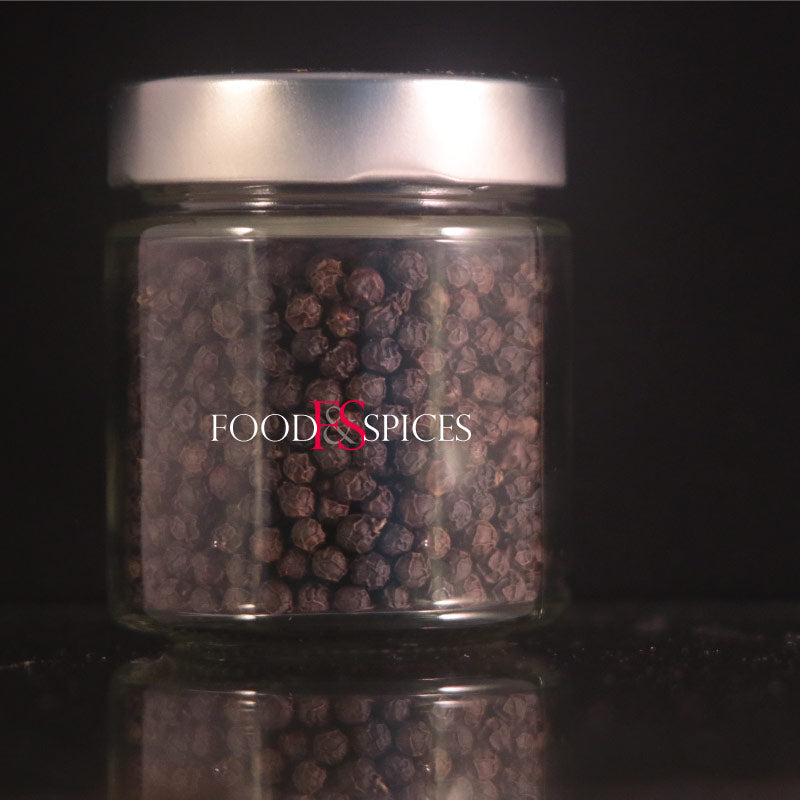
- available in glass (60 grams), stand-up pouch (various weight classes) and sample bag
- larger quantities than shown on request
Save
- batch number **MF600420
- best before jJanuary 2028 (01-2028)
Expiration date - storage advice
Expiration date - storage advice
The stated expiration date is an indication of the shelf life. Because many factors can influence the maintenance of the quality of a spice, you may have to take it sooner or enjoy it for a long time. Trust your senses of smell and taste.
Store spices in a closed container, preferably in a dark, dry and cool place
The batch number that we mention with each product helps us to trace from which supply an item comes.
Dimensions
Dimensions
Onze ziplock-zakken zijn gemaakt van plastics, zo mogelijk van één soort plastic. Biedt ze aan bij het plastic-afval. De potjes zijn een levenlang te gebruiken om uw specerijen of spulletjes in te bewaren. Doet u het glas toch weg, doe het dan in de glasbak.
Allergen information
Allergen information
This product contains no allergens.
Our packaging
Our packaging
We supply this product in a practical twist-off jar (clear glass) of 128ml and in bags. For smaller quantities we use laminated stand-up pouches with ziplock closure, made of PET and PE. The bag is approximately 90% recyclable and is collected with the plastic.
Our two-layer bio-based kraft bags consist of a layer of 60 gram kraft paper and 80 micron PLA plastic. This bag is 100% biodegradable and can be placed in the green bin.
We use our aluminum bags for packaging larger quantities. These three-layer bags are made of laminated 12 micron PET, 7 micron aluminum and 60 micron PE. This combination makes it not possible to fully recycle the bags. These bags must be presented with the other waste.
The test tubes are made of PS plastic, have a diameter of 16 millimeters and a length of 100 millimeters. The caps are made of LDPE.
Share