depeperwinkel
Ma khaen - Laotian mountain pepper
Ma khaen - Laotian mountain pepper
Temporarily out of stock
Unable to load availability for pickup
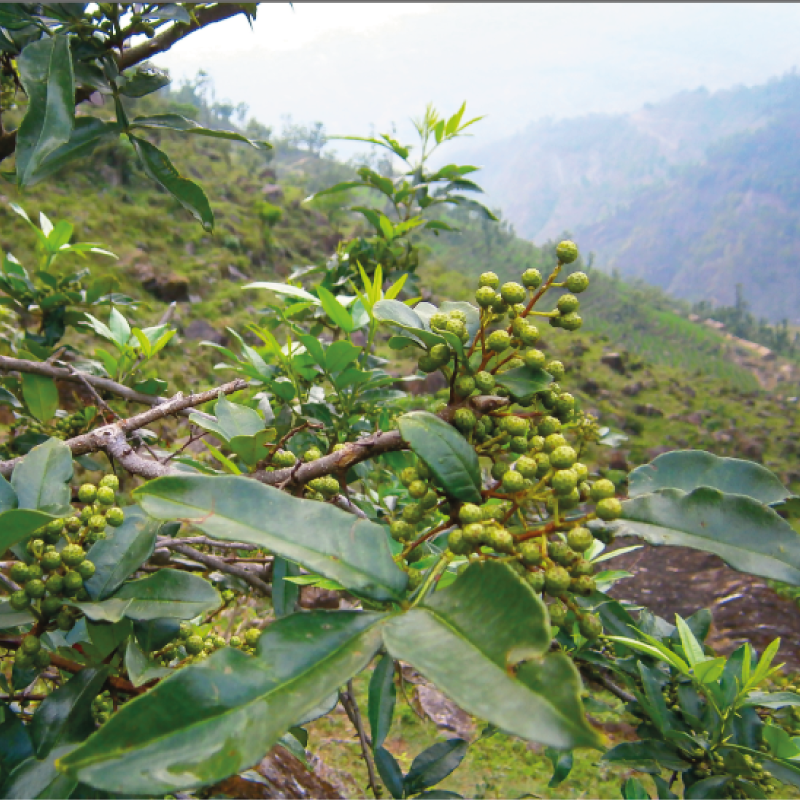
This mountain pepper, which is called ma khaen in Laos, grows in the wild in the mountainous Luang Prabang, in the northern Laos.
Unfortunately, no longer available. However, the North Vietnamese mountain pepper Mac khen is in stock; as the name suggests, same plant, same berry, just a different region.
The pepper is primarily collected by women and is an important source of income. In the Luang Prabang region, ma khaen is the fifth most important non-timber forest product according to FAO data. For a long time, the bushes were cut down in their entirety to harvest the berries; nowadays, harvesting takes place sustainably, without deforestation.
This mountain pepper is the berry of a Szechuan pepper found exclusively in the wild, or actually
He has A mildly tingling sharpness and the unmistakable citrus flavor (mandarin) that becomes stronger and sweeter when the pepper is heated. The tree on which this pepper grows is the mountain pepper, or triphal in Indian, which grows naturally in an area called the Indamalaya, the ecozone that stretches from India to the Indonesian island of Sulawesi, including Vietnam. The tree grows there up to an altitude of 1,500 meters in moist, dense forests.
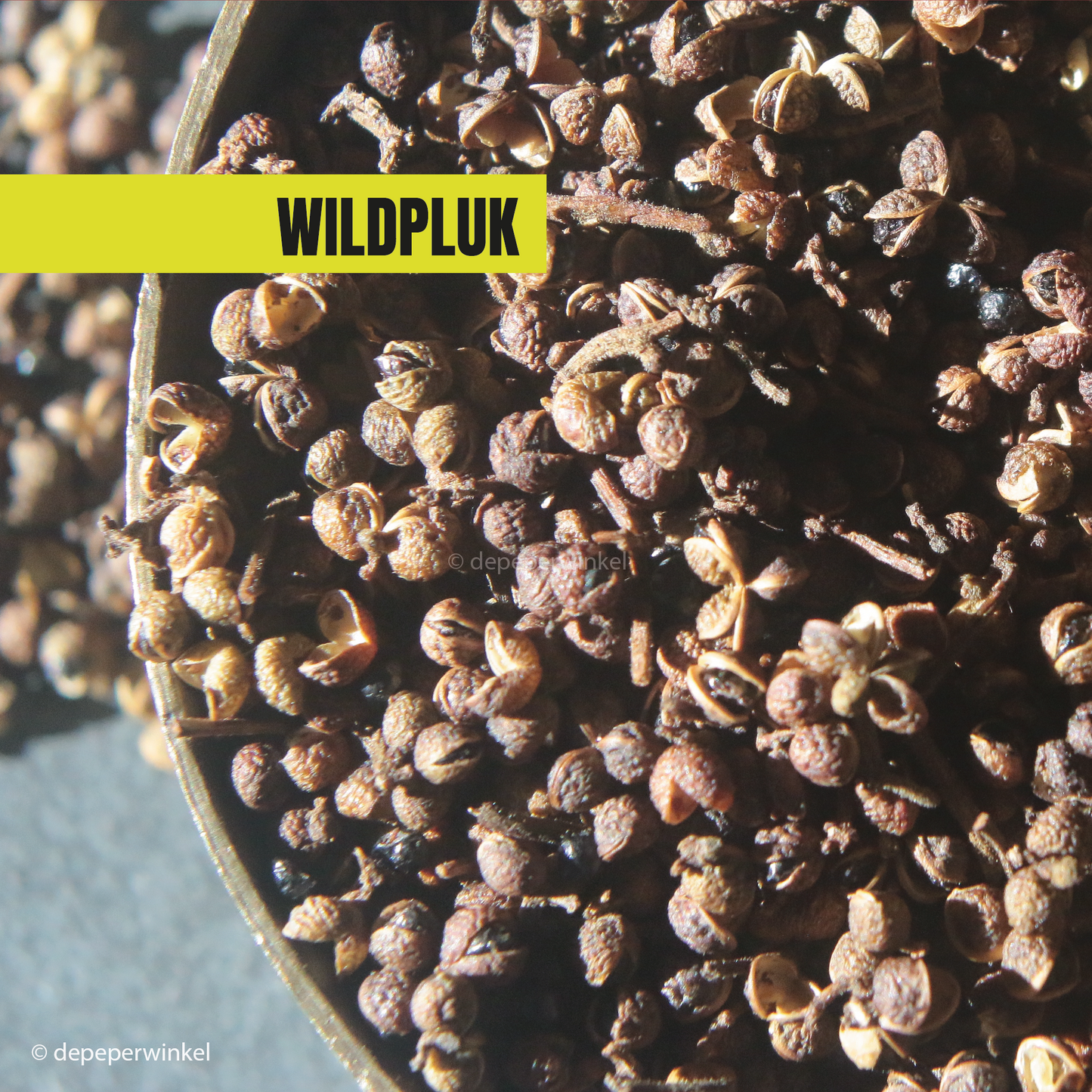
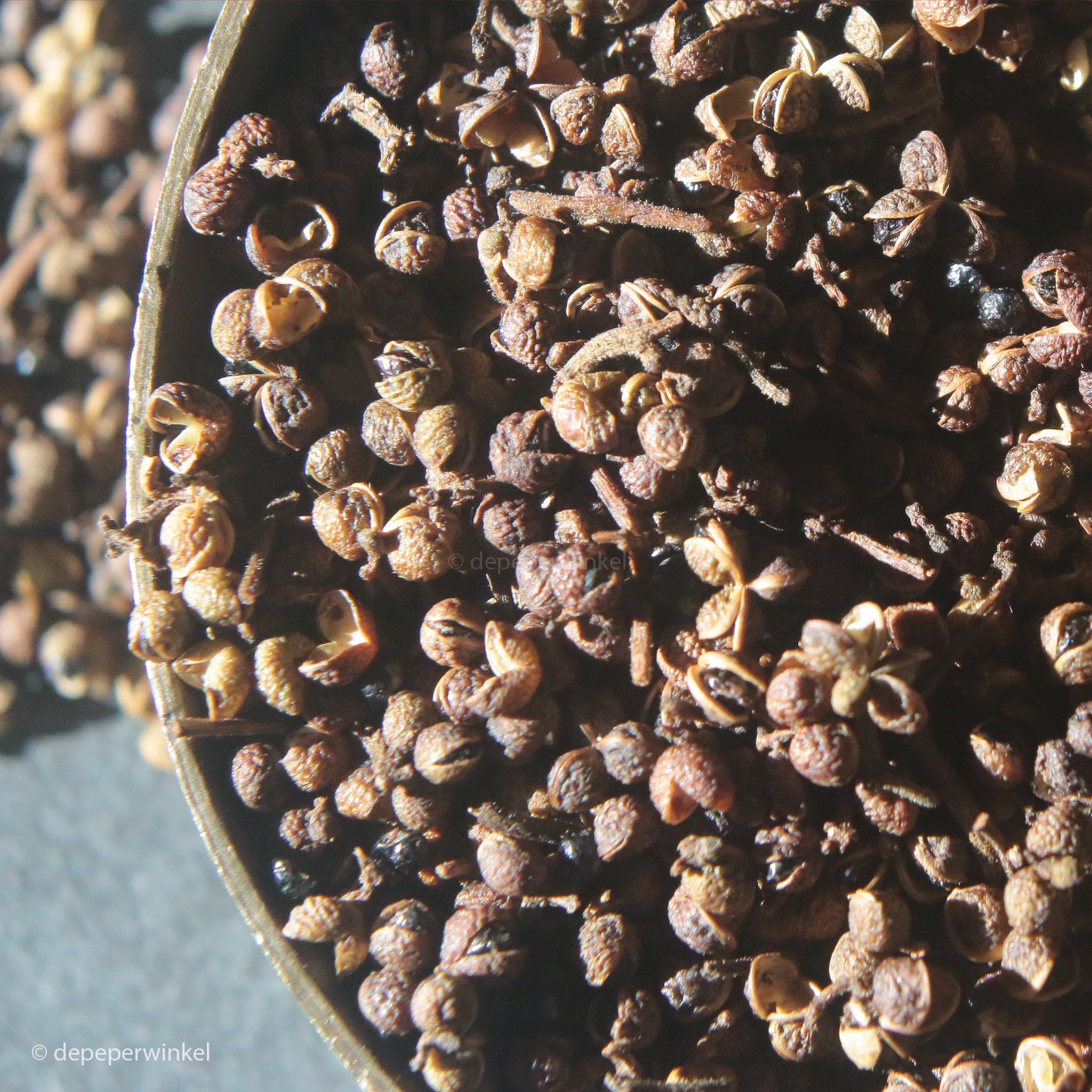
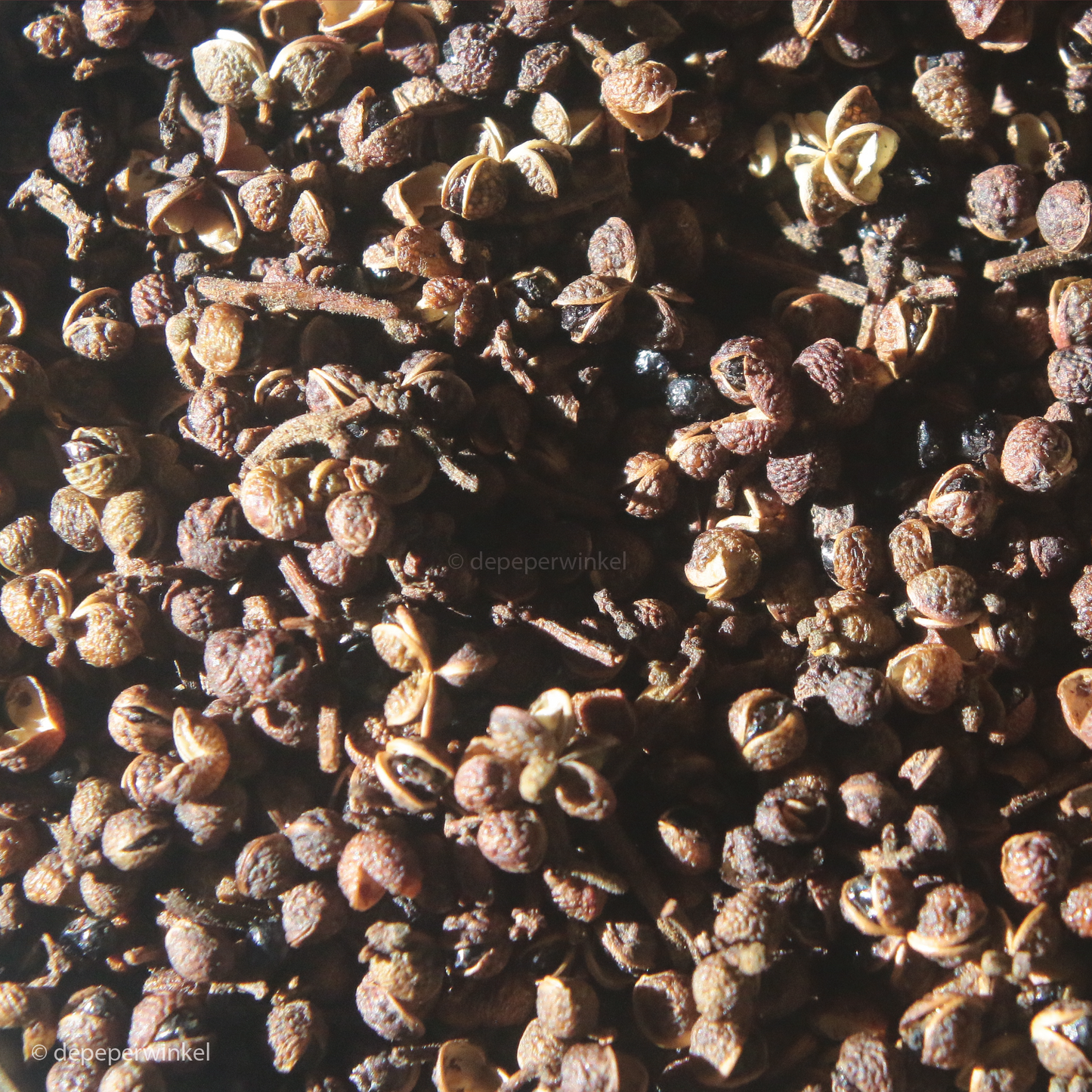
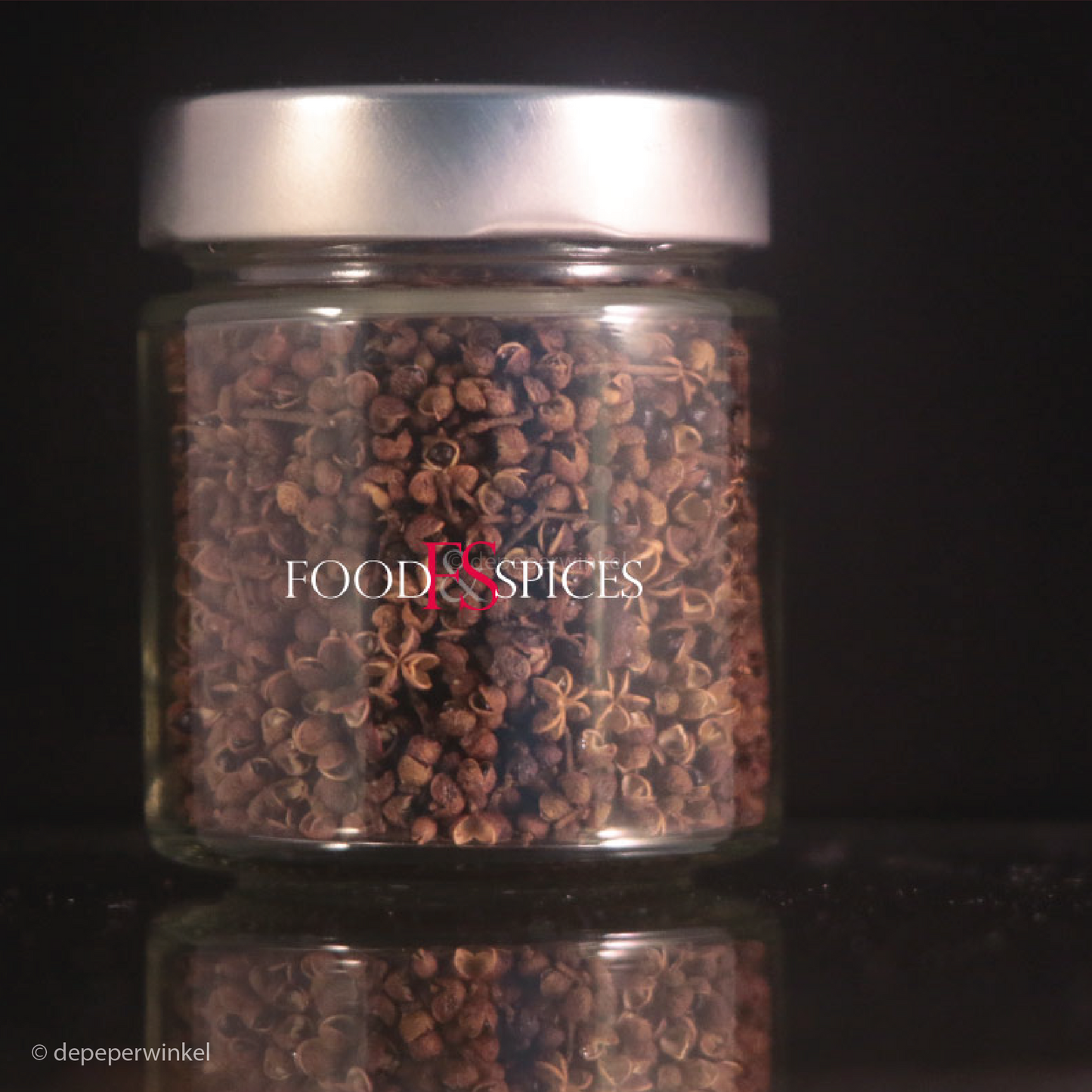
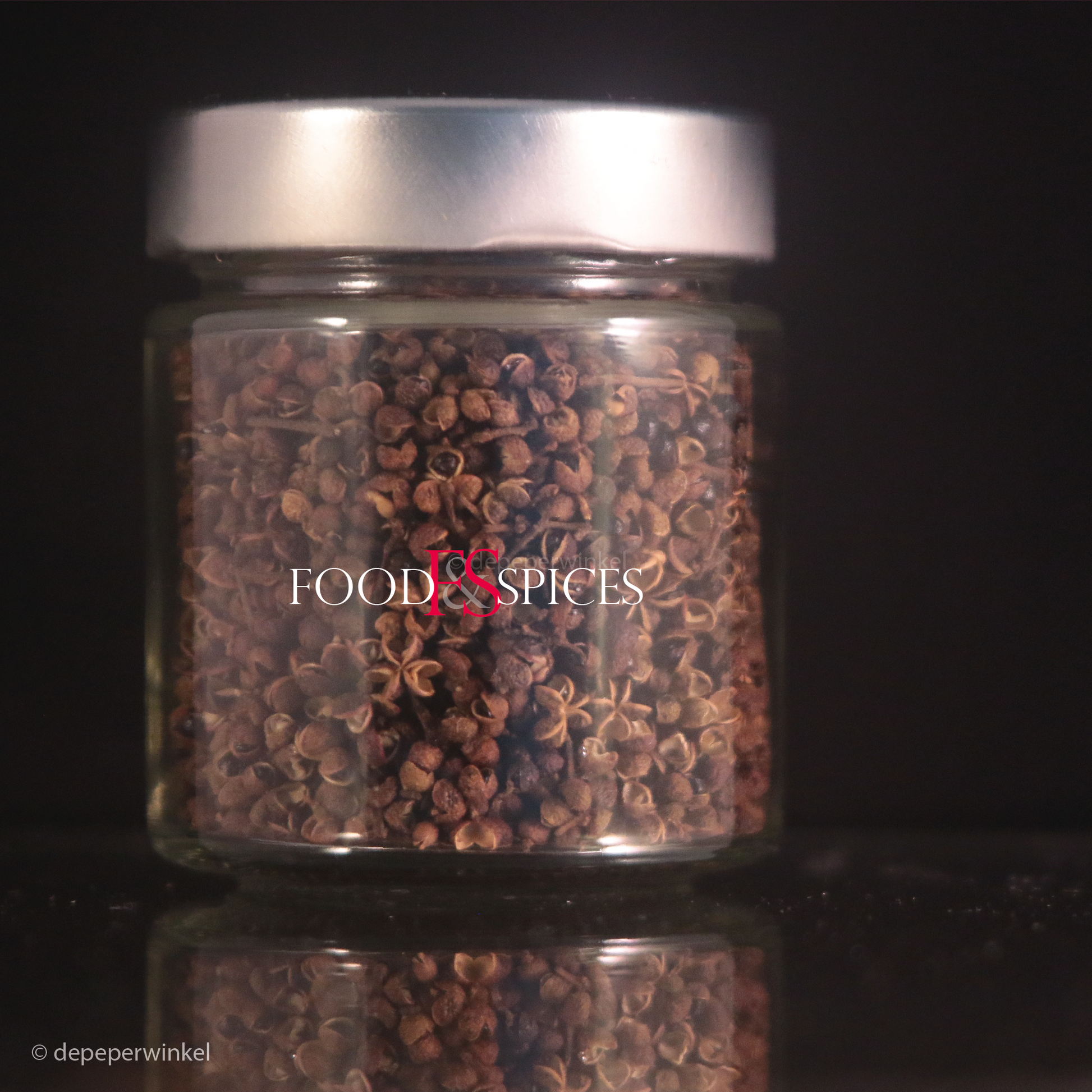
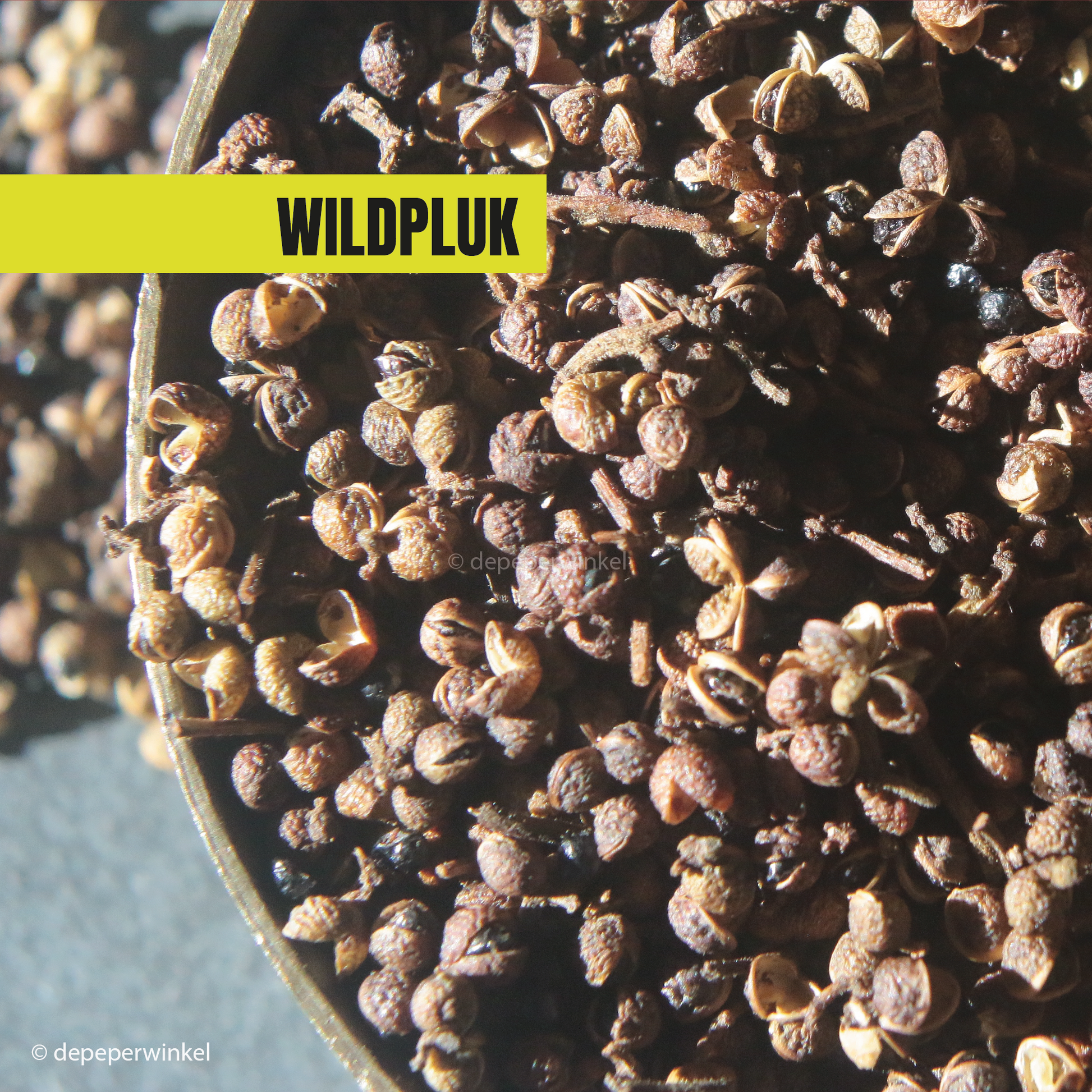
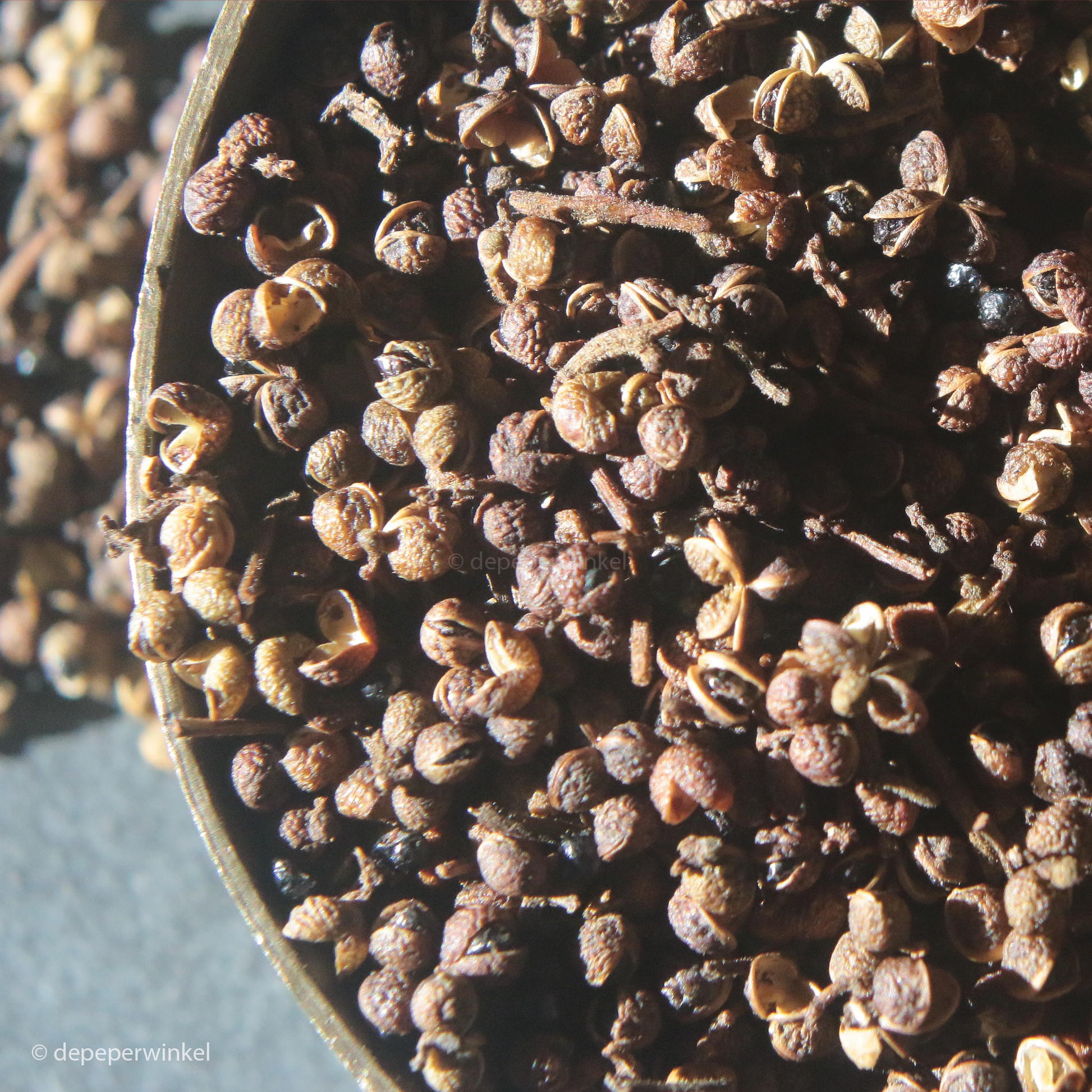
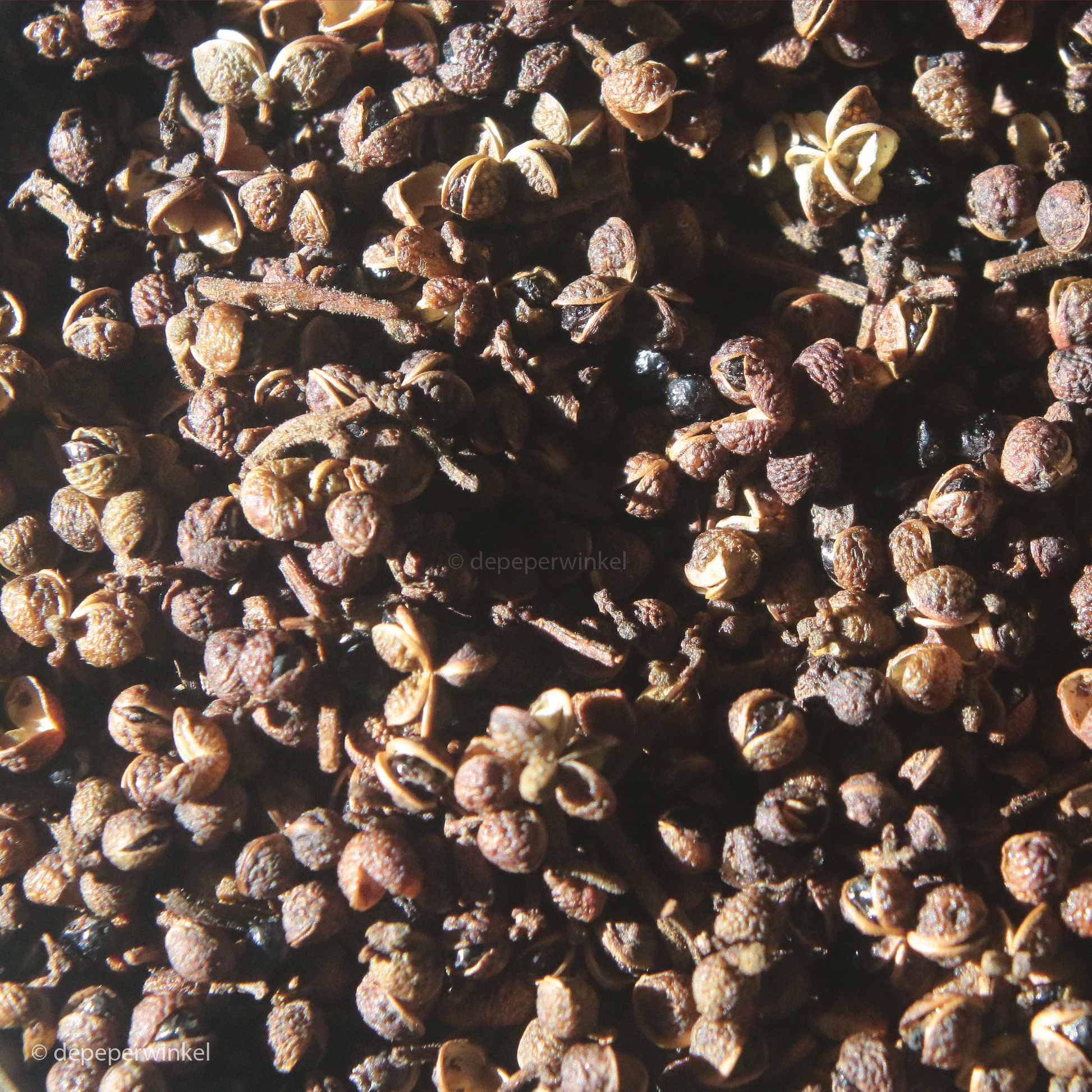
The berry is quite small, just like the andaliman berry, and, like the andaliman, is harvested by hand. No easy task, as the branches of the Zanthoxylum have vicious thorns. The berries grow in smaller clusters that, when dried, appear as 'mini-star anise'. Each berry contains a single seed.
The unique sharpness experience of sanshol
Characteristic of all Zanthoxylum
The tingling is accompanied by a mild numbing sensation, jokingly compared to tasting a 9-volt battery. A single berry is enough to experience this! This somato-sensation, stimulation by touch, has been used for centuries as an anesthetic in traditional Asian medicine. Its mechanism of action is very complex and the subject of extensive studies. Hydroxy-α-sanshol, in particular, is believed to cause the tingling, and there are certain parallels with the sensation of spiciness from capsaicin, the pungent substance in chili peppers, but also with menthol and mustard oil.
Scent and taste
The berries have a complex aroma, in which you You taste mandarin peel and tea, but also anise and menthol, and the sweet notes of angelica. The scent is related to that of black pepper due to the high sabinene content, which is higher in the dried berry than in the fresh one.This is the flavor profile:
- D-limonene (dipentene), sweet citrus flavor, occurring in modest amounts in nutmeg, mace, and cardamom,
- β-phellandrene, pleasant mint and citrus flavor, also found in allspice,
- β-pinene, woody pine scent, as in cumin, pine (pine cone), juniper and hemp,
- sabinene, responsible for the woody, camphor-like flavor of black pepper, among others
- carvotan acetone, likewise minty, as in angelica.
- dihydrocarvol as in black pepper and black tea, and
- the bitter terpinol, - occurring especially in the seeds - as in cranberries.
This pepper is therefore delicious in combination with the aforementioned spices, and in general with products that pair well with citrus, such as shellfish, white fish, salmon, white butter sauces, veal, pork, and duck. It can be eaten raw and added at the last moment, and is delicious in vegetable salads, desserts, or with fruit.
In India, it is preferred to use the pepper called triphal (Marathi) or triphala (Gujarati) 'pure', that is, not in combination with other spices. Triphal is used there primarily in fish dishes, just as in Vietnam, where mountain pepper is eaten with grilled fish, grilled or dried meat, and smoked buffalo meat. Sometimes, meat is rubbed with ground mountain pepper to preserve it.
Usage
Roast the whole berries. Crush the berries to release the seeds. It is best to use a mortar and pestle for these, while the seed husks are best ground. The same applies to the whole berries (with seeds), provided they were roasted until crisp beforehand.
Features:
- 100% berries of the Zanthoxylum rhetsa
- origin: Luang Prabang, Laos
Assortment
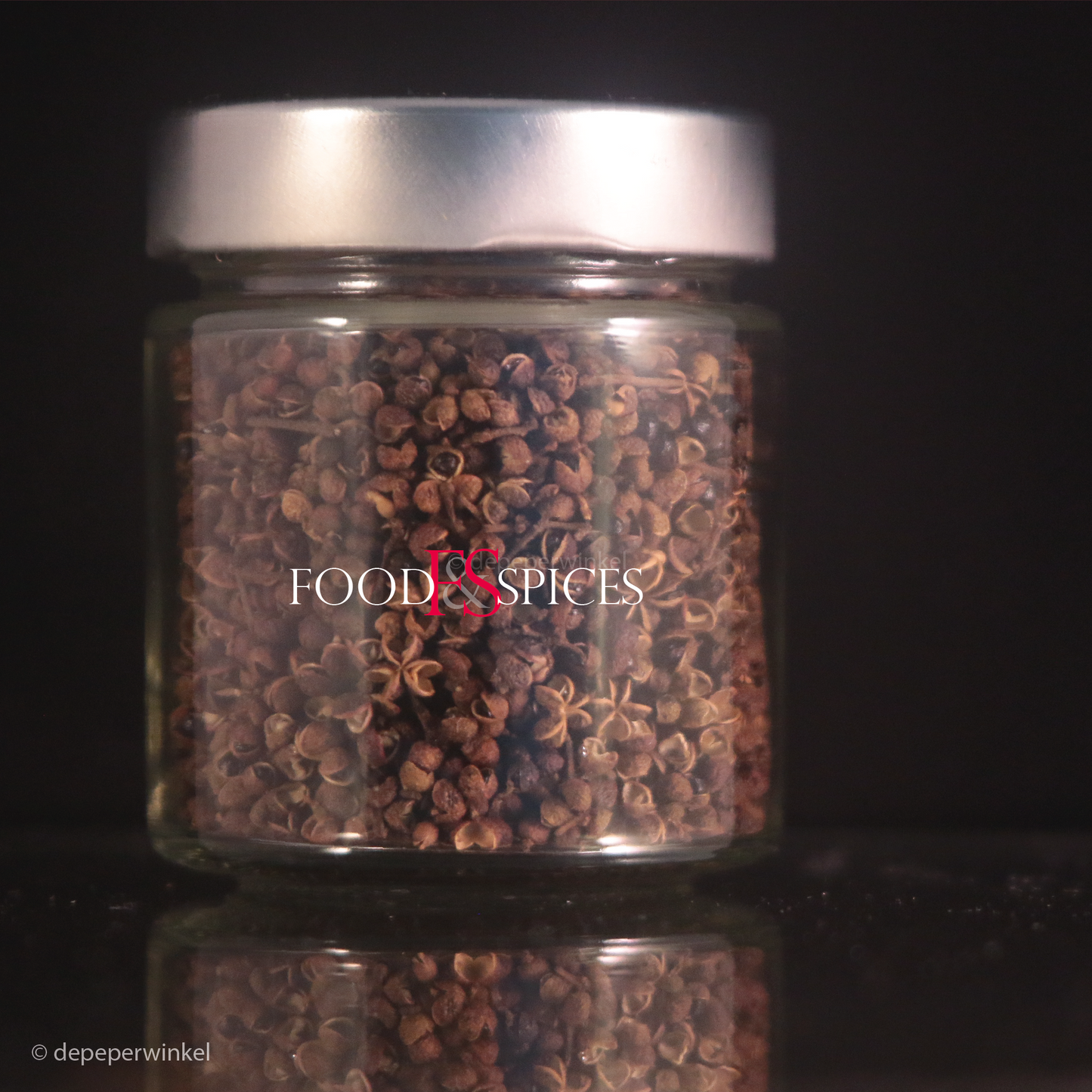
- available in glass (30 grams), stand-up pouch and test tube (10 ml)
- Larger quantities on request
Gift packaging
- The jar is available in tasteful gift packaging, consisting of a cube box filled with black tissue paper.
- For an overview of our gift packaging, please refer to the gift packaging section.
General advice
- ma khaen is a versatile Szechuan pepper, used both raw and roasted.
Save:
- store your pepper in a closed package
- preferably store in a dark, dry and cool place
- best before - - -
- This expiration date is an indication.
Do you want to know how Ma khaen smaakt ?
You can also try a test tube. The tube contains enough pepper to grasp the essence of the flavor.
Batch number
The batch number helps us trace which supply an item originated from. It is listed on the packing slip and the invoice.
Expiration date - storage advice
Expiration date - storage advice
The stated expiration date is an indication of the shelf life. Because many factors can influence the maintenance of the quality of a spice, you may have to take it sooner or enjoy it for a long time. Trust your senses of smell and taste.
Store spices in a closed container, preferably in a dark, dry and cool place
The batch number that we mention with each product helps us to trace from which supply an item comes.
Dimensions
Dimensions
Onze ziplock-zakken zijn gemaakt van plastics, zo mogelijk van één soort plastic. Biedt ze aan bij het plastic-afval. De potjes zijn een levenlang te gebruiken om uw specerijen of spulletjes in te bewaren. Doet u het glas toch weg, doe het dan in de glasbak.
Allergen information
Allergen information
This product contains no allergens.
Our packaging
Our packaging
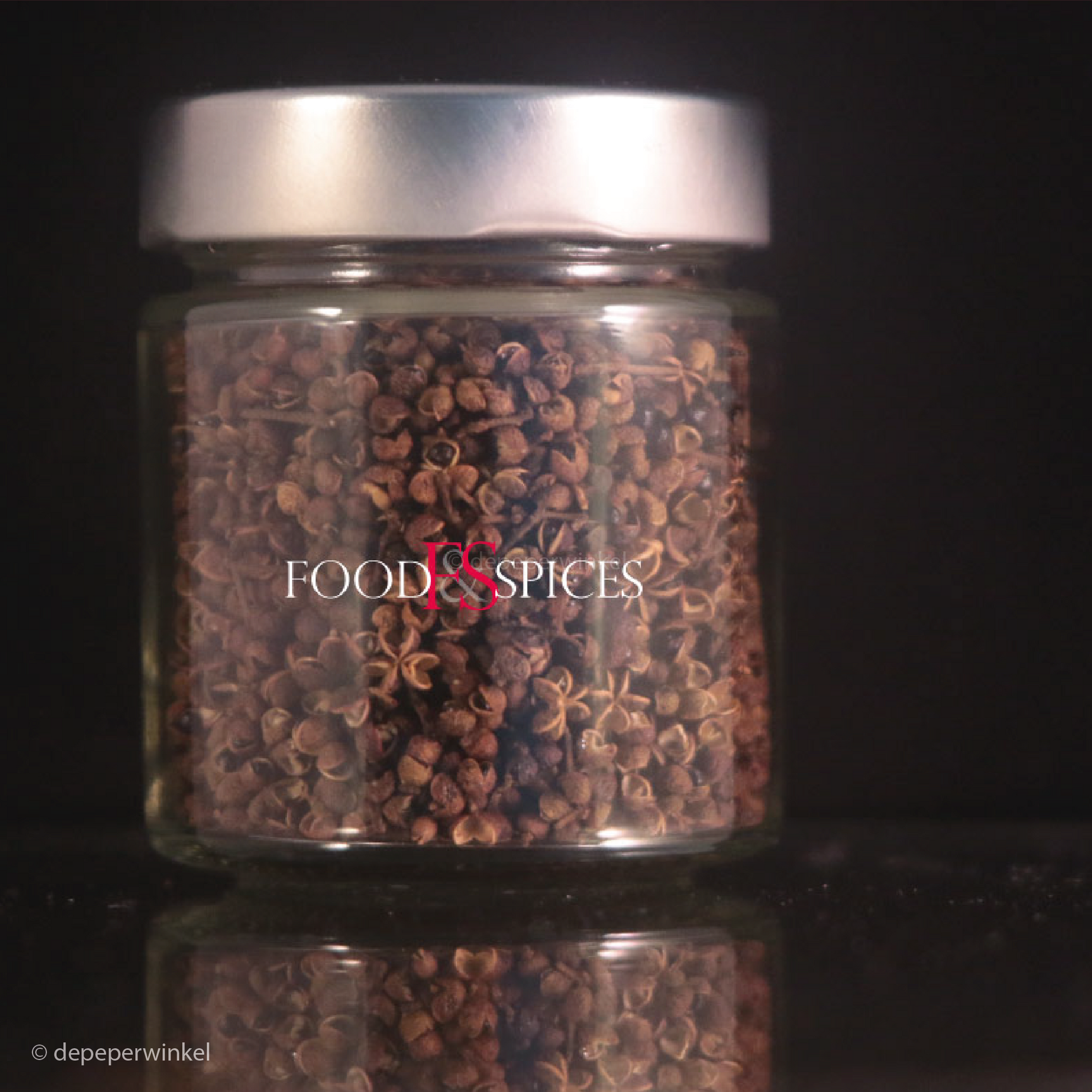
We supply this product in a practical twist-off jar (clear glass) of 128ml and in bags. For smaller quantities we use laminated stand-up pouches with ziplock closure, made of PET and PE. The bag is approximately 90% recyclable and is collected with the plastic.
Our two-layer bio-based kraft bags consist of a layer of 60 gram kraft paper and 80 micron PLA plastic. This bag is 100% biodegradable and can be placed in the green bin.
We use our aluminum bags for packaging larger quantities. These three-layer bags are made of laminated 12 micron PET, 7 micron aluminum and 60 micron PE. This combination makes it not possible to fully recycle the bags. These bags must be presented with the other waste.
The test tubes are made of PS plastic, have a diameter of 16 millimeters and a length of 100 millimeters. The caps are made of LDPE.
Share