
depeperwinkel
Clove
Clove
In stock
Unable to load availability for pickup
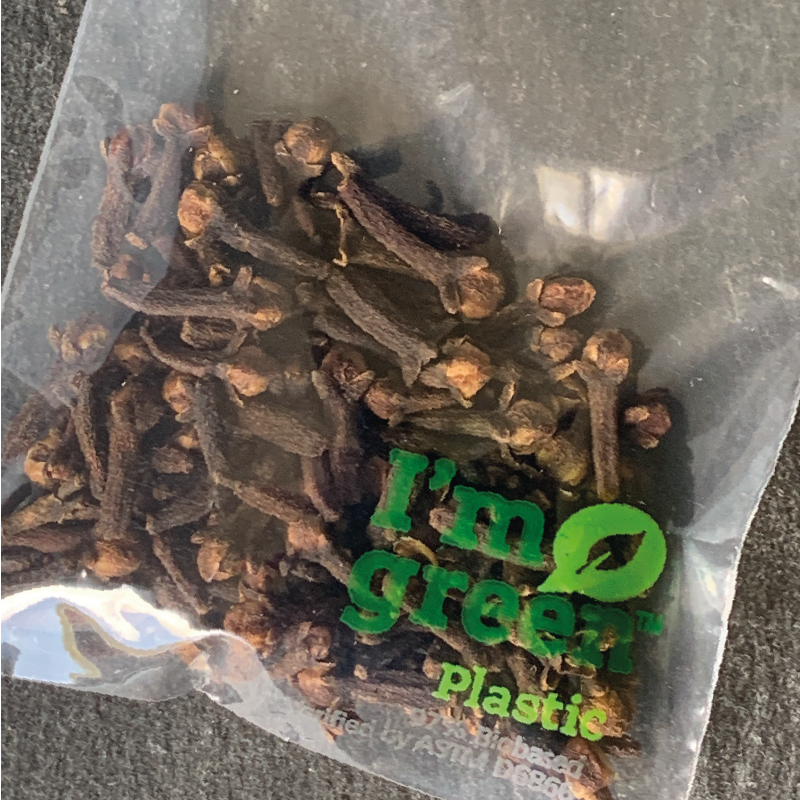
A clove is the unopened flower bud of the clove tree. This clove originates from Zanzibar, where the clove tree was introduced from Indonesia in the nineteenth century.
Cloves come from Syzygium aromaticum, a tree that originally grew only in the Moluccas, especially in the sultanates of the North Moluccas (Maluku Utara).
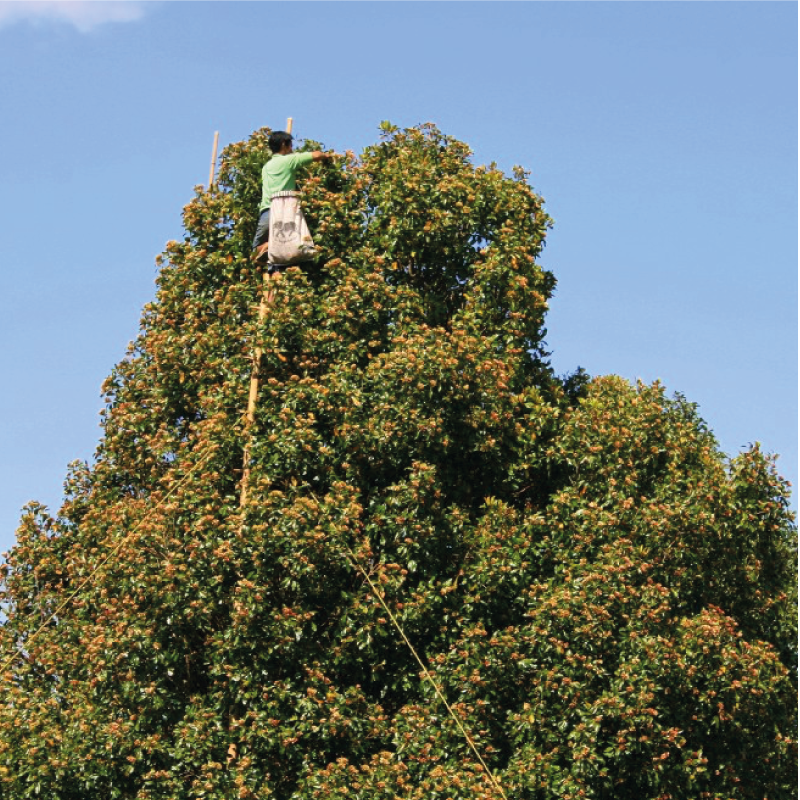
The clove tree is a 10-15 meter tall tree that bears cream-colored flowers, which turn red during flowering. However, this usually does not happen, because before the flowers open, the buds are picked to be dried into what we call cloves.
The tree bears flowers for the first time in the fourth to as many as the seventh year and can live to be eighty years old. The buds are picked manually by experienced pickers. The timing of the harvest is crucial; the buds must be perfectly round and already beginning to change color. As soon as a bud opens, it becomes unusable as a spice.
The Zanzibar archipelago was already the world's largest producer of cloves (around 1850). Clove cultivation there dates back to the early nineteenth century, when Zanzibar was under British rule. Cultivation takes place primarily on the northern island of Pemba. After a brief period of independence, Zanzibar has been part of Tanzania since 1964.
There are two annual harvest seasons: the harvest of average-sized cloves in the Mwaka season (July-November) and that of average-sized cloves in the Vuli season (December-March). Cloves are classified into three quality grades, CG1, CG2, and CG3, the latter primarily intended for the production of krecek, the Indonesian cigarette.
CG1 is the highest quality in terms of composition (minimal breakage, for example) and the most powerful flavor. CG2 buds still have a well-developed aroma, are slightly milder than CG1, and contain (at most) 5% headless cloves, 3% so-called khoker cloves - not sufficiently dried and therefore fermented - and 4% mother cloves (elongated fruits with a seed).
Scent and taste
The clove aroma comes from the pungent-tasting eugenol and combines excellently with spices and herbs that also contain eugenol, such as nutmeg, allspice, cinnamon, pepper, vanilla (eugenol is the raw material for the production of vanillin), basil, and star anise.
Usage
Cloves are suitable for sweet and savory dishes, in baked goods and desserts as well as in roasts and stews, in sour meat dishes and curries, and in sauerkraut, red cabbage, and mulled wine, of course. Many famous spice blends contain cloves.
Features:
- 100% dried flower buds of Sygyzium aromaticum
- hand-picked, quality CG2
Assortment
- available in glass (45 grams) and stand-up pouch (various weight classes)
- larger quantities than shown on request
Batch number Regular cloves - OB560382
- best before August 2028 (08-2028)
Expiration date - storage advice
Expiration date - storage advice
The stated expiration date is an indication of the shelf life. Because many factors can influence the maintenance of the quality of a spice, you may have to take it sooner or enjoy it for a long time. Trust your senses of smell and taste.
Store spices in a closed container, preferably in a dark, dry and cool place
The batch number that we mention with each product helps us to trace from which supply an item comes.
Dimensions
Dimensions
Onze ziplock-zakken zijn gemaakt van plastics, zo mogelijk van één soort plastic. Biedt ze aan bij het plastic-afval. De potjes zijn een levenlang te gebruiken om uw specerijen of spulletjes in te bewaren. Doet u het glas toch weg, doe het dan in de glasbak.
Allergen information
Allergen information
This product contains no allergens.
Our packaging
Our packaging
We supply this product in a practical twist-off jar (clear glass) of 128ml and in bags. For smaller quantities we use laminated stand-up pouches with ziplock closure, made of PET and PE. The bag is approximately 90% recyclable and is collected with the plastic.
Our two-layer bio-based kraft bags consist of a layer of 60 gram kraft paper and 80 micron PLA plastic. This bag is 100% biodegradable and can be placed in the green bin.
We use our aluminum bags for packaging larger quantities. These three-layer bags are made of laminated 12 micron PET, 7 micron aluminum and 60 micron PE. This combination makes it not possible to fully recycle the bags. These bags must be presented with the other waste.
The test tubes are made of PS plastic, have a diameter of 16 millimeters and a length of 100 millimeters. The caps are made of LDPE.
Share