depeperwinkel
Black Kampot pepper PGI
Black Kampot pepper PGI
In stock
Unable to load availability for pickup
Black Kampot Pepper is flavorful and sharp. Its easy-to-combine flavor profile makes black kampot into the ideal pepper for rubs, marinades, and in spice blends with pepper.
Kampot pepper, which in Khmer is called Mrech Kampot, is named after a place and region in southern Cambodia. The peppers are derived from small-leaved pepper plants of the Piper variety lampong or large-leaved plants of the variety kamchay.
Other peppers of the type lampong are the Muntok pepper from Indonesian Bangka and Sarawak pepper from Borneo. Lampong-peppers bear somewhat smaller berries than most peppers, often different sizes mixed together.
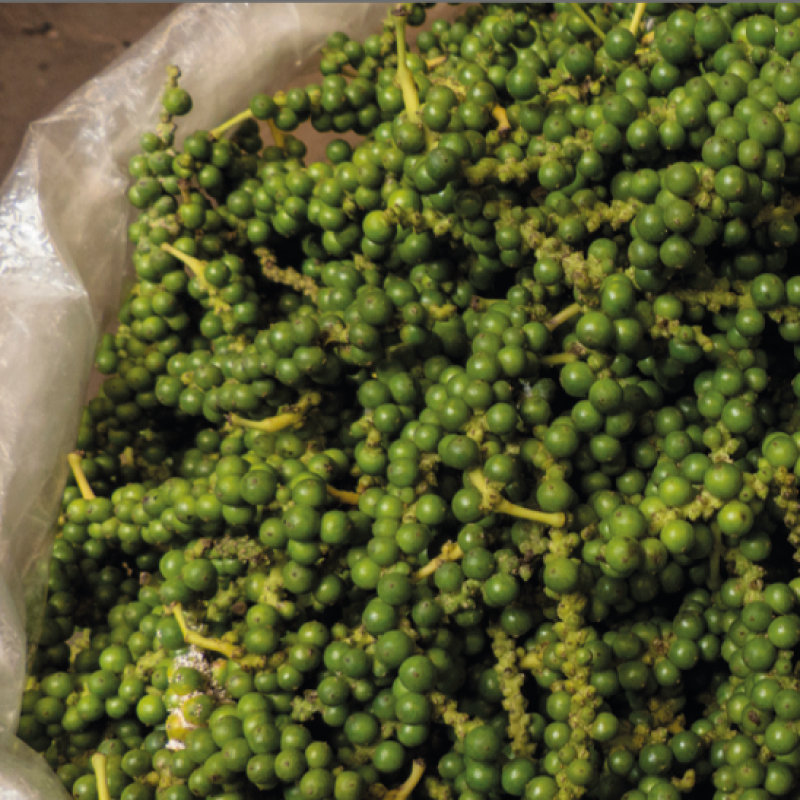
The black Kampot Pepper is made from the predominantly unripe berry. Characteristic of the Kampot are the taste and scent notes of flowers, eucalyptus, and mint.
Kampot Pepper is often called the world's best pepper, a reputation built during the Indochinese era, when Cambodian pepper was the star in every self-respecting French restaurant. Kampot is included in the 'Ark of Taste'.
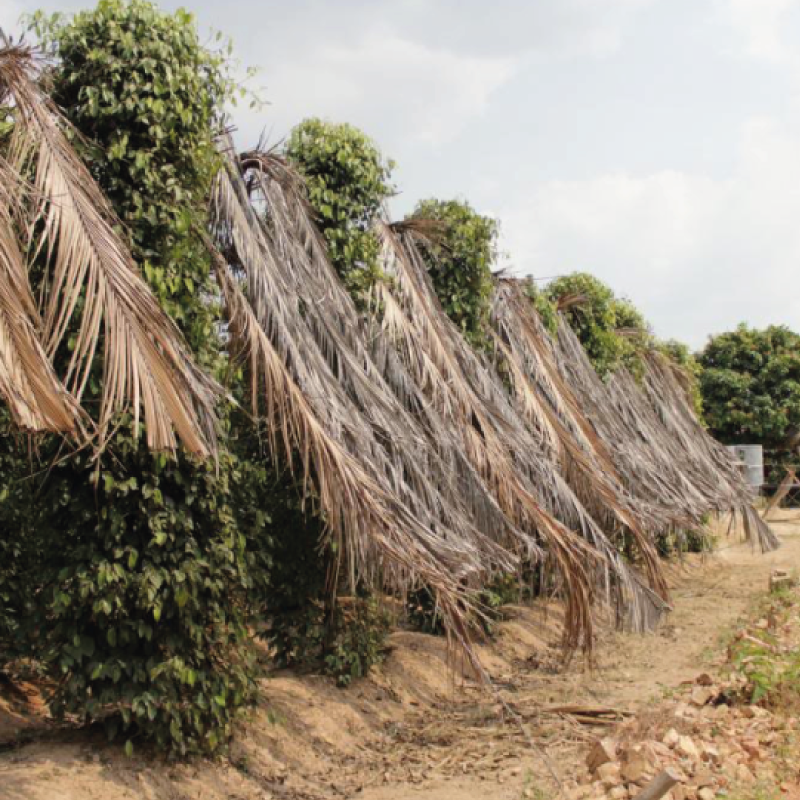
Our Kampot peppers come from one of the many small family businesses with a pepper plantation. These belong to farmers who, after the fall of the Khmer Rouge and the withdrawal of the Vietnamese, started growing pepper again instead of rice. Because the Khmer Rouge had focused all its efforts on rice cultivation, pepper cultivation in Cambodia had virtually been lost.
This pepper is cultivated there using centuries-old methods. The land is still irrigated in the traditional way, without the use of pesticides. Only natural plant resources and crayfish, which are found on a large scale on the many rice paddies in the area, are used to fertilize the land.
Developments
In addition to the protected Kampot you may see more and more 'Kampot' pepper being offered on the European market that maybe does come from this region, but without the consent of the quality control of Kampot Pepper Association.
Usage
Combine black kampot with red meat, fatty fish, brown sauces, tomato dishes, vegetables, or white cheese. Delicious with fruit, and chocolate desserts such as mousses and fondants.
Features:
- 100% peppercorns from Piper nigrum
- protected by the European PGI label (international: PGI)
- origin: region Kampot, Cambodia
Assortment
- available in glass (60 grams), stand-up pouch (various weight classes) and sample sachet (15ml)
- larger quantities than shown on request
Save
- batch number **KG630445
- best before September 2029 (09-2029)
Expiration date - storage advice
Expiration date - storage advice
The stated expiration date is an indication of the shelf life. Because many factors can influence the maintenance of the quality of a spice, you may have to take it sooner or enjoy it for a long time. Trust your senses of smell and taste.
Store spices in a closed container, preferably in a dark, dry and cool place
The batch number that we mention with each product helps us to trace from which supply an item comes.
Dimensions
Dimensions
Onze ziplock-zakken zijn gemaakt van plastics, zo mogelijk van één soort plastic. Biedt ze aan bij het plastic-afval. De potjes zijn een levenlang te gebruiken om uw specerijen of spulletjes in te bewaren. Doet u het glas toch weg, doe het dan in de glasbak.
Allergen information
Allergen information
This product contains no allergens.
Our packaging
Our packaging
We supply this product in a practical twist-off jar (clear glass) of 128ml and in bags. For smaller quantities we use laminated stand-up pouches with ziplock closure, made of PET and PE. The bag is approximately 90% recyclable and is collected with the plastic.
Our two-layer bio-based kraft bags consist of a layer of 60 gram kraft paper and 80 micron PLA plastic. This bag is 100% biodegradable and can be placed in the green bin.
We use our aluminum bags for packaging larger quantities. These three-layer bags are made of laminated 12 micron PET, 7 micron aluminum and 60 micron PE. This combination makes it not possible to fully recycle the bags. These bags must be presented with the other waste.
The test tubes are made of PS plastic, have a diameter of 16 millimeters and a length of 100 millimeters. The caps are made of LDPE.
Share