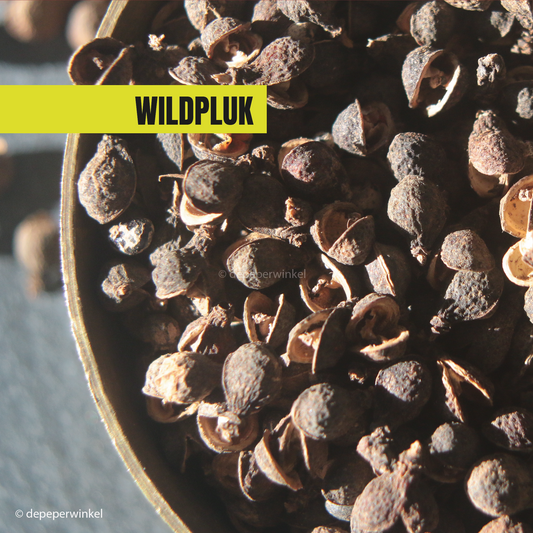
Collection: Our "pseudo" <tc>peppers</tc>
Pseudopeppers are often 'false' in other languages peppers mentioned. In French, for example, the term 'faux poivre' is used, in English 'false pepper'. In colloquial speech, the term pepper is used for both plants from the gender Piper from the Piperaceae family as plants from the genus Capsicum from the Solanaceae family, better known as chilipeppersUnder pseudonympeppers by understanding all spices from other plant genera that are used for their pungency in the same way as these two "real" peppers.
In various countries, such pseudopeppers the standard, as in Japan, where black pepper and chili pepper lose out to Szechuan pepper, as a rule sansho. In Europe, some of the pseudos traditionally used there arepeppers completely forgotten, like grains of paradise and selim. In Africa, where both of these originate, they are displacing the Asian black pepper and long pepper, the native peppers, even the African long pepper, a real pepper.
The differences between the botanically different peppers concern both the degree of spiciness and the taste. As for the spiciness, only Plants from the Piperaceae family contain the pungent substance piperine. Pseudopeppers stimulates our acuity receptors in very diverse ways. Such as with sanshool, the stimulating substance in the peppers from the Zanthoxylum genus (the Szechuanpeppers), which numbs the tongue.
We take you with our pseudonympeppers join us on a world trip that is more than worth the effort.

 Not available - see explanation