depeperwinkel
Chipotle morita
Chipotle morita
In stock
Unable to load availability for pickup
Our Mexican chipotle adobo contains this delicious smoked jalapeño chili, from which the adobo derives its name: the chipotle. Our chipotle comes directly from Mexico.
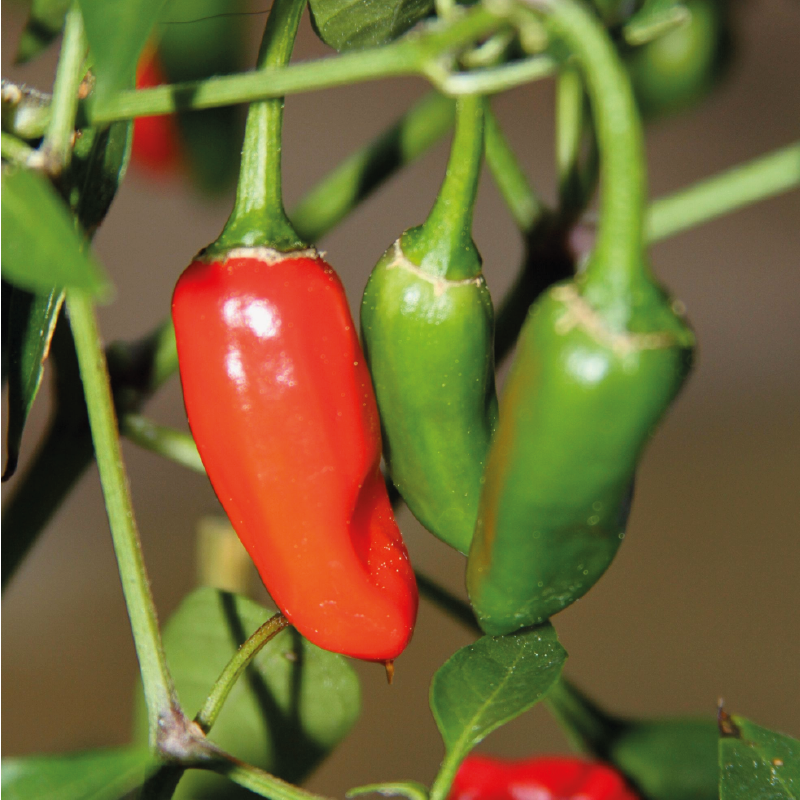
The jalapeño
The technique used for this was presumably developed by the Aztecs, who preserved meat in an identical manner. The Aztecs called this smoked
The fully ripened jalapeños are dried and smoked for 6 days, during which they are stirred every few hours to ensure the smoke is well distributed. The drying and smoking process takes place at 60-75 degrees. On average, 10 kilograms of jalapeños yield 1 kilogram of chipotles.
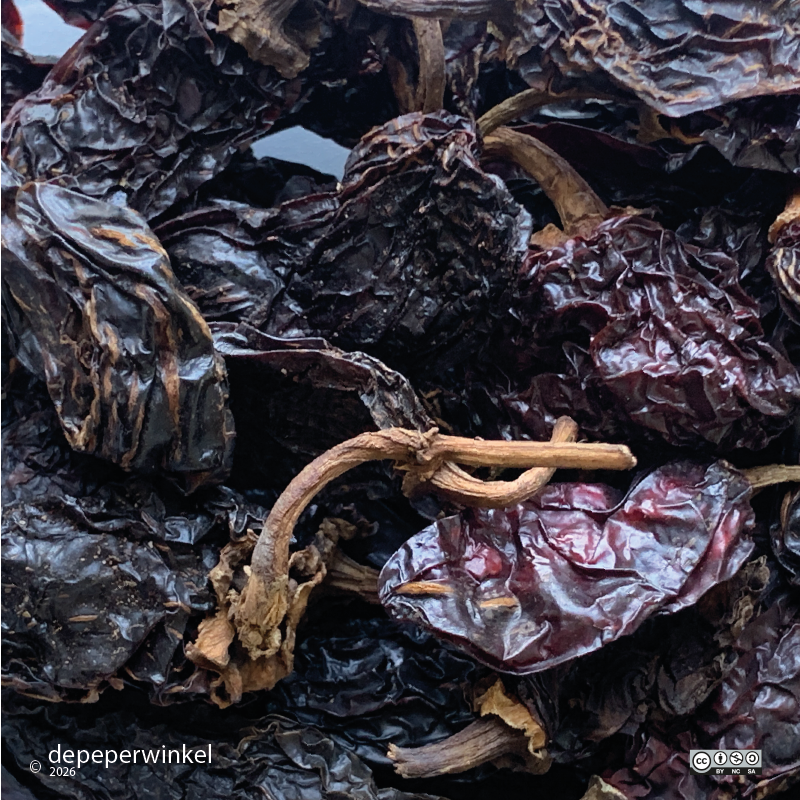
There are two prominent varieties from Mexico, namely the morita and a larger variety named meco, which is primarily used in Mexico. The morita variety is smaller and has a reddish-purple tint, while the meco has more of a grayish-brown color – some say it looks like a cigar butt!
The chipotle has a sharpness on the Scoville scale between 2,500 and 8,000 Scoville units (SHU), on average sharper than the alternative pasilla.
The chipotle is named morita because of its almost deep purple color, which means little blackberry. Although they lose much of their original size during the drying process, this type of chipotle is supple and still slightly moist, just like dried tomatoes or prunes. How different that is from the chipotle meco, which is also called chile ahumado or típico. For this, the chili is
Just like many other spices, it is a good idea to enhance the flavor of the chipotle by lightly toasting them before use. Do this in a preheated frying pan over medium heat, but do not toast them for longer than 20-30 seconds and turn the
After this brief roasting time, you can rehydrate the chipotl or grind it into flakes or powder, if you wish. To rehydrate them, make a few small cuts in the skin on both sides and place the
Are you going for the taste, not the sharpness of this one?
Features:
- 100% jalapeña
pepper (Capsicum annuum)
- Scoville score >2,500 - 8.000 SHU (Scoville heat units)
- grown and smoked in Mexico
Assortment
- available in stand-up pouches (various weight classes)
- larger quantities than shown on request
Save
- batch number **MA630447
- best before December 2028 (12-2028)
Expiration date - storage advice
Expiration date - storage advice
The stated expiration date is an indication of the shelf life. Because many factors can influence the maintenance of the quality of a spice, you may have to take it sooner or enjoy it for a long time. Trust your senses of smell and taste.
Store spices in a closed container, preferably in a dark, dry and cool place
The batch number that we mention with each product helps us to trace from which supply an item comes.
Dimensions
Dimensions
Onze ziplock-zakken zijn gemaakt van plastics, zo mogelijk van één soort plastic. Biedt ze aan bij het plastic-afval. De potjes zijn een levenlang te gebruiken om uw specerijen of spulletjes in te bewaren. Doet u het glas toch weg, doe het dan in de glasbak.
Allergen information
Allergen information
This product contains no allergens.
Our packaging
Our packaging
We supply this product in a practical twist-off jar (clear glass) of 128ml and in bags. For smaller quantities we use laminated stand-up pouches with ziplock closure, made of PET and PE. The bag is approximately 90% recyclable and is collected with the plastic.
Our two-layer bio-based kraft bags consist of a layer of 60 gram kraft paper and 80 micron PLA plastic. This bag is 100% biodegradable and can be placed in the green bin.
We use our aluminum bags for packaging larger quantities. These three-layer bags are made of laminated 12 micron PET, 7 micron aluminum and 60 micron PE. This combination makes it not possible to fully recycle the bags. These bags must be presented with the other waste.
The test tubes are made of PS plastic, have a diameter of 16 millimeters and a length of 100 millimeters. The caps are made of LDPE.
Share