depeperwinkel
Oregano (rigani)
Oregano (rigani)
In stock
Unable to load availability for pickup
This powerful oregano was picked on the island of Crete, the island where the mountain slopes are colored by a carpet of flowering herbs in the summer. The flavor is so concentrated that it is advisable to use the oregano sparingly. Give your pizza, egg dish, or salad a boost with this unique herb.
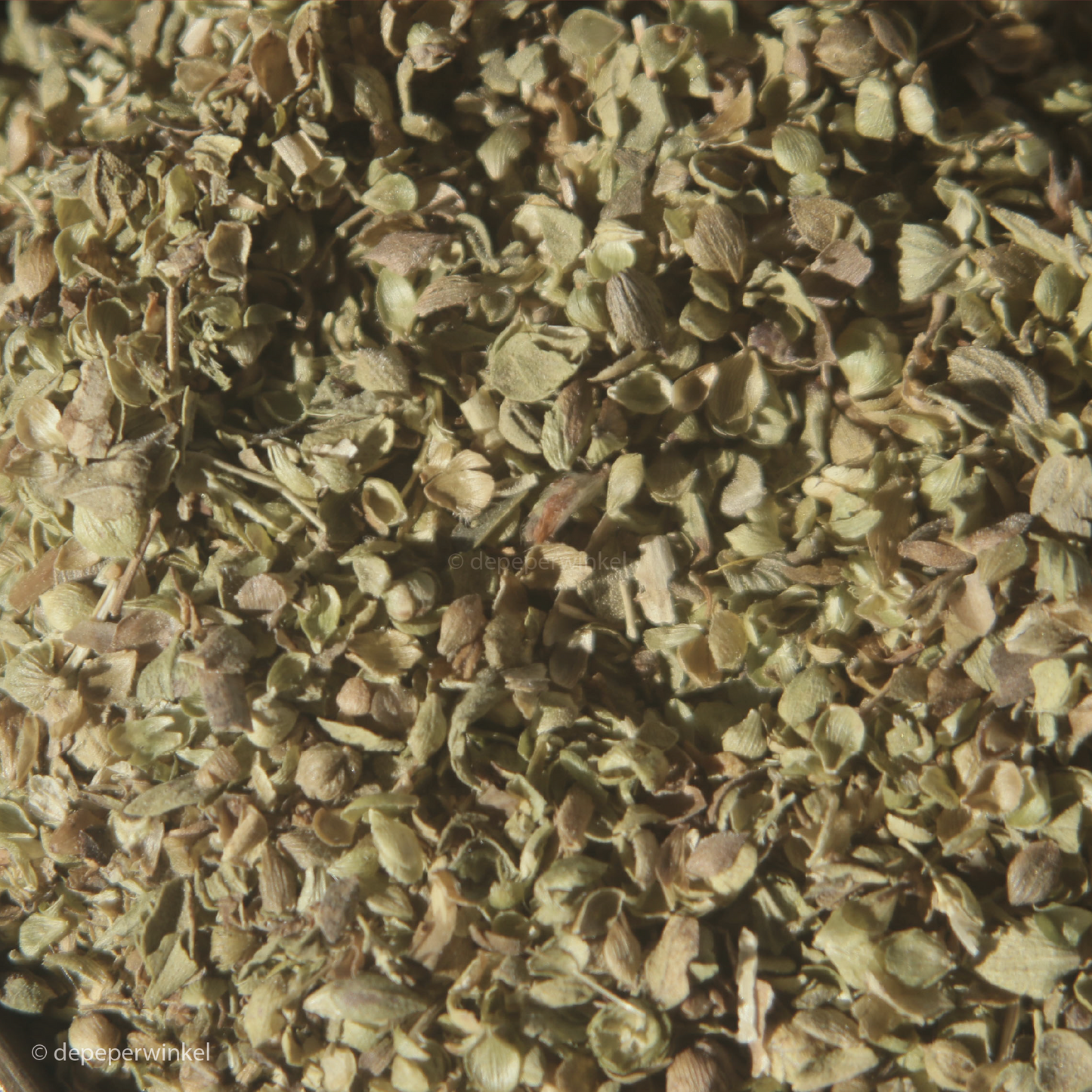
Note: the oregano leaves can be (considerably) finer than those shown in the image! Grading: 2-5 mm
Oregano is the popular name for marjoram, a plant belonging to the mint family. Its use on pizza and in salads in Italian and Greek cuisine is famous, especially in combination with tomato and eggplant. However, oregano is not used solely in European cuisine, but also in Latin American cuisine.
Like true marjoram (Origanum majorana), oregano is woody. The leaves are larger, have a stalk, are slightly hairy, and are green on both sides. Oregano is usually harvested 'on the stem'. That is why the stem and leaf are processed together in many oregano products.
This is not the case with our oregano; the leaves are stripped from the stems after harvesting. Moreover, our oregano is harvested early in the summer, shortly before flowering, when the leaves are at their most flavorful. This wild-growing oregano, known as rígani in Crete, naturally possesses a more powerful and broader flavor profile than dried, cultivated oreganos, both naturally and through the careful method of harvesting and processing, but is also more potent than fresh oregano.
Therefore, use it to give a dish (hot or cold) a boost. Be more sparing with this wild oregano than you might be accustomed to. Prevent the strong flavor of this wild oregano from overpowering other flavor components. Incidentally, the more delicate the dish, the more it is worth considering using marjoram instead of oregano. rule of thumb in addition is:
- rustic Mediterranean and Southern French dishes oregano,
- refined Northern French dishes: marjoram.
Scent and taste
The taste and aroma of oregano are determined by carvacrol (spicy and bitter), thymol (thyme), myrcene (peppery), and sabinene. The latter is responsible for the sweet notes.
Usage
As strange as it may sound, oregano lends itself not only to savory dishes but also to sweet dishes, even in ice cream or yogurt. A favorite application, however, is oregano in combination with garlic and lemon, for example as a flavoring for (fatty) lamb, and on or in egg dishes.
Add dried oregano only at the last moment. The best time to add dried herbs is at most ten minutes before the end of cooking. That is sufficient for the leaves to reabsorb moisture and transfer the flavor to the dish.
Did you know that the flavor of these dried herbs comes out best when you let the herbs absorb moisture in oil for a while, so that they can transfer their flavor to the oil? Then cook with this aromatic oil.
Features:
- 100% dried leaf (stripped) of Origanum vulgare - wild
- origin: Greece (Crete)
Assortment
- available in glass (20 grams) and stand-up pouch (various weight classes)
- glarger quantities than shown on request
Save
- batch number OB550370
- best before June 2027 (06-2027)
Expiration date - storage advice
Expiration date - storage advice
The stated expiration date is an indication of the shelf life. Because many factors can influence the maintenance of the quality of a spice, you may have to take it sooner or enjoy it for a long time. Trust your senses of smell and taste.
Store spices in a closed container, preferably in a dark, dry and cool place
The batch number that we mention with each product helps us to trace from which supply an item comes.
Dimensions
Dimensions
Onze ziplock-zakken zijn gemaakt van plastics, zo mogelijk van één soort plastic. Biedt ze aan bij het plastic-afval. De potjes zijn een levenlang te gebruiken om uw specerijen of spulletjes in te bewaren. Doet u het glas toch weg, doe het dan in de glasbak.
Allergen information
Allergen information
This product contains no allergens.
Our packaging
Our packaging
We supply this product in a practical twist-off jar (clear glass) of 128ml and in bags. For smaller quantities we use laminated stand-up pouches with ziplock closure, made of PET and PE. The bag is approximately 90% recyclable and is collected with the plastic.
Our two-layer bio-based kraft bags consist of a layer of 60 gram kraft paper and 80 micron PLA plastic. This bag is 100% biodegradable and can be placed in the green bin.
We use our aluminum bags for packaging larger quantities. These three-layer bags are made of laminated 12 micron PET, 7 micron aluminum and 60 micron PE. This combination makes it not possible to fully recycle the bags. These bags must be presented with the other waste.
The test tubes are made of PS plastic, have a diameter of 16 millimeters and a length of 100 millimeters. The caps are made of LDPE.
Share