depeperwinkel
Thyme (thimari)
Thyme (thimari)
In stock
Unable to load availability for pickup
Thyme is a classic in Mediterranean cuisine and a must in French cuisine. It is a versatile herb that pairs well with vegetable dishes, grilled fish, and grilled meat, but is also used in refined dishes, often in combination with other herbs such as rosemary, sage, bay leaf, and oregano.
Thyme is the name of common thyme (Thymus vulgaris) and the plant genus to which this plant belongs. It is a woody herb with fine leaves that have a very aromatic smell and taste. The main aromatic substance is thymol, named after the plant, a substance that is also found in oregano, for example.
The name thymus is said to have been given to the plant by the ancient Greeks in the sense of the word 'to smoke out', referring to the use of thyme as incense.
Thyme is a member of the Lamiaceae family and belongs to the same family as herbs such as basil, oregano, and marjoram. It is one of the many herbs that grow naturally on the island of Crete and turn the slopes pink in summer when the carpets of herbs are in full bloom. Our thyme grows wild on the island of Crete in the vicinity of Mount Ida.
Just like basil, thyme is widely available fresh, as a potted or border plant, but also in the form of freshly picked sprigs. Thyme dries very well, with the advantage that the leaves keep longer and the flavor becomes more concentrated. The downside of this concentration is that dried thyme is best not used in delicate fish dishes; fresh thyme is by far the preferred choice in those cases. However, for grilled fish and grilled meat, you would still prefer dried thyme.
Scent and taste
The taste and aroma of thyme are generally perceived as 'warm', but thyme also has a sharp taste. In Southern Italian cuisine, use thyme for sauces with pasta and vegetable dishes, such as dishes with tomato and roasted or baked potatoes. In Italian cuisine, thyme is often combined with sage and rosemary. With these three, for example, you can make a great marinade for beef (with olive oil and a good pepper, of course).
In addition to thymol, thyme contains carvacrol (spicy and bitter), myrcene (peppery), and – very slightly – mint; it is not without reason that thyme is a member of the Mint family (Lamiaceae).
Usage
In French cuisine, thyme is used in Herbes de Provence and bouquet garni, but not only in France; these thyme combinations are also very popular in Italian cuisine.
Add dried herbs only at the last moment. The best time to add dried herbs is at most ten minutes before the end of cooking. That is sufficient for the leaves to reabsorb moisture and transfer the flavor to the dish.
Did you know that the flavor of these dried herbs comes out best when you let the herbs absorb moisture in oil for a while, so that they can transfer their flavor to the oil? Then cook with this aromatic oil.
Features:
- 100% dried leaf (stripped) of Thymus vulgaris
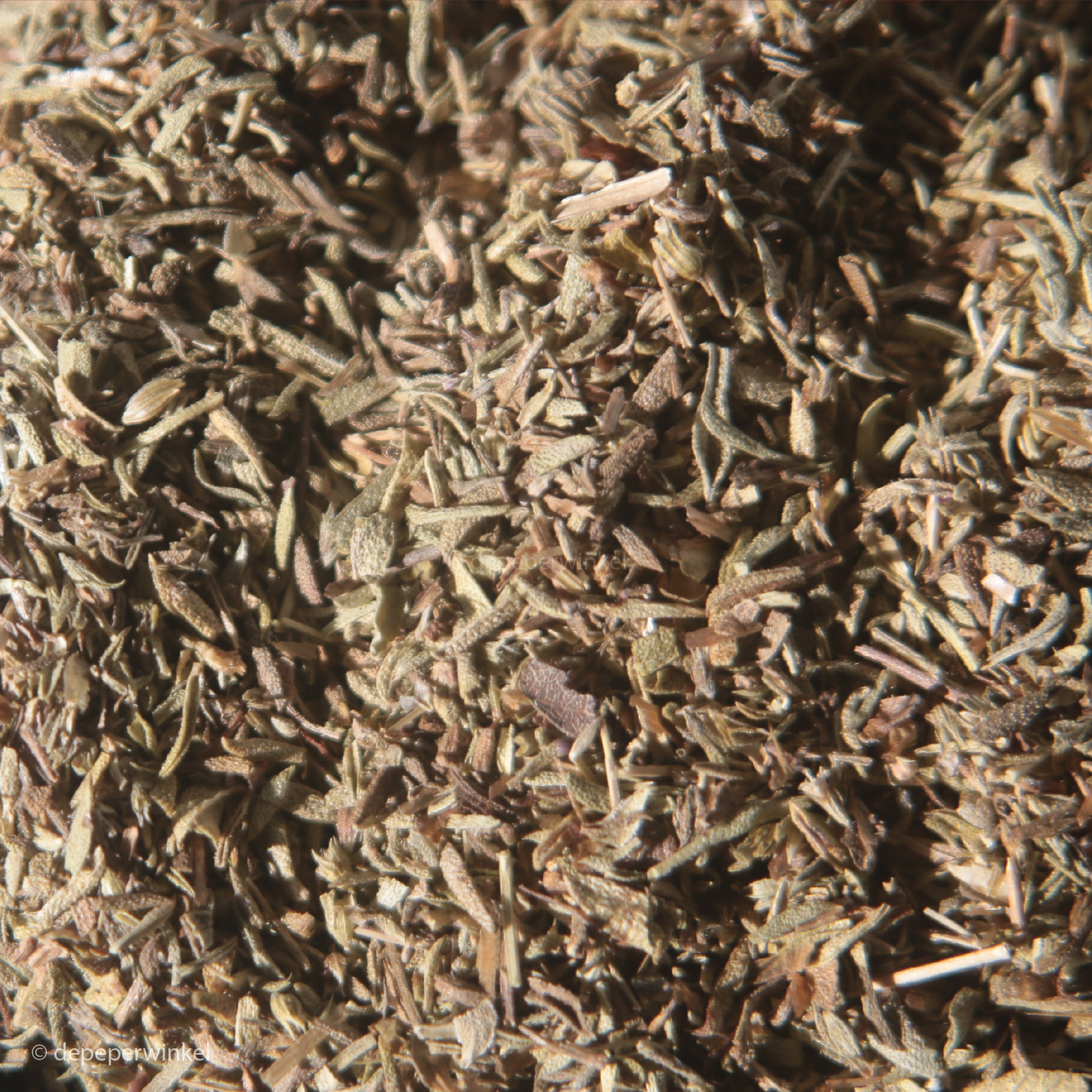
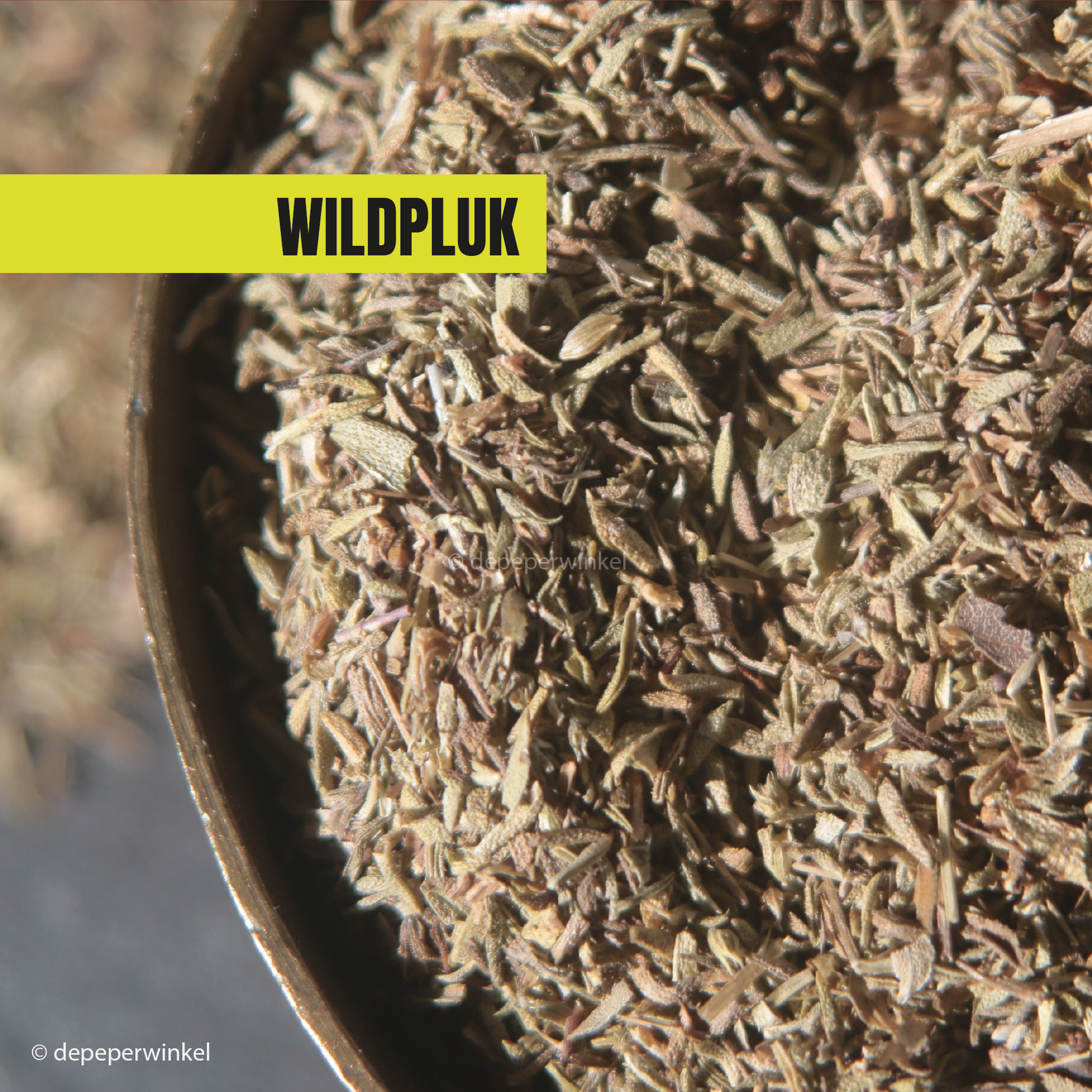
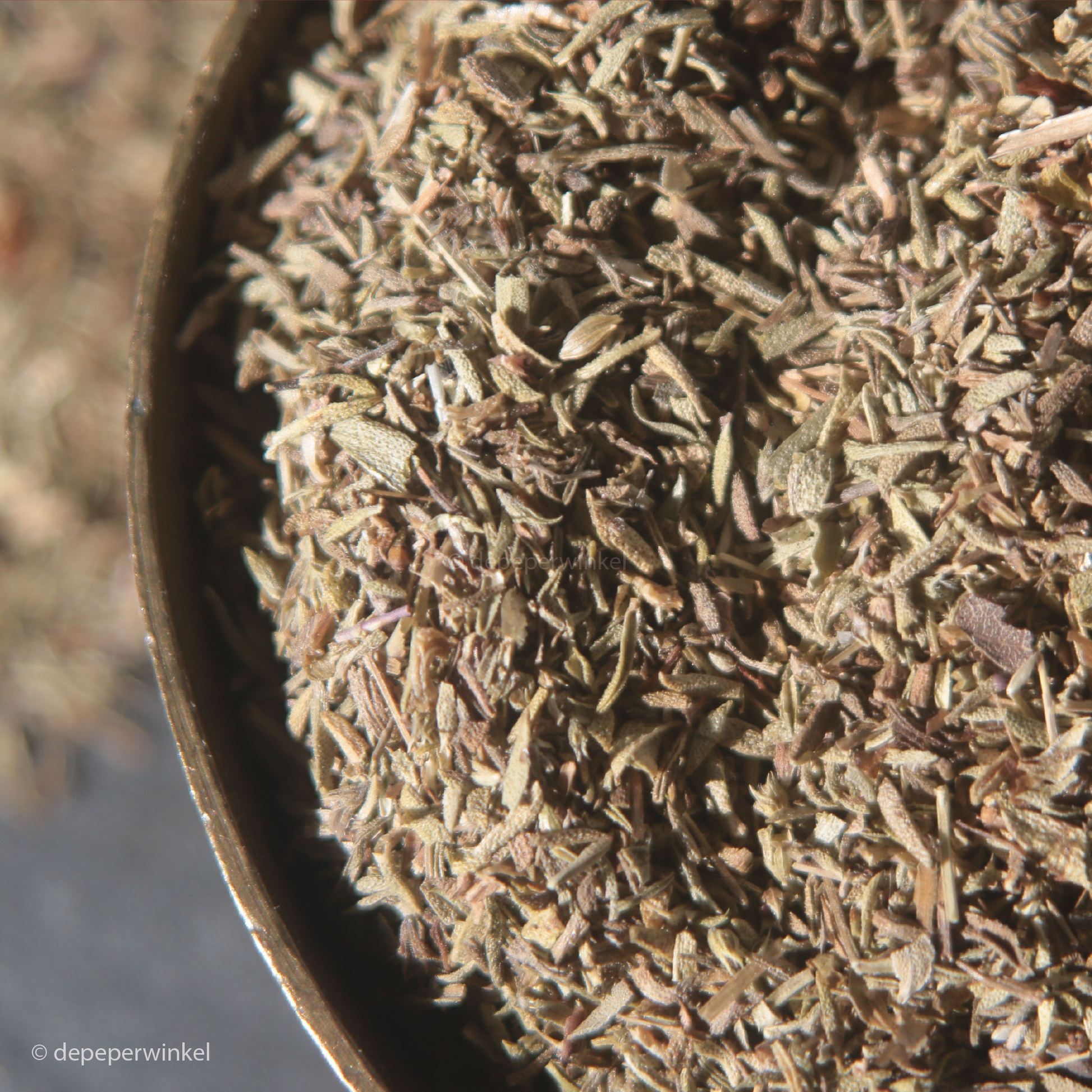
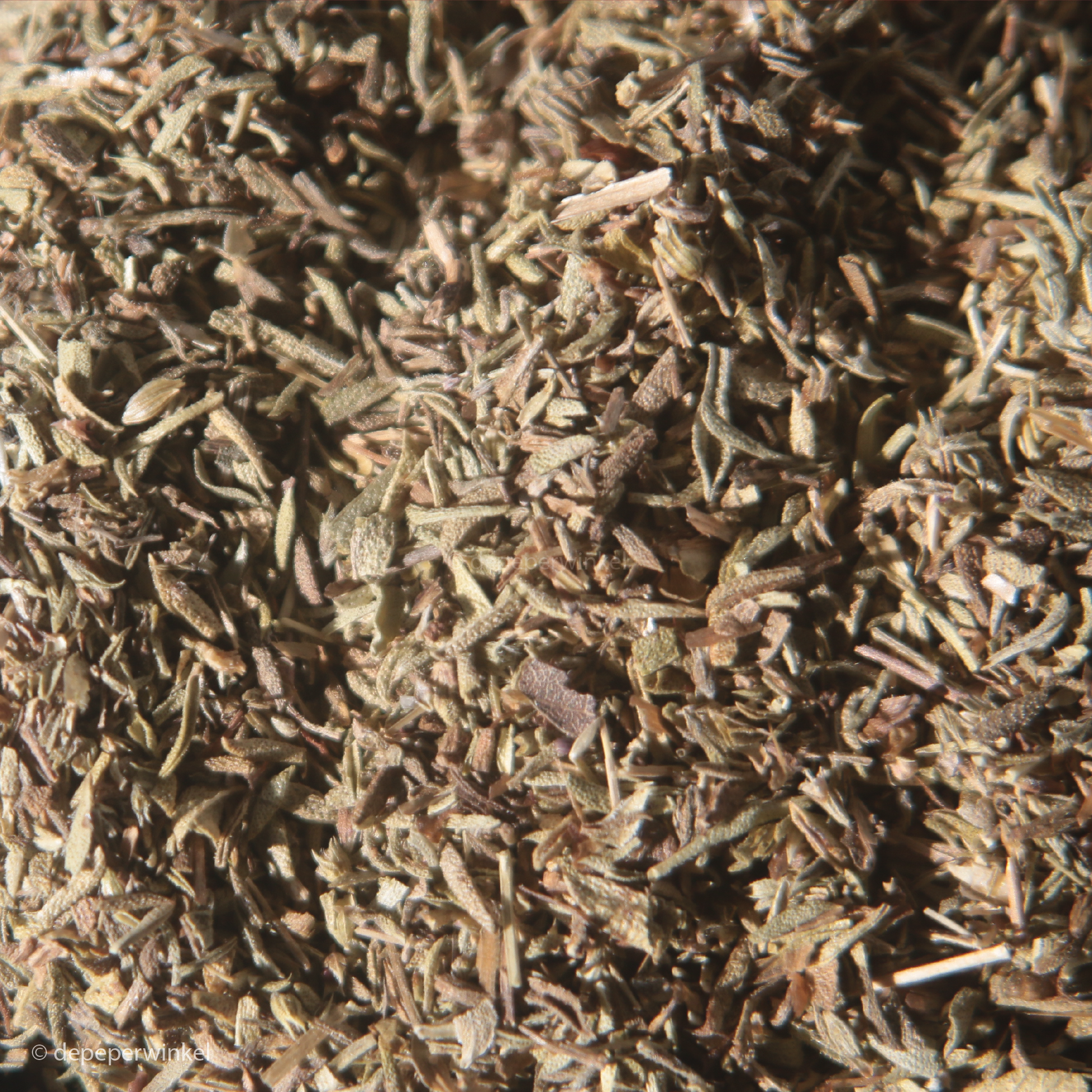
- foraging - stripped leaf
- origin: Greece (Crete)
Assortment
- available in glass (20 grams) and stand-up pouch (various weight classes)
- glarger quantities than shown on request
Save
- batch number OB610425
- best before May 2028 (05-2028)
Expiration date - storage advice
Expiration date - storage advice
The stated expiration date is an indication of the shelf life. Because many factors can influence the maintenance of the quality of a spice, you may have to take it sooner or enjoy it for a long time. Trust your senses of smell and taste.
Store spices in a closed container, preferably in a dark, dry and cool place
The batch number that we mention with each product helps us to trace from which supply an item comes.
Dimensions
Dimensions
Onze ziplock-zakken zijn gemaakt van plastics, zo mogelijk van één soort plastic. Biedt ze aan bij het plastic-afval. De potjes zijn een levenlang te gebruiken om uw specerijen of spulletjes in te bewaren. Doet u het glas toch weg, doe het dan in de glasbak.
Allergen information
Allergen information
This product contains no allergens.
Our packaging
Our packaging
We supply this product in a practical twist-off jar (clear glass) of 128ml and in bags. For smaller quantities we use laminated stand-up pouches with ziplock closure, made of PET and PE. The bag is approximately 90% recyclable and is collected with the plastic.
Our two-layer bio-based kraft bags consist of a layer of 60 gram kraft paper and 80 micron PLA plastic. This bag is 100% biodegradable and can be placed in the green bin.
We use our aluminum bags for packaging larger quantities. These three-layer bags are made of laminated 12 micron PET, 7 micron aluminum and 60 micron PE. This combination makes it not possible to fully recycle the bags. These bags must be presented with the other waste.
The test tubes are made of PS plastic, have a diameter of 16 millimeters and a length of 100 millimeters. The caps are made of LDPE.
Share