depeperwinkel
Red Szechuan<tc>pepper</tc> Huā jiāo
Red Szechuan<tc>pepper</tc> Huā jiāo
In stock
Unable to load availability for pickup
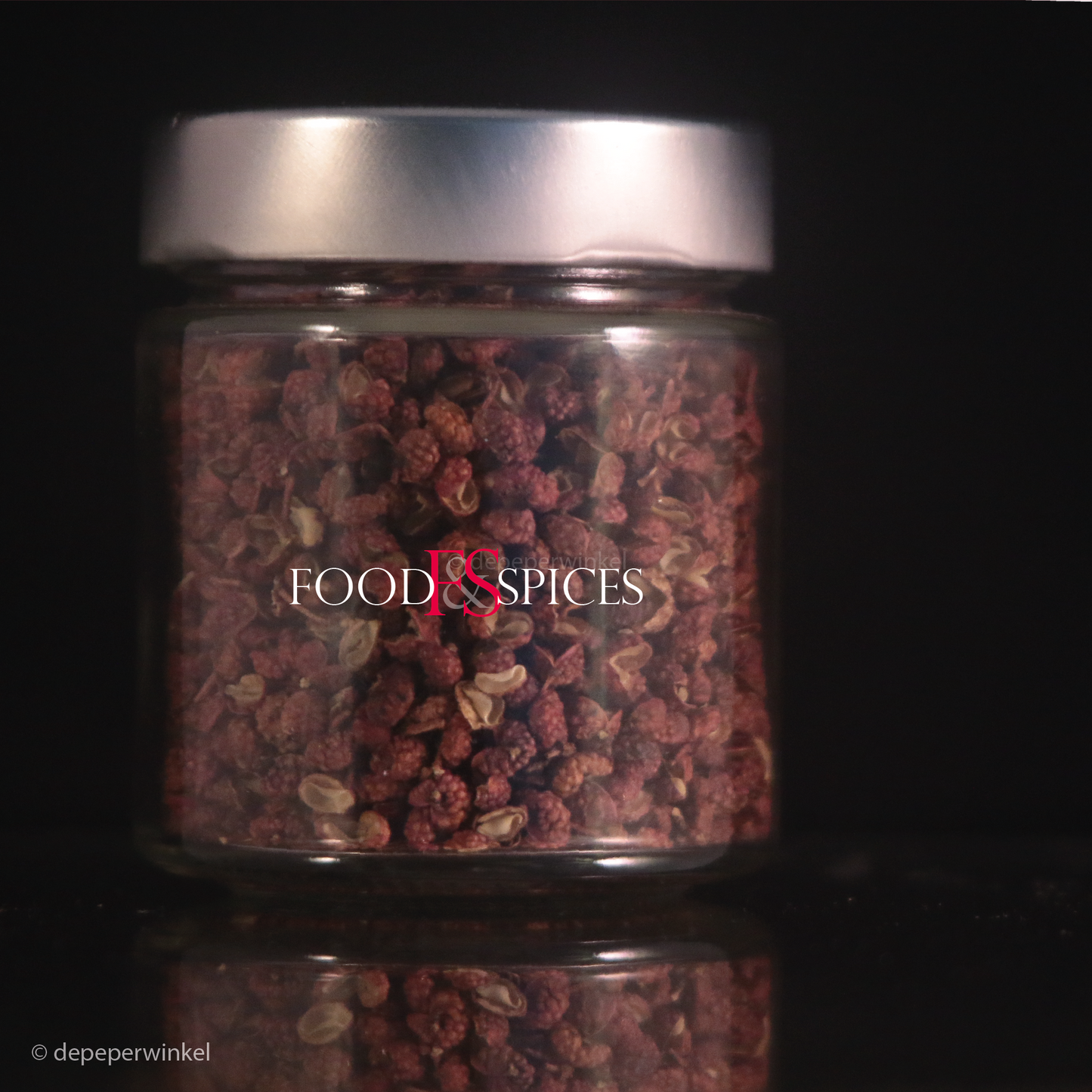
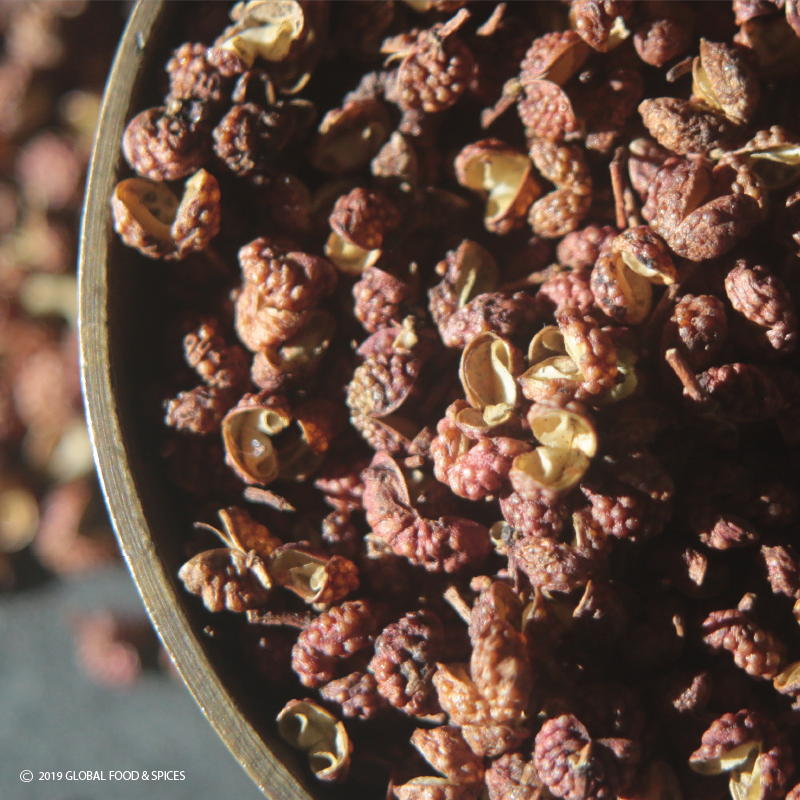
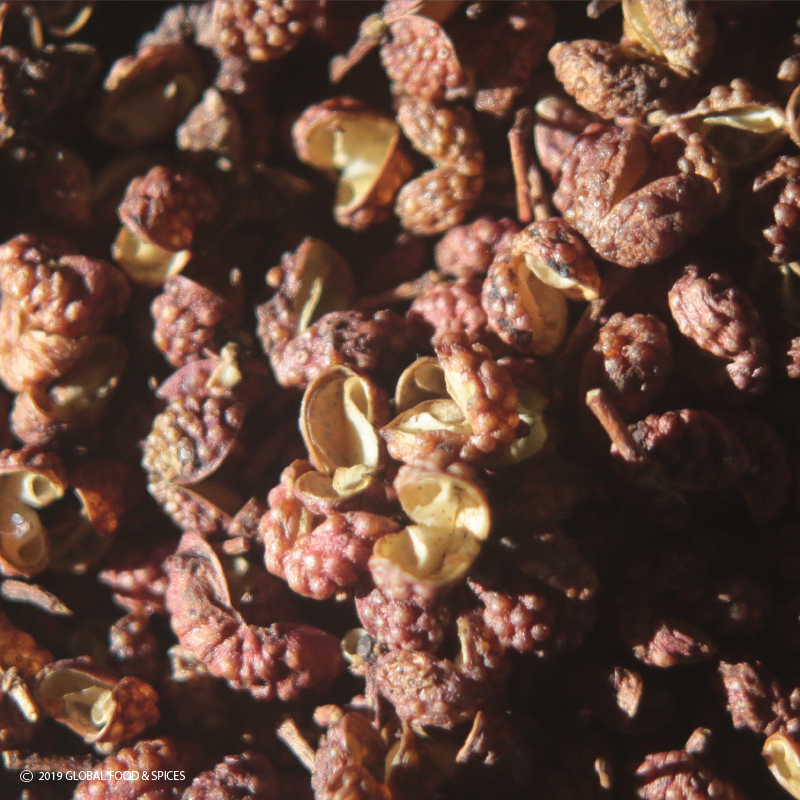
Our red huā jiāo. In full dà hóng páo huā jiāo, is a special Szechuan
This Szechuan
The name of this
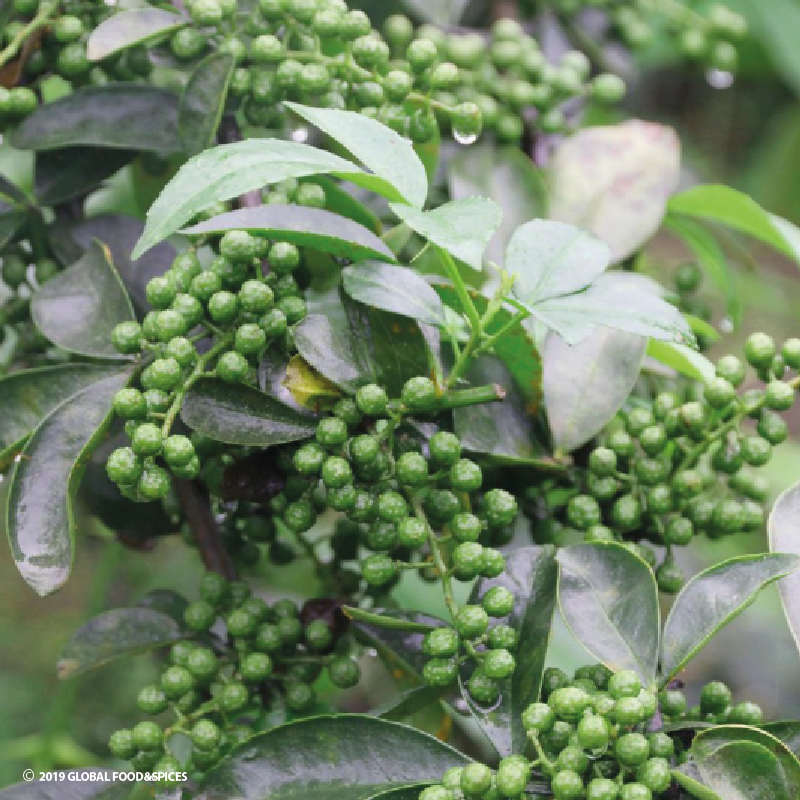
The Zanthoxylum is a plant that can grow into a large tree, the bark of which is covered with coarse, sometimes woody spines. The bark appears to be covered with a row of "teeth," perhaps hence the Dutch name "toothache tree." In traditional Chinese medicine, the
The ripe berry is picked in early autumn, as soon as the berries burst open and the rather bitter seeds are released. The seed pods are traditionally sun-dried, but better varieties are no longer dried. The better quality Szechuan
There is a clear difference in taste between the larger berry of Zanthoxylum bungeanum and the smaller one of Zanthoxylum piperitum, which makes the former very popular with Asian chefs. In the Chinese consumer market, but also in other Asian countries (and Europe), the small and often darker berry is the most sought-after, partly due to its lower price. Even the "old guard" in China clings to the taste of this widely available Szechuan.
The unique sharpness experience of sanshol
Characteristic of all Zanthoxylum
Szechuan is considered the sharpest Zanthoxylum
The tingling sensation is accompanied by a slight numbness, jokingly compared to tasting a 9-volt battery. A single berry is enough to experience that! This somatosensation, stimulation by touch, has been used for centuries as an anesthetic in traditional Asian medicine. Its effects are very complex and the subject of extensive studies. Hydroxy-α-sanshol, in particular, is said to cause the tingling, and there are certain parallels with the pungency experienced with capsaicin, the pungent substance in chili peppers.
Smell and taste
The Szechuan berry contains
- linalyl acetate, responsible for a pleasant citrus, bergamot and lavender scent,
- limonene, the scent of lemon peel,
- geraniol, rose scent,
- geranyl acetate, lavender fragrance.
- β-pinene, pine resin, and
- linalool, responsible for the scents of rosewood and coriander
A ripe berry contains significantly more linalool, geraniol and geranyl acetate than a green berry.
The aromas develop during maturation, in red Szechuan
Combinations
Szechuan
Usage
Szechuan
Szechuan
For those who don't know Szechuan
Features:
- 100% berries of the Zanthoxylum bungeanum - opening rate 90% (seed-poor)
- origin: Xinshao, Hunan
Assortment
- available in glass (30 grams), stand-up pouch and test tube (10 ml)
- larger quantities on request
Gift wrapping
- The jar is available in a tasteful gift packaging, consisting of a cube box filled with black tissue paper.
- For an overview of our gift packaging, please refer to the gift packaging section.
General advice
- Huā jiāo is the Szechuan
pepper excellent for use in stir-fry dishes - use Szechuan
pepper sparingly, and choose whether to use the berries whole or ground
- allow the Szechuan to absorb moisture well, so that the taste and spiciness are optimally integrated
Save:
- save your szechuan
pepper in closed packaging - preferably store in a dark, dry and cool place
- batch **210 - best before October 2026 (10-2026)
- batch **570387 - best before October 2028 (10-2028)
- This expiration date is an indication
Batch number
The batch number helps us track which batch an item originates from. It's listed on the packing slip and invoice.
Share